PCB / FPC / HDI Lamination Cushion Paper
PCB / FPC / HDI Lamination Cushion Paper for high-temperature pressing. Cellulose fiber material for pressure equalization, with custom thicknesses and sizes.
PCB / FPC / HDI Lamination Cushion Paper
High-Temperature Cellulose Fiber Press Cushioning Material for PCB, FPC, Rigid-Flex and HDI Lamination
Product Overview
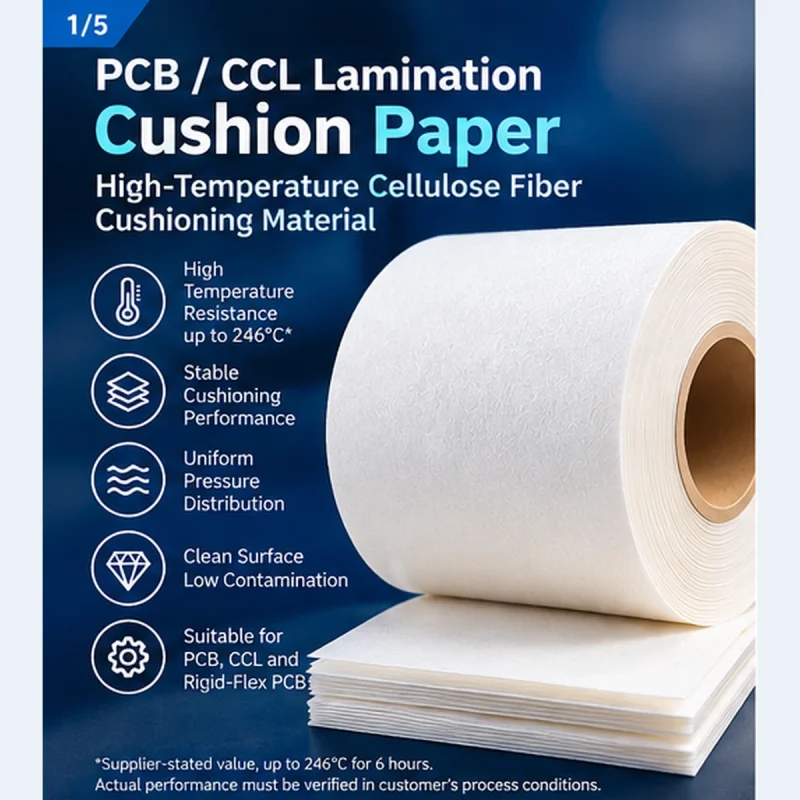
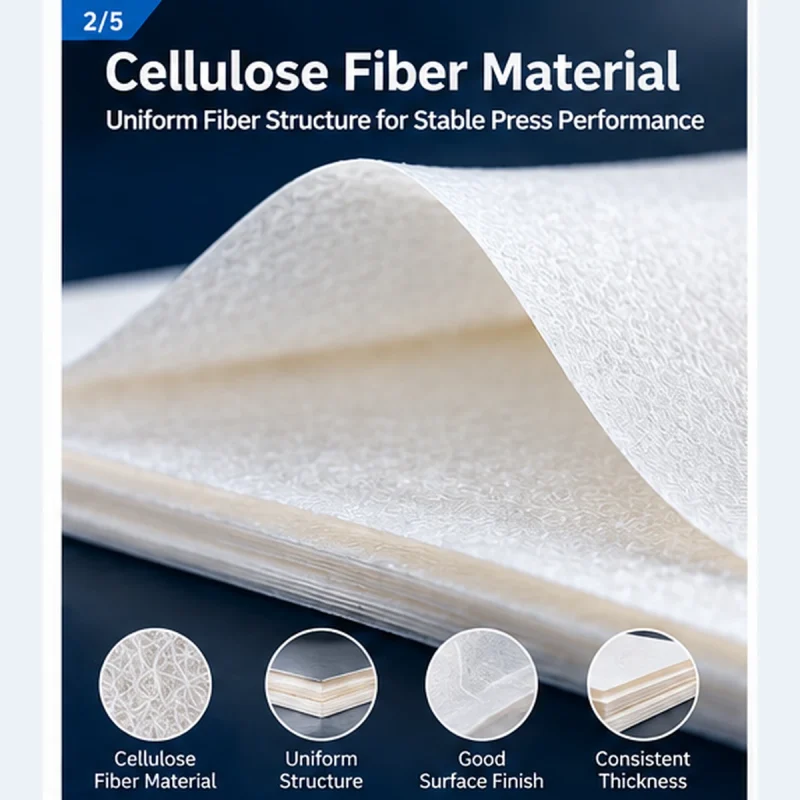
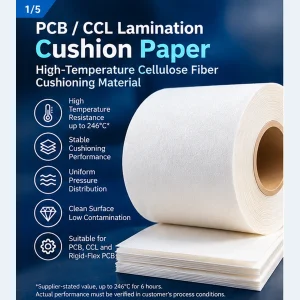
PCB, FPC, Rigid-Flex and HDI Lamination Cushion Paper is a cellulose fiber-based cushioning material designed for use in heated press lamination processes for printed circuit boards and copper clad laminates.
Positioned within the lamination press stack, cushion paper helps manage pressure distribution, accommodate minor thickness variations, and support controlled heat transfer during pressing.
It is intended for applications where uniform pressure, reliable panel support, and consistent lamination conditions are important to finished laminate quality.
HighTemp Material offers cushion paper sourcing and custom converting solutions for PCB, FPC, Rigid-Flex and HDI manufacturers, including cut-to-size sheets and special-shaped parts.
Key Features
- Cellulose fiber-based cushioning material
- Designed for PCB, FPC, Rigid-Flex and HDI hot-press lamination
- Helps equalize pressure across panel surfaces
- Supports controlled heat transfer during pressing
- Accommodates localized thickness differences and surface irregularities
- Multiple thickness options
- Custom sheet dimensions and special-shape cutting
Request Technical Information | Request Samples | Get a Quote
Key Features and Benefits
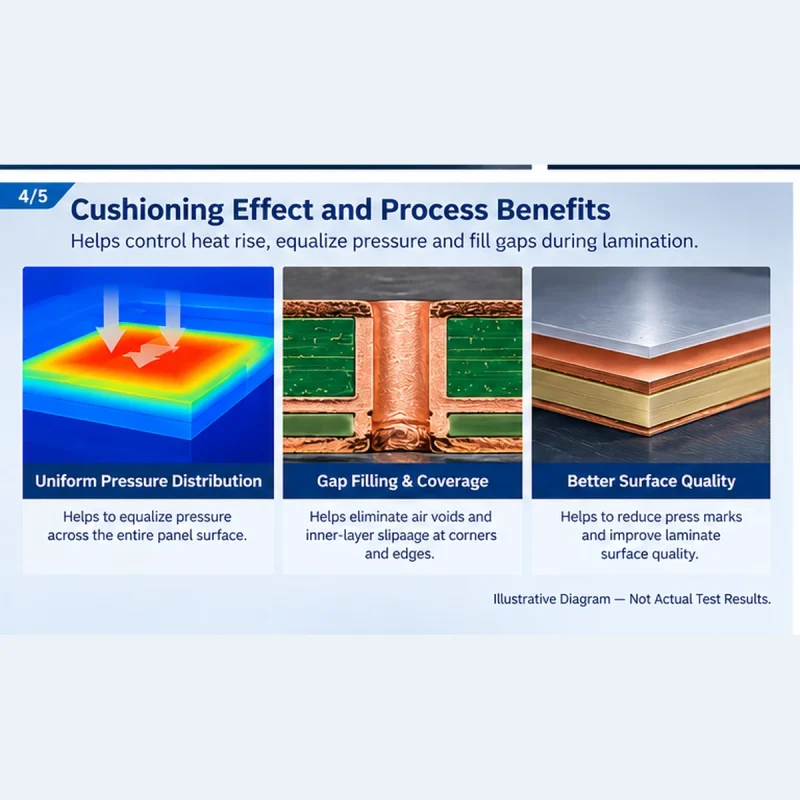
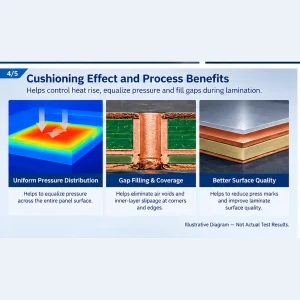
1. Uniform Pressure Distribution
During PCB, FPC, Rigid-Flex and HDI lamination, uneven pressure can contribute to localized variation in resin flow, bonding quality, and laminate thickness.
Cushion paper provides a compressible layer within the press stack, helping distribute the applied load more evenly across the panel.
This may be especially useful for multilayer PCB constructions and panels with localized thickness differences.
2. Controlled Heat Transfer
Cushion paper can influence the rate and uniformity of heat transfer from the heated press platens to the laminate.
Appropriate cushion material selection helps support a controlled thermal response during the lamination cycle.
The actual heating behavior depends on cushion thickness, density, thermal properties, stack configuration, and pressing conditions.
3. Gap Filling and Surface Conformability
Cushion paper helps accommodate minor irregularities and gaps in the lamination stack.
Its compressibility can improve contact between process layers, particularly around panel edges and regions with varying thickness.
The amount of compression and recovery must be evaluated according to the selected grade.
4. High-Temperature Lamination Applications
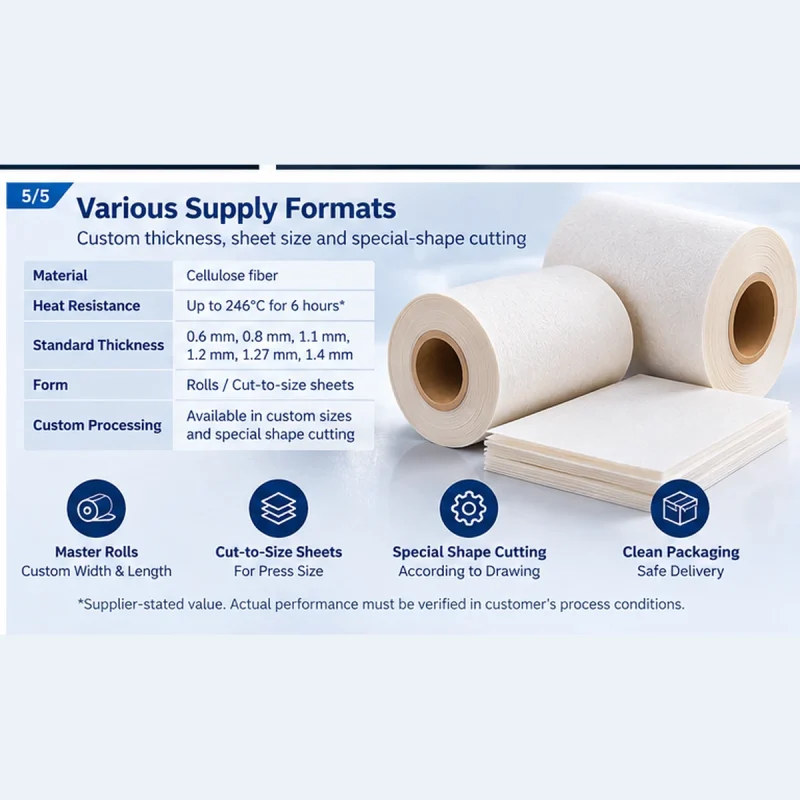
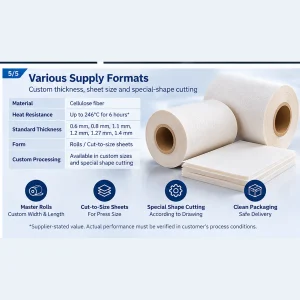
The referenced cellulose fiber cushion paper is described by its supplier as suitable for thermal exposure up to 246°C for six hours.
This is preliminary supplier-stated information and has not yet been independently verified by HighTemp Material.
Suitability under combined temperature, pressure, and time conditions requires qualification before production use.
5. Flexible Thickness and Sheet Options
Available reference thicknesses include:
0.6 mm, 0.8 mm, 1.1 mm, 1.2 mm, 1.27 mm, and 1.4 mm.
Custom sheet dimensions and special-shaped cutting can be evaluated according to customer drawings and order requirements.
Typical Technical Specifications
| Property | Preliminary Specification |
|---|---|
| Product | PCB, FPC, Rigid-Flex and HDI Lamination Cushion Paper |
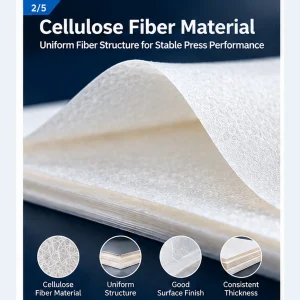
| Base Material | Cellulose Fiber |
| Material Form | Cushioning Paper / Sheet |
| Color | To be confirmed |
| Standard Thickness | 0.6 / 0.8 / 1.1 / 1.2 / 1.27 / 1.4 mm |
| Supplier-Stated Heat Resistance | Up to 246°C for 6 hours |
| Thickness Tolerance | Pending confirmation |
| Density | Pending confirmation |
| Compressibility | Pending testing |
| Compression Recovery | Pending testing |
| Thermal Conductivity | Pending testing |
| Moisture Content | Pending testing |
| Maximum Pressing Pressure | Pending qualification |
| Reuse Capability | Pending confirmation |
| Sheet Dimensions | Customized |
| Special-Shape Cutting | Available upon evaluation |
Technical Note: The information above is preliminary. The stated thermal performance and available thicknesses are based on supplier promotional information. Final specifications must be confirmed against the selected product grade and applicable test documentation.
Applications
Multilayer PCB Lamination
Used as a cushioning layer in heated press stacks for multilayer printed circuit boards, helping accommodate thickness variations and support more uniform pressure distribution.
Copper Clad Laminate Manufacturing
Applicable to selected CCL lamination processes requiring pressure equalization and controlled heat transfer during resin curing.
Rigid-Flex PCB Lamination
Can be evaluated for rigid-flex PCB processing where differences in layer construction create localized pressure distribution challenges.
High-Layer-Count PCB Manufacturing
For complex multilayer constructions, suitable cushioning materials can help manage the mechanical response of the press stack.
Material selection should be based on actual lamination temperature, pressure, duration, and panel structure.
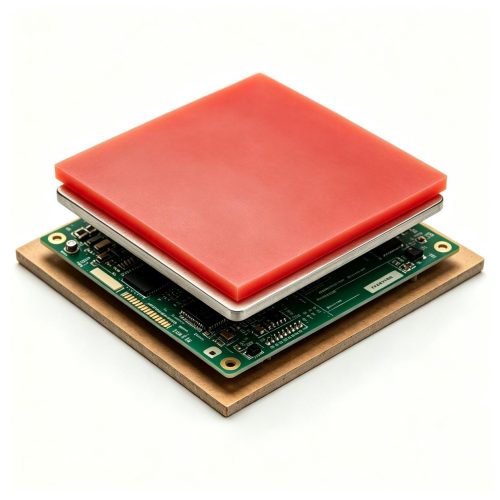
How Cushion Paper Works in a Lamination Press
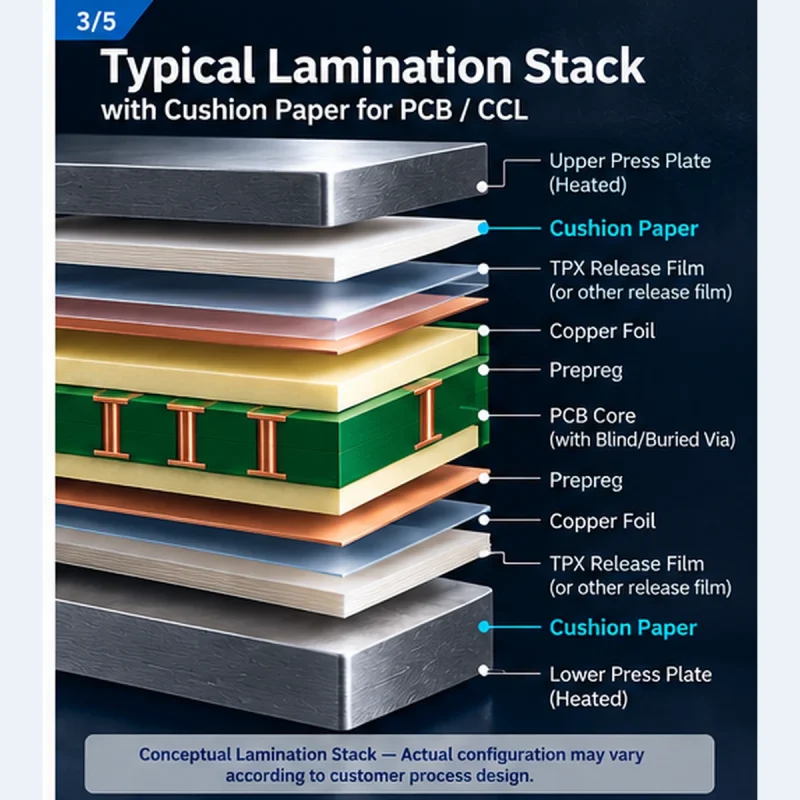
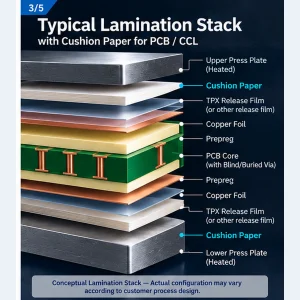
Cushion paper is positioned between designated process layers within the lamination stack, typically to help distribute pressure and influence heat transfer.
A representative process stack may include:
- Heated press platen
- Press plate or tooling layer
- Cushion paper
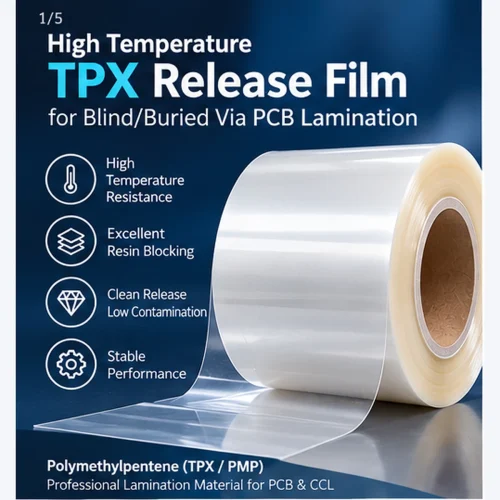
- Release or separation material, where required
- Copper foil and prepreg
- PCB core or CCL laminate assembly
- Corresponding lower process layers
The exact sequence varies by manufacturing process and should follow the customer’s approved lamination design.
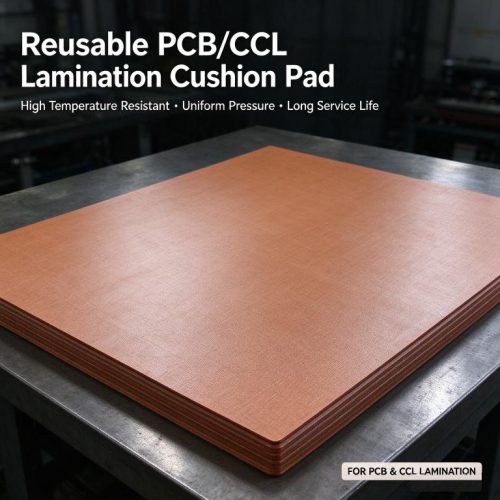
Cushion Paper vs Reusable Cushion Pads
| Selection Factor | Cellulose Fiber Cushion Paper | Reusable Cushion Pad |
|---|---|---|
| Main Structure | Fiber-based paper material | Grade-dependent engineered composite |
| Cushioning Mechanism | Fiber compression | Engineered compressible structure |
| Thickness | Multiple sheet thicknesses | Grade-dependent |
| Thermal Behavior | Depends on fiber structure and thickness | Depends on pad construction |
| Reuse | Must be confirmed | Designed for repeated use, subject to grade |
| Supply Format | Sheets and custom-cut shapes | Sheets or custom-cut pads |
| Typical Selection Priority | Process compatibility and per-cycle cost | Repeatability and reuse economics |
Neither option is universally superior. Selection should consider the pressing cycle, required pressure uniformity, contamination controls, and cost per lamination cycle.
Selection Guide for PCB, FPC, Rigid-Flex and HDI Manufacturers
To recommend a suitable cushion paper thickness and supply format, we suggest confirming:
Lamination Temperature: Maximum temperature and holding time.
Pressing Pressure: Peak pressure, pressure profile, and pressure units.
Panel Size: Finished panel dimensions and usable press area.
Panel Structure: Multilayer PCB, rigid-flex PCB, or copper clad laminate, HDI.
Cushion Thickness: Current cushion paper thickness and number of layers.
Current Material: Existing product or reference grade, such as PACOPAD.
Process Issues: Uneven pressure, resin flow variation, panel warpage, surface marks, or localized thickness variation.
Consumption: Sheets per cycle, expected reuse, and monthly quantity.
Custom Sheet Cutting and Supply
HighTemp Material supports customer-specific material sourcing and converting services.
Depending on the available cushion paper grade, options may include:
- Standard rectangular sheets
- Custom press-size sheets
- Special-shaped die-cut parts
- Custom packaging and labeling
- Sample sheets for process evaluation
Please provide your dimensions, thickness requirements, and estimated order quantity for quotation.
Frequently Asked Questions
What is PCB lamination cushion paper?
PCB lamination cushion paper is a compressible process material used in heated press stacks to help manage pressure distribution, accommodate thickness variation, and influence heat transfer.
Is cushion paper the same as a reusable silicone cushion pad?
No. Cellulose fiber cushion paper and reusable engineered cushion pads have different structures and mechanical behavior. They should be evaluated separately.
Can this cushion paper replace PACOPAD?
It may be considered as a candidate for application benchmarking. Equivalent performance has not yet been established and should be confirmed through comparative lamination trials.
What thicknesses are available?
Reference thicknesses include 0.6, 0.8, 1.1, 1.2, 1.27, and 1.4 mm. Actual stock availability should be confirmed before ordering.
Can it withstand 246°C?
The supplier promotional material states heat resistance up to 246°C for six hours. Actual suitability depends on the applied pressure, exposure time, material construction, and test conditions.
Can you supply custom sizes?
Custom rectangular sheets and special-shape cutting are available for evaluation according to customer drawings and quantity requirements.
What information is needed for a quotation?
Please provide thickness, sheet dimensions, press temperature, pressure, holding time, current cushion material, and estimated monthly consumption.
Request PCB, FPC, Rigid-Flex and HDI Lamination Cushion Paper Samples
Looking for a high-temperature cushion paper solution for PCB, FPC, Rigid-Flex and HDI lamination?
HighTemp Material can assist with material sourcing, thickness selection, custom cutting, and sample evaluation.
Contact HighTemp Material Co., Limited
Website: https://www.hightempmaterial.com/
Request a Quote | Request Samples | Ask for Technical Information