
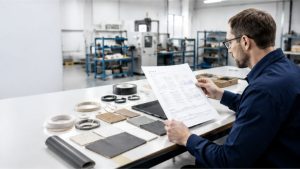

Selecting the right material is one of the most important steps in designing reliable industrial components. Temperature, electrical insulation, chemical exposure, mechanical stress and dimensional requirements can all affect the performance and service life of a finished product.
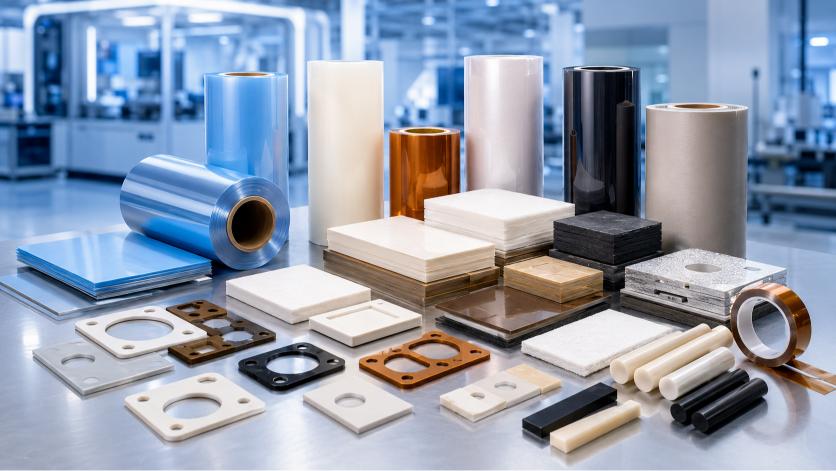
This high performance material selection guide introduces four major material groups used in demanding industrial applications: high performance films, thermal insulation materials, engineering plastics, and industrial accessories and converted components.
Whether you are developing insulation for electronic equipment, thermal barriers for battery systems, components for PCB lamination or sealing products for industrial furnaces, this guide will help you identify suitable material options for your application.
Why Material Selection Matters
Industrial components are often exposed to several operating challenges at the same time. A material may need to provide electrical insulation while also resisting heat, chemicals, pressure or mechanical wear.
Selecting a material based on only one property can lead to problems such as:
- Electrical insulation failure
- Thermal deformation
- Chemical degradation
- Dimensional instability
- Premature wear
- Delamination or cracking
- Reduced production efficiency
- Increased maintenance costs
A successful material selection process should evaluate the complete operating environment rather than focusing only on temperature resistance or price.
The following four material groups cover a wide range of solutions for electronics, lithium batteries, automotive equipment, solar PV modules, semiconductor manufacturing and general industrial systems.
1. High Performance Films
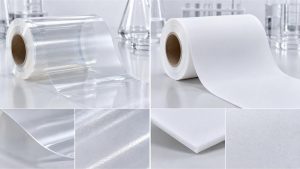
High performance films are lightweight, flexible and easy to convert into custom shapes. They are widely used for electrical insulation, thermal protection, surface release, masking and component separation.
PEN High Temperature Insulation Film
PEN film provides excellent dielectric strength, dimensional stability and temperature resistance. Compared with standard polyester films, it can offer improved performance in applications involving heat, moisture and mechanical stress.
Typical applications include:
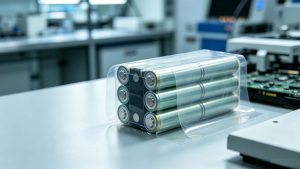
- Lithium battery packaging
- Motor and transformer insulation
- Solar PV module insulation
- Flexible electronic components
- Automotive electrical systems
- Power electronics
PEN film is particularly suitable when a thin, lightweight insulation material with good long-term stability is required.
PPS Insulation Film
PPS film offers outstanding mechanical strength, chemical resistance and thermal stability. It can maintain reliable performance in demanding environments where conventional insulation films may lose strength or dimensional accuracy.
Common uses include:
- Electric vehicle electronics
- Battery module insulation
- Inverters and power supplies
- High temperature motors
- Industrial sensors
- Electrical isolation components
PPS film is often selected for applications that require a combination of heat resistance, flame resistance and chemical durability.
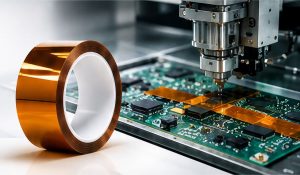
Polyimide Film
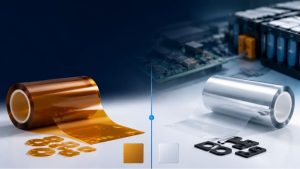
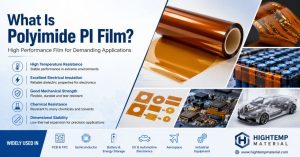
Polyimide film is one of the most widely used high temperature electrical insulation films. It provides excellent dielectric strength, thermal stability and flexibility.
It is commonly used for:
- PCB and FPC manufacturing
- SMT reflow masking
- Motor and transformer insulation
- Lithium battery insulation
- Semiconductor processing
- Aerospace electronics
- High temperature adhesive tapes
Polyimide film can also be coated, laminated or die-cut into custom insulation components.
PTFE Film and Sheet
PTFE provides exceptional chemical resistance, low friction, non-stick performance and stable electrical properties. Depending on the grade and processing conditions, PTFE can be used in applications with continuous exposure to elevated temperatures.
Typical applications include:
- Chemical-resistant liners
- Electrical insulation
- Low-friction sliding components
- Sealing and gasketing
- Release surfaces
- Industrial equipment protection
PTFE is particularly useful when chemical resistance and low surface adhesion are more important than mechanical rigidity.
Release Films
Release films create a controlled separation layer between materials during pressing, lamination, molding and curing processes.
Available solutions may include:
- Double-sided matte release film
- TPX release film
- Three-in-one release film
- PET release film
- Fluoropolymer release film
- Surface-treated functional film
Release films are commonly used in PCB/FPC lamination, composite molding, adhesive processing and electronic component manufacturing.
Functional Coated Films
Functional films receive special surface treatments or coatings to provide additional performance, such as:
- Electrical insulation
- Surface protection
- Anti-static performance
- Controlled release
- Adhesion improvement
- Flame resistance
- Optical or anti-glare properties
The correct coating should be selected according to the substrate, processing temperature, adhesive system and required release force.
2. Thermal and Insulation Materials
Thermal insulation materials reduce heat transfer, protect nearby components and improve energy efficiency. They are available as boards, papers, cotton, flexible pads and custom die-cut parts.
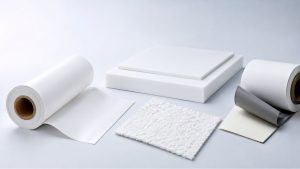
Ceramic Fiber Board
Ceramic fiber board combines low thermal conductivity with high temperature resistance and structural stability. Certain grades can be used in environments reaching approximately 1260°C to 1400°C, depending on material composition and operating conditions.
Common applications include:
- Industrial furnace linings
- Kiln insulation
- Heat shields
- High temperature equipment
- Combustion chamber insulation
- Thermal processing machinery
Ceramic Fiber Paper
Ceramic fiber paper is thin, lightweight and flexible. It is suitable for applications where rigid insulation boards cannot be installed.
Typical uses include:
- Furnace and kiln seals
- Expansion joint insulation
- High temperature gaskets
- Appliance insulation
- Heat barrier layers
- Thermal wrapping
Some ceramic fiber paper grades are designed for temperatures up to approximately 1280°C. Actual performance should always be confirmed under specific operating conditions.
Ceramic Fiber Cotton
Ceramic fiber cotton provides low thermal conductivity and excellent heat retention. Its flexible structure allows it to fill irregular spaces and wrap complex equipment.
Applications include:
- Furnace cavity filling
- Pipe insulation
- High temperature equipment repair
- Heat treatment systems
- Industrial boilers
- Thermal insulation modules
Rock Wool and Aluminum Silicate Board
Rock wool and aluminum silicate insulation boards provide fire resistance, sound insulation and heat preservation.
They are often used for:
- Industrial equipment insulation
- Building fire protection
- Heating systems
- Pipeline insulation
- Acoustic control
- Machinery enclosures
The correct board density and thickness should be selected according to the required temperature range, structural load and insulation target.
Mica Insulation Sheet
Mica sheet provides excellent dielectric strength and high temperature resistance. Some mica-based products can perform at temperatures approaching 1000°C, depending on the mica type, binder and application conditions.
Typical uses include:
- Electric heating equipment
- Battery thermal barriers
- Power electronics
- Busbar insulation
- Home appliances
- High temperature electrical components
Mica sheets can be precision die-cut into washers, barriers, frames and customized insulation parts.
Aerogel Insulation Pad
Aerogel pads provide ultra-low thermal conductivity in a thin and lightweight structure. This makes them particularly valuable when installation space is limited.
Typical applications include:
- Lithium battery cell insulation
- Energy storage fire protection
- EV battery thermal barriers
- Industrial pipelines
- High temperature equipment
- Compact electronic systems
Aerogel insulation is frequently selected for battery packs where reducing heat propagation between cells is a critical design objective.
3. Engineering Plastics
Engineering plastics are used when a component requires mechanical strength, dimensional accuracy, electrical insulation, chemical resistance or wear resistance.
PEEK
PEEK offers high strength, excellent wear resistance and strong chemical durability. It is frequently selected for demanding applications where conventional plastics cannot maintain reliable performance.
Common applications include:
- Semiconductor equipment
- Aerospace components
- Chemical processing equipment
- Precision bearings
- Electrical connectors
- Medical and industrial components
PPS
PPS engineering plastic provides high temperature resistance, flame-retardant characteristics and excellent dimensional stability.
It is widely used for:
- Automotive electrical parts
- Pump and valve components
- Electronic housings
- Industrial connectors
- Battery system components
- Heat-resistant structural parts
PEI
PEI, also known by the common trade name ULTEM™, provides high strength, stiffness and heat resistance. It also offers good dimensional stability and electrical insulation performance.
Applications include:
- Electrical connectors
- Semiconductor tooling
- Aerospace interiors
- Medical equipment
- High temperature fixtures
- Precision mechanical parts
PTFE Engineering Plastic
PTFE rods, sheets and machined parts provide excellent chemical resistance, low friction and non-stick characteristics.
Typical PTFE components include:
- Bushings
- Valve seats
- Seals
- Guide rails
- Insulation blocks
- Chemical-resistant machine parts
POM
POM, commonly known as acetal, offers high stiffness, low friction and excellent wear resistance. It is suitable for precision parts requiring good dimensional accuracy.
Typical components include:
- Gears
- Rollers
- Bearings
- Sliding blocks
- Mechanical guides
- Precision fixtures
PVC
PVC offers good chemical resistance, electrical insulation and cost efficiency. It is commonly used in applications with moderate temperature requirements.
Typical uses include:
- Electrical insulation components
- Chemical tanks
- Equipment panels
- Pipe systems
- Protective covers
- General industrial parts
4. Industrial Accessories and Converted Components
In many applications, selecting a raw material is only the first step. The material may also need to be laminated, coated, cut, machined or converted into a finished component.
PCB Lamination Cushion Pads
High temperature cushion pads help distribute heat and pressure during PCB, CCL and FPC lamination.
They can help improve:
- Pressure uniformity
- Lamination consistency
- Surface quality
- Heat distribution
- Production stability
The correct cushion pad should be selected according to press temperature, pressure, recovery requirements and expected service cycles.
Separator Plates
Separator plates are used during PCB and multilayer lamination processes. Materials such as SUS630, 4120, 4310 and DILLIDUR steel may be selected according to hardness, flatness, surface quality and production requirements.
High-precision separator plates can support uniform pressure distribution and consistent lamination quality.
Tooling Plates
Tooling and carrier plates provide stable support for multilayer lamination, assembly and precision manufacturing.
Custom tooling plates can include:
- Machined holes
- Alignment features
- Positioning pins
- Custom thicknesses
- Special surface treatments
- Application-specific dimensions
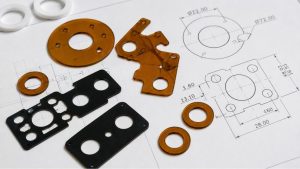
Die-Cut Parts
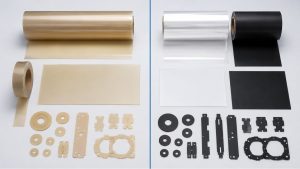
Films, foams, mica, PTFE, rubber and insulation sheets can be precision converted into customized parts.
Common die-cut products include:
- Insulation pads
- Gaskets
- Washers
- Frames
- Thermal barriers
- Protective films
- Sealing components
Custom converting can include roll-to-roll slitting, sheet cutting, kiss cutting, laminating, adhesive backing and precision die cutting.
High Temperature Tapes
High temperature tapes may use polyimide, fiberglass cloth, PTFE or other specialty substrates.
They are commonly used for:
- SMT masking
- Powder coating
- Electrical insulation
- Surface protection
- Composite processing
- Heat sealing
- Industrial assembly
Tape selection should consider the maximum processing temperature, exposure time, adhesive residue, chemical contact and required peel strength.
High Temperature Sealing Rope
Ceramic fiber rope and other heat-resistant packing ropes provide flexible sealing for furnace doors, ovens, boilers and thermal processing equipment.
Key selection factors include:
- Operating temperature
- Rope diameter
- Compression requirement
- Chemical exposure
- Abrasion level
- Required flexibility
How to Select the Right High Performance Material
A practical material selection process should evaluate the following factors.
1. Operating Temperature
Identify both the continuous operating temperature and short-term peak temperature. A material that survives brief heat exposure may not be suitable for continuous use at the same temperature.
2. Electrical Insulation Requirements
For electrical and electronic applications, consider dielectric strength, volume resistance, arc resistance, thickness and long-term insulation stability.
PEN, PPS, polyimide, mica and ceramic fiber products are commonly evaluated for electrical insulation applications.
3. Thermal Insulation Performance
When reducing heat transfer is the priority, compare thermal conductivity, thickness, density and installation space.
Aerogel pads are suitable for thin thermal barriers, while ceramic fiber and rock wool products are often used for thicker industrial insulation systems.
4. Chemical Resistance
Identify all chemicals, oils, solvents, cleaning agents and processing fluids that may contact the material.
PTFE, PEEK and PPS generally provide strong chemical resistance, but compatibility should be verified using the actual chemical concentration, temperature and exposure duration.
5. Mechanical Performance
Consider tensile strength, compression, stiffness, wear resistance, impact, flexibility and dimensional stability.
Rigid engineering plastics may be suitable for structural components, while films and flexible insulation materials are better for wrapping, layering and thin electrical barriers.
6. Component Shape and Converting Method
Determine whether the material will be supplied as a roll, sheet, rod, board, tape or finished component.
Custom converting may be necessary when the application requires:
- Tight dimensional tolerances
- Complex outlines
- Adhesive backing
- Multilayer lamination
- Clean edges
- Registration holes
- High-volume production
7. Testing and Compliance
The final material should be evaluated according to relevant industry requirements, which may include flame resistance, electrical performance, environmental compliance and application-specific safety standards.
Prototype sampling and application testing are recommended before full production.
Quick Material Selection Reference
| Application Requirement | Recommended Material Options |
|---|---|
| Electrical insulation | PEN film, PPS film, polyimide film, mica sheet and ceramic fiber products |
| Thin thermal insulation | Aerogel pad, mica sheet and ceramic fiber paper |
| High temperature insulation | Ceramic fiber board, ceramic fiber paper, ceramic fiber cotton and mica |
| Chemical resistance | PTFE, PEEK, PPS, PVC and selected ceramic fiber products |
| Low friction and wear resistance | PTFE, POM and PEEK |
| PCB/FPC lamination | Release film, cushion pad, separator plate, tooling plate and die-cut insulation parts |
| Battery thermal protection | Aerogel pad, mica sheet, ceramic fiber paper and custom insulation components |
| High temperature masking | Polyimide tape, PTFE tape and fiberglass cloth tape |
| Furnace and equipment sealing | Ceramic fiber rope and high temperature gasket materials |
Material recommendations are general guidelines. The final selection should be confirmed according to the actual temperature, pressure, chemical environment, dimensions and required service life.
Typical Industrial Applications
The materials in this high performance material selection guide can be used across a broad range of industries.
PCB and FPC Lamination
Release films, cushion pads, separator plates and tooling plates help control pressure, heat transfer and surface quality during multilayer lamination.
Lithium Batteries and Energy Storage
Aerogel, mica, ceramic fiber paper, PEN film and custom insulation parts can support electrical isolation, cell separation and thermal propagation protection.
EV and Automotive Electronics
PPS, PEEK, polyimide film and thermal insulation materials are used in battery packs, inverters, sensors, motors and power control systems.
Semiconductor Manufacturing
High-purity engineering plastics, insulation films and precision-machined components are used in fixtures, carriers and processing equipment.
Solar PV Modules
PEN film, release films, insulation films and high temperature tapes support module manufacturing, electrical isolation and long-term environmental protection.
Industrial Furnaces and Heat Treatment
Ceramic fiber board, ceramic fiber paper, ceramic fiber cotton, rock wool and sealing rope help reduce heat loss and protect equipment.
Aerospace and Defense
PEEK, PEI, polyimide film and advanced insulation materials support lightweight components exposed to heat, chemicals and demanding mechanical conditions.
General Industrial Equipment
Engineering plastics, gaskets, tapes, insulation sheets and custom die-cut parts are used in machinery, electrical systems, chemical equipment and manufacturing lines.
Frequently Asked Questions
What is a high performance material?
A high performance material is designed to maintain important electrical, thermal, chemical or mechanical properties under demanding operating conditions. Examples include polyimide film, PTFE, PEEK, PPS, mica, aerogel and ceramic fiber.
Which material is best for high temperature electrical insulation?
The best option depends on the operating temperature, voltage, thickness and mechanical requirements. Polyimide film, mica sheet, PPS film, PEN film and ceramic fiber products are commonly considered for high temperature electrical insulation.
What is the difference between thermal insulation and electrical insulation?
Thermal insulation reduces heat transfer, while electrical insulation prevents unwanted electrical current flow. Some materials, such as mica and certain high performance films, can provide both thermal and electrical protection.
Can these materials be customized?
Yes. Films, sheets, tapes, foams, mica, rubber and engineering plastics can be slit, laminated, coated, machined or die-cut according to custom drawings and application requirements.
Do I need to test the material before placing a production order?
Yes. Application testing is strongly recommended because actual performance can be influenced by temperature cycles, pressure, chemicals, installation method and component design.
Conclusion
The right material can improve product reliability, extend service life and reduce production risks. However, material selection should always be based on the complete operating environment.
High performance films are suitable for thin electrical insulation and surface protection. Ceramic fiber, mica and aerogel provide thermal protection across different temperature ranges. Engineering plastics deliver strength, wear resistance and dimensional stability, while precision-converted components help integrate these materials into the final application.
If you are unsure which material is suitable for your project, provide your operating temperature, dimensions, thickness, application environment, required properties and estimated quantity. Our technical team can help compare material options and develop a customized solution.
View and Download Our High Performance Material Guide
For a faster overview of available films, insulation materials, engineering plastics and industrial components, view our complete High Performance Material Selection Guide below.
Click the guide to open the full-size version or save it for future material selection and project reference.