


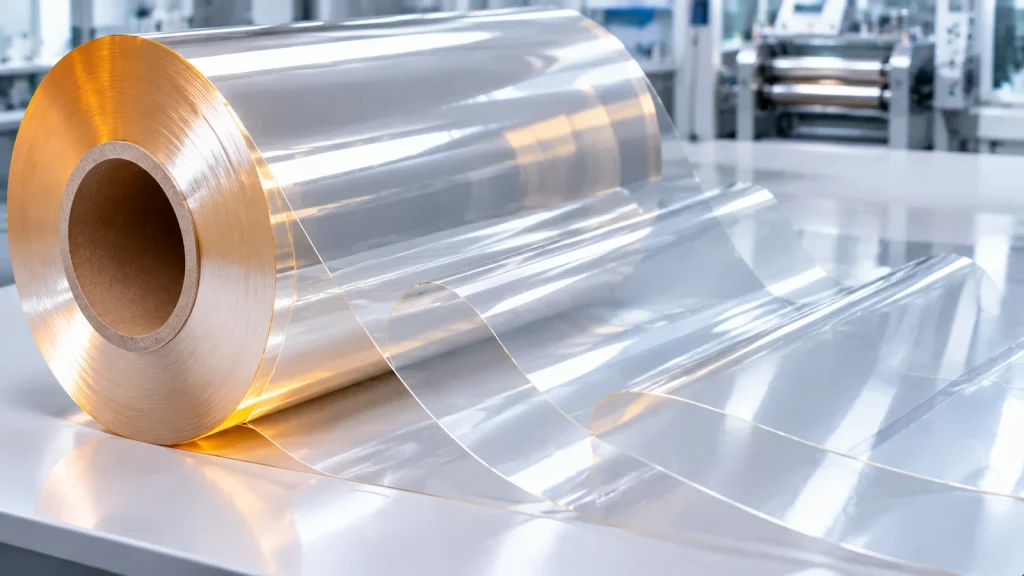
Mylar® is a well-known trade name associated with polyester film, while PET (polyethylene terephthalate) is the polymer family name used across the wider market. In engineering and procurement, the distinction matters: a buyer may ask for “Mylar film,” but the actual specification should identify the required PET film construction, grade, thickness, surface, electrical properties, thermal exposure and converting format.
Oriented PET film is widely used where a thin, flexible and mechanically robust dielectric barrier is needed. It can be supplied as rolls or sheets and converted into insulation spacers, barriers, liners, labels, covers and die-cut components. However, not every PET grade is interchangeable. Film orientation, heat setting, additives, surface treatment, coating, thickness and manufacturing history can influence its behavior in the finished assembly.
This guide explains the material properties that matter, how to compare PET with other insulation films, where polyester film is used, what can go wrong, and which tests and RFQ details help engineers qualify the right construction.
1. What Is Mylar Polyester Film?
Polyester film used for industrial insulation is commonly made from polyethylene terephthalate (PET). Many engineering films are biaxially oriented: the film is stretched in both the machine direction (MD) and transverse direction (TD), then heat-set to develop a useful balance of tensile strength, stiffness, clarity and dimensional behavior.
“Mylar” is a trademark, not a universal technical grade designation. In an RFQ, it is better to state “PET polyester film” and then specify the required properties. If a project requires a named brand or approved source, identify that separately. A generic PET film should not be represented as a branded Mylar product without authorization and traceability.
Why PET is used
- Electrical insulation: PET is a dielectric polymer and can function as a thin electrical barrier when the grade, thickness and assembly design are suitable.
- Mechanical strength: Oriented film can provide useful tensile strength, stiffness and handling durability at relatively low thickness.
- Dimensional consistency: Film can be manufactured in controlled gauges and converted into repeatable roll, sheet or component formats; actual stability depends on grade and thermal history.
- Converting flexibility: PET can be slit, sheeted, laminated and die cut, subject to the selected construction and process limits.
- Surface options: Clear, white, black, matte, treated or coated variants may be available, but their properties are not automatically equivalent.
For product-specific options, review HighTemp Material’s clear PET electrical isolation film and black matte insulation PET film. Confirm the current TDS and grade before design approval.
2. PET Polyester Film Material Structure and Manufacturing
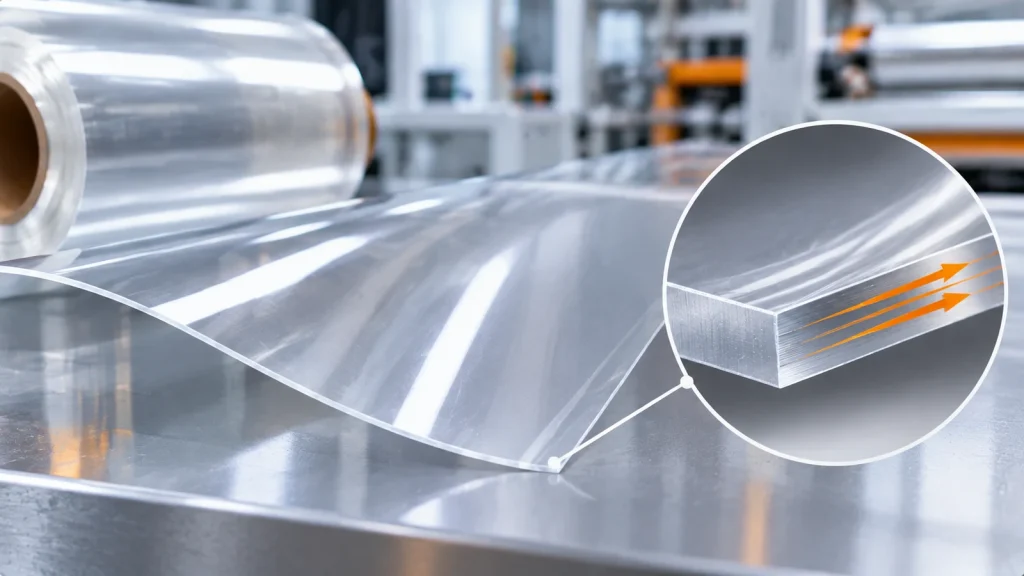
PET is a thermoplastic polyester. Film properties are influenced by resin chemistry, molecular weight, orientation ratio, heat-setting conditions, additives and any subsequent surface treatment or coating. A film’s nominal polymer name alone is therefore insufficient to define its performance.
2.1 Biaxial orientation
During biaxial orientation, the film is stretched in MD and TD. This process aligns polymer chains and changes mechanical and dimensional behavior. MD and TD properties may differ, so directional data should be reviewed when a part is narrow, highly stressed, slit into strips or exposed to heat.
2.2 Heat setting and dimensional behavior
Heat setting is used to stabilize the oriented film. It does not mean the film has unlimited thermal stability. When PET is exposed to elevated temperature, shrinkage, relaxation, curling or distortion may occur depending on the grade, restraint, exposure time, temperature profile and prior processing. The relevant acceptance limit must be agreed for the actual application.
2.3 Surface treatment and coatings
Surface treatment may be used to improve printability, coating or adhesive bonding. Matte finishes, primers, anti-block additives and functional coatings can change friction, haze, surface energy, dielectric behavior or converting performance. Specify which side is treated and whether the surface must remain compatible with adhesive, ink, potting compound or another layer.
3. Core Mylar / PET Film Material Properties
Engineers should assess the complete property set rather than selecting film by a single headline value. The following table describes general PET film characteristics; it is not a substitute for a grade-specific technical data sheet.
| Property | General engineering relevance | What to verify for the selected grade |
|---|---|---|
| Dielectric strength | Resistance to electrical breakdown under a specified test arrangement. | Test method, specimen thickness, conditioning, electrode geometry and measured value. |
| Volume resistivity | Indicates resistance to current flow through the bulk material. | Test conditions, temperature, humidity and grade-specific data. |
| Dielectric constant and dissipation factor | Important in capacitive, high-frequency or signal-sensitive designs. | Frequency, temperature, humidity and test method. |
| Tensile strength and elongation | Affect web handling, converting, installation and resistance to tearing. | MD and TD values, specimen preparation and test speed. |
| Dimensional stability | Controls fit and alignment after heating or environmental exposure. | MD/TD shrinkage or dimensional change under defined conditions. |
| Thickness and tolerance | Influence dielectric design, stack-up, fit and material consumption. | Nominal gauge, tolerance, measurement method and cross-web variation. |
| Moisture behavior | Can affect electrical and dimensional behavior in some environments. | Conditioning and performance after humidity exposure. |
| Surface condition | Influences adhesion, printing, friction, appearance and lamination. | Gloss/matte, haze, surface energy, cleanliness and treated side. |
| Chemical compatibility | Relevant where cleaners, oils, solvents, electrolytes or process chemicals contact the film. | Actual chemical, concentration, temperature, duration and stress condition. |
| Thermal behavior | Determines suitability for continuous and short-duration process exposure. | Grade-specific thermal limits, shrinkage, aging and retained properties. |
Do not confuse a typical property with a design allowable
A dielectric-strength value measured on a laboratory specimen is not automatically the allowable working voltage of a finished product. Design also depends on thickness distribution, defects, edge geometry, creepage and clearance, pressure, humidity, temperature, aging, partial-discharge risk and applicable product standards. Use the test value as one input to engineering review, not as a stand-alone voltage rating.
4. Electrical and Thermal Performance
4.1 Electrical insulation performance
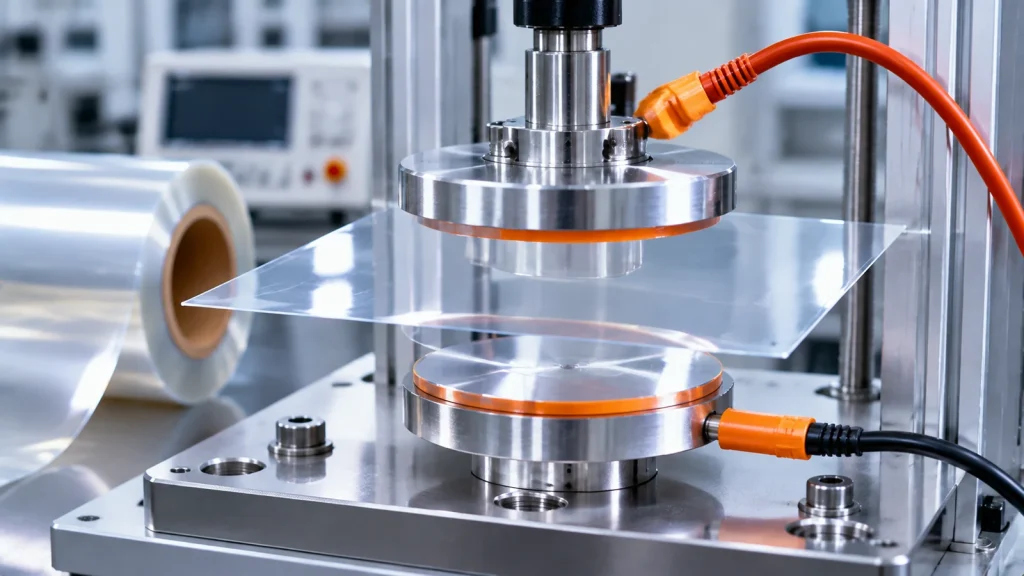
PET film is used as a dielectric barrier in many electrical and electronic assemblies. Its suitability depends on the electrical stress, film thickness, field concentration, surface condition, mechanical support and environmental exposure. Thin films can be vulnerable to puncture from burrs, sharp corners, particles, wrinkles or assembly pressure even when the base material has good intrinsic dielectric properties.
For electrical qualification, request dielectric breakdown data and volume resistivity where relevant, with the test method and conditioning clearly stated. If the film is part of a multilayer construction, evaluate the full stack, including adhesive, coating, substrate and interfaces.
4.2 Thermal limits and exposure
PET should not be selected solely because a supplier describes it as “heat resistant.” Thermal suitability depends on the exact grade, duration, load, restraint, cycling profile and the property that must be retained. A brief process peak is different from continuous service at an elevated temperature. Dimensional shrinkage, embrittlement, discoloration, adhesive degradation and loss of dielectric margin may occur under different conditions.
Where an application involves soldering, reflow, hot pressing, motor operation or repeated thermal cycling, obtain grade-specific data and conduct a representative assembly trial. If the required thermal envelope exceeds the verified PET grade capability, compare alternatives such as PI, PEN or PPS rather than stretching a PET specification beyond its evidence.
4.3 Moisture, chemicals and aging
Although PET generally has relatively low moisture uptake compared with many hydrophilic polymers, moisture conditioning can still affect measured electrical behavior and interfaces. Chemical resistance must be assessed against the actual exposure, not a generic “good resistance” statement. Evaluate cleaning agents, oils, solvents, adhesives, battery-related chemicals and process residues as applicable.
5. Thickness, Surface and Grade Selection
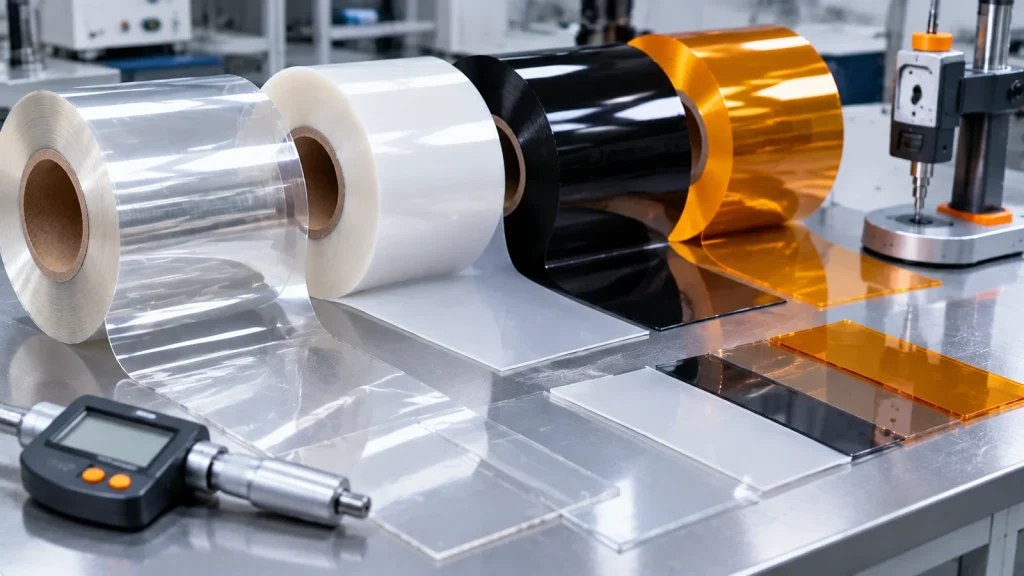
Thickness selection is a system decision. A thicker film may improve handling robustness or increase the insulation distance, but it can affect flexibility, fit, forming, die-cut edge quality and total stack height. A thinner film may support compact designs but can be more sensitive to puncture, wrinkles and handling damage.
5.1 Define the required thickness
- Start with the electrical design and required insulation function.
- Consider mechanical puncture risk, edge contact, assembly pressure and abrasion.
- Account for total stack-up, including adhesive, release liner if retained, coatings and adjacent materials.
- Specify nominal thickness and acceptable tolerance, not just a broad range.
- Confirm whether thickness is measured on the base film or the complete laminate.
5.2 Select the surface and color
Clear film may be useful where visual inspection or transparency is required. White or opaque film can improve visual contrast in some assemblies. Black matte film may reduce glare or provide a particular appearance, but color and finish alone do not establish electrical or thermal performance. Confirm pigment/additive compatibility, surface finish, optical properties and the exact grade.
5.3 Compare film constructions
| Construction | Potential benefit | Key engineering check |
|---|---|---|
| Uncoated clear PET | Transparent, flexible film format for general insulation and protective barriers. | Electrical grade, surface condition, thermal exposure and dimensional change. |
| White / opaque PET | Visual contrast and opaque barrier. | Pigment/additive effects, dielectric data and thickness consistency. |
| Black matte PET | Low-gloss appearance and reduced visual reflection. | Surface treatment, coating, colorant and electrical properties. |
| Adhesive-backed PET | Can simplify positioning and assembly. | Adhesive chemistry, bond surface, peel/shear, aging and service temperature. |
| Flame-retardant PET | Can address specified flammability requirements where the exact grade is qualified. | Current certification file, thickness range, color, end-use recognition and production traceability. |
| Coated / treated PET | Can improve bonding, printability or process functionality. | Coating identity, side orientation, compatibility and retained properties. |
HighTemp Material lists product-specific options including clear PET electrical isolation film, black matte PET insulation film and a flame-retardant PET insulation film. For flame-retardant projects, verify the exact grade, thickness and applicable UL file or certification status directly before making a compliance claim.
6. Industrial Applications of Mylar Polyester Film
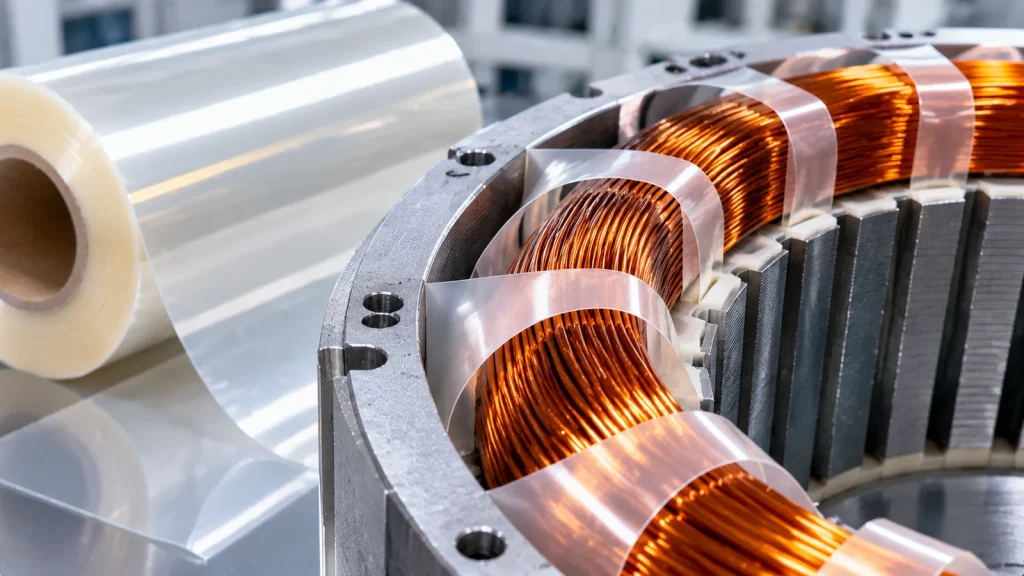
6.1 Electrical and electronic insulation
PET film can be used as slot liners, phase barriers, coil separators, insulating covers, terminal barriers and protective dielectric layers where its grade and thermal envelope are suitable. In motors and transformers, the film must be assessed as part of the complete insulation system, including winding temperature, mechanical movement, impregnation varnish, sharp edges and applicable insulation-system requirements.
6.2 Battery packs and energy storage
In battery modules and packs, PET may be used for insulating barriers, cell separators at the module level, protective sheets, labels or formed/die-cut components. It is not a substitute for the electrochemical separator inside a lithium-ion cell. Battery-pack use requires review of voltage, creepage, abrasion, electrolyte or coolant exposure, flame behavior, thermal propagation strategy and assembly geometry.
6.3 PCB, FPC and electronics manufacturing
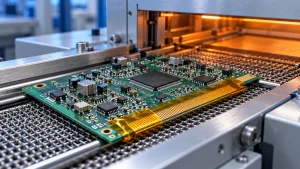
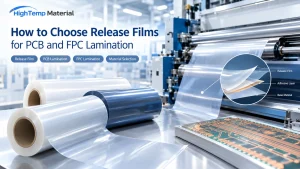
PET film may be used for insulation, temporary protection, process separation, release applications or converted components in electronics manufacturing. Do not confuse a PET electrical insulation film with a PET release liner: release coatings and surface behavior determine whether a film is suitable for separation during lamination. For PCB/FPC process separation, see PET release film for PCB/FPC lamination.
6.4 Power electronics and industrial equipment
Potential uses include insulating covers, barriers between conductive parts, protective overlays and custom spacers. The correct grade depends on operating voltage, local temperature, vibration, contamination, humidity and assembly method. Where flame behavior is part of the product requirement, use a specifically qualified flame-retardant grade rather than assuming standard PET meets the requirement.
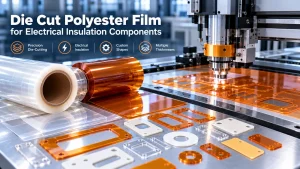
6.5 Die-cut and adhesive-backed components
Film can be converted into washers, pads, windows, barriers and shaped insulating components. Adhesive-backed constructions can assist placement, but the adhesive becomes part of the functional system and must be qualified for substrate adhesion, aging, temperature and electrical requirements.
7. Converting: Slitting, Sheeting, Laminating and Die Cutting
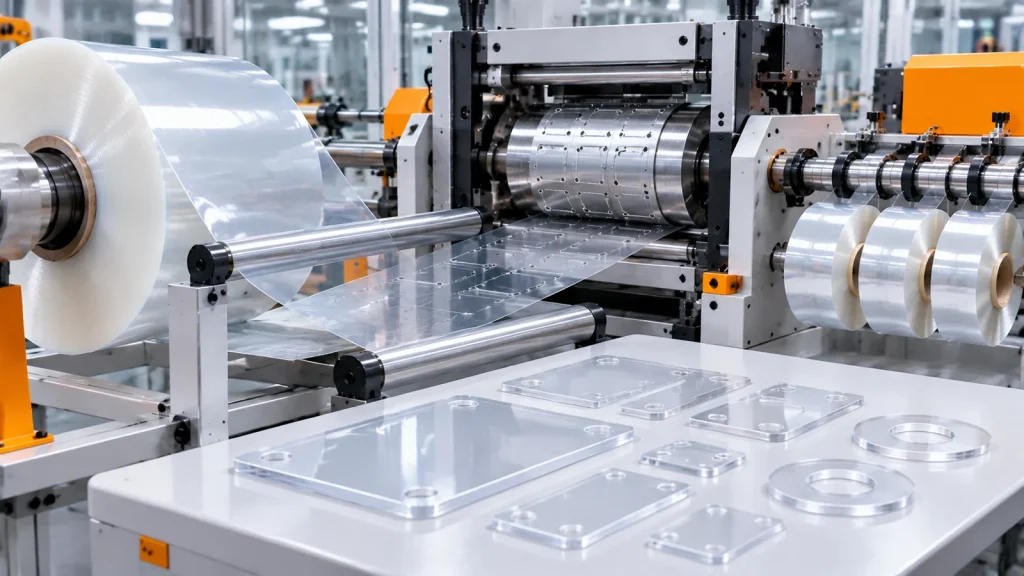
Material selection and converting design should be developed together. A film that performs well as a flat sheet may behave differently after slitting, winding, laminating or die cutting. Web tension, roller condition, blade sharpness, tool clearance, liner release and static control can affect finished-part quality.
| Process | Typical output | Important controls |
|---|---|---|
| Slitting | Narrow rolls to specified widths. | Width tolerance, edge quality, winding tension, telescoping and roll cleanliness. |
| Sheeting | Flat sheets for manual or automated handling. | Length/width, squareness, curl, static and surface protection. |
| Die cutting | Custom gaskets, washers, barriers and shaped parts. | Tool design, edge quality, dimensional tolerance, nesting and part release. |
| Lamination | Multilayer film, foam or adhesive constructions. | Adhesive compatibility, bubbles, alignment, bond strength and aging. |
| Kiss cutting | Adhesive-backed parts retained on a release liner. | Cut depth, liner integrity, weeding and dispensing performance. |
HighTemp Material’s precision slitting service, custom die-cutting service and precision converting service provide relevant starting points for discussing roll, sheet and finished-part formats. Final capability and tolerances should be confirmed against the drawing and selected material.
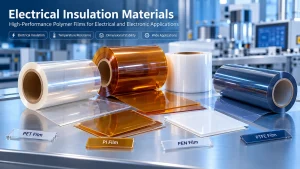
8. PET vs. PI, PEN and PPS: How to Compare Insulation Films
No single polymer is best for every insulation application. The table below is a qualitative screening guide, not a substitute for comparing specific grades and test reports.
| Material | General positioning | Typical selection considerations | What must be verified |
|---|---|---|---|
| PET | Balanced mechanical, electrical and converting properties for many general-purpose film insulation uses. | Cost, clarity, availability, thickness and processability. | Thermal exposure, dimensional stability, dielectric data and grade. |
| PI | Often considered for higher-temperature electrical and process environments. | Thermal requirements, flexibility, cost and process compatibility. | Exact grade, electrical properties, moisture behavior and system qualification. |
| PEN | Can offer a different balance of thermal and mechanical properties compared with PET. | Dimensional stability, temperature profile and application-specific performance. | Grade-specific thermal aging, dielectric and mechanical data. |
| PPS | Used where a higher-performance engineering polymer construction is required. | Rigidity, temperature, chemical environment and forming/converting needs. | Film availability, grade data, brittleness/flexibility and actual assembly behavior. |
For a broader comparison, read HighTemp Material’s thermal cycling of insulation films guide and electrical insulation film thickness selection guide.
9. Common Selection Errors and Failure Risks
| Risk or error | Possible consequence | Prevention / verification |
|---|---|---|
| Specifying only “Mylar” | Different suppliers may quote different PET grades or constructions. | Specify polymer, grade, thickness, finish, color, tolerance and required test data. |
| Using a generic temperature claim | Film shrinkage, distortion or property loss in service. | Define continuous and peak exposure, duration, cycles and restraint; validate actual grade. |
| Relying on dielectric strength alone | Finished assembly may fail at edges, defects or interfaces. | Review voltage design, thickness distribution, edge condition, creepage and full assembly testing. |
| Ignoring MD/TD behavior | Unexpected shrinkage, curl or dimensional mismatch. | Request directional data and orient parts consistently where relevant. |
| Choosing adhesive without substrate review | Edge lift, residue, creep or bond failure. | Test peel, shear, aging and compatibility on actual substrates. |
| Insufficient edge protection | Film may be punctured by burrs, sharp corners or rough surfaces. | Deburr substrates, review radii and inspect converted edges. |
| Uncontrolled storage and handling | Dust, scratches, blocking, static attraction or roll damage. | Define packaging, cleanliness, humidity and storage conditions. |
| Unverified flame-retardant claim | Non-compliance with end-product requirements. | Verify exact UL file, grade, thickness, color and recognition conditions. |
10. Testing and Qualification for PET Insulation Film
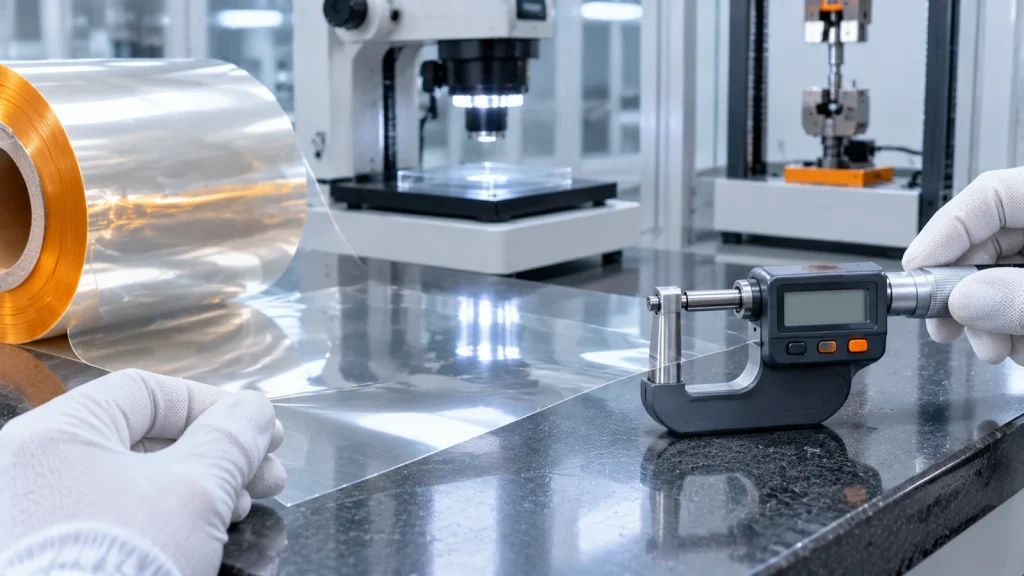
Build a qualification plan around the failure modes and requirements of the actual application. Standards below are examples of commonly referenced methods; confirm the current edition, scope and specimen requirements with the testing laboratory and your compliance team.
| Test / evaluation | Why it matters | Example reference / notes |
|---|---|---|
| Thickness measurement | Confirms gauge and variation across the roll or sheet. | Use an agreed calibrated method and sampling plan. |
| Dielectric breakdown | Evaluates electrical breakdown under defined conditions. | ASTM D149; test conditions and specimen thickness must be reported. |
| Volume resistivity | Assesses bulk electrical resistance where required. | ASTM D257; conditioning and electrode arrangement matter. |
| Tensile properties | Supports web handling and mechanical design evaluation. | ASTM D882 for thin plastic sheeting; report MD and TD where relevant. |
| Dimensional change / shrinkage | Checks fit after thermal exposure. | Define temperature, duration, restraint, direction and measurement procedure; ASTM D1204 or ASTM D2732 may be relevant depending on the test objective. |
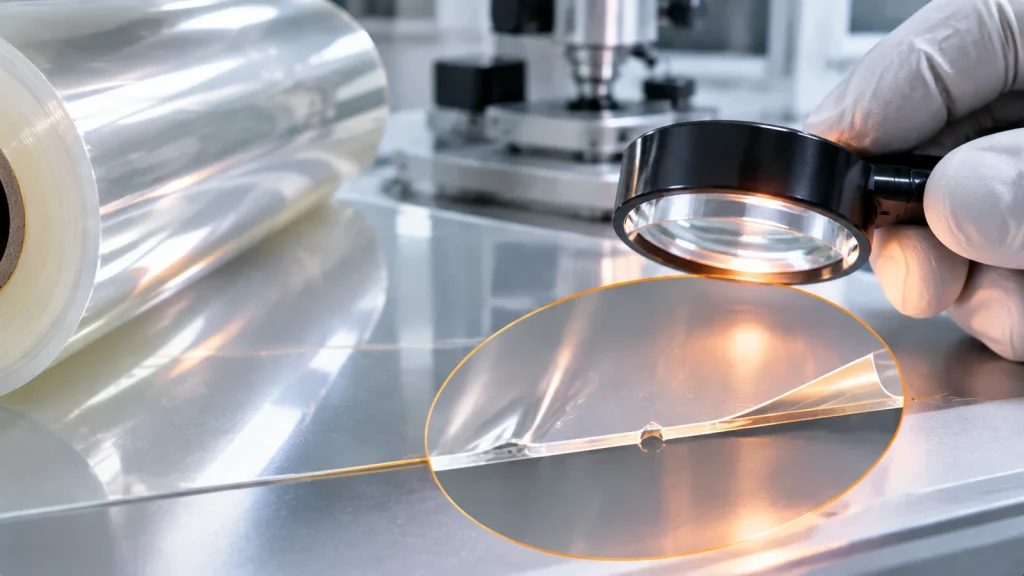
| Optical / surface inspection | Detects haze, inclusions, scratches, gels, contamination and finish variation. | ASTM D1003 may be relevant for haze/transmittance of transparent plastics. |
| Adhesion and aging | Checks the complete adhesive construction. | Choose peel, shear, tack and aging methods suitable for the adhesive and substrate. |
| Flammability | Confirms a specified flame classification where required. | Use the exact applicable standard and certified grade; do not infer a rating from polymer type. |
| Assembly validation | Confirms the film works in the actual component. | Test under representative voltage, temperature, pressure, humidity, vibration and chemical exposure. |
Recommended qualification sequence
- Review the application drawing, electrical design and environmental profile.
- Confirm material identity, grade, thickness, finish and lot traceability.
- Review supplier TDS, SDS and relevant certification documents.
- Measure incoming thickness, visual quality and dimensional condition.
- Run material-level electrical, mechanical and thermal tests as required.
- Convert representative samples using the intended production process.
- Validate finished parts in the actual assembly and document acceptance criteria.
- Approve the specification and control changes to grade, source, thickness or process.
11. How to Specify Mylar Polyester Film: Engineering RFQ Checklist
A clear RFQ reduces ambiguity and makes supplier responses easier to compare. Include as many of the following details as are available:
- Material identity: PET polyester film, requested brand/grade if mandatory, and approved alternatives if allowed.
- Application: motor, transformer, battery module, PCB/FPC, power electronics, appliance or other assembly.
- Electrical requirements: operating voltage, dielectric test requirement, resistivity or dielectric constant requirements, and applicable product standard.
- Thermal profile: continuous temperature, peak temperature, exposure duration, cycle count and thermal cycling profile.
- Thickness: nominal thickness, tolerance, whether base film or total laminate thickness is specified.
- Format: master roll, slit roll, sheet, adhesive-backed roll or finished die-cut part.
- Dimensions: roll width, length, core, outside diameter, sheet size or part dimensions.
- Surface and appearance: clear, white, black, matte, treated side, gloss/haze or cleanliness requirements.
- Adhesive: single/double-sided, substrate, bond strength, liner type and aging requirements.
- Drawing and tolerances: PDF/DXF/DWG or other controlled drawing, critical dimensions and inspection method.
- Compliance: required UL recognition, flame rating, RoHS/REACH declarations or customer-specific approvals, as applicable.
- Quantity: prototype quantity, initial order quantity, annual usage and forecast.
- Packaging and delivery: roll protection, clean packaging, labeling, destination and requested delivery schedule.
12. Request a Mylar / PET Polyester Film Quote
Are you selecting PET polyester film for electrical insulation, electronics manufacturing or a custom industrial component? HighTemp Material can discuss PET film formats and related converting options, including slitting, sheet cutting, laminating and die-cut parts, subject to material and drawing review.
To help us assess your requirement, please provide the application, operating temperature, electrical requirements, thickness, dimensions, preferred color or surface, drawing, applicable test standards and estimated quantity. If you are not certain which PET construction is suitable, share the operating conditions and we can review the available information with you.
Request a technical review or quotation: Discuss PET film and precision converting or inquire about PET electrical insulation film.
RFQ form placement: Insert your Fluent Forms shortcode below this CTA after creating or selecting the dedicated Mylar/PET RFQ form. Replace the placeholder with the real shortcode; do not publish the placeholder.
Suggested RFQ form fields
- Name, business email, company, country/region and phone (optional).
- Material / grade preference and application.
- Operating temperature (continuous and peak), voltage and required electrical properties.
- Film thickness, tolerance, color, finish and surface treatment.
- Required format: roll, sheet, slit roll, adhesive-backed film or die-cut part.
- Dimensions, drawing upload and critical tolerances.
- Applicable test standards / certification requirements.
- Prototype quantity, order quantity, annual demand and target delivery date.
- Additional technical notes and consent to be contacted about the RFQ.
13. Frequently Asked Questions
1. Is Mylar the same as PET polyester film?
Mylar is a trademark associated with polyester film products, while PET is the polymer name. Not every PET film is a Mylar-branded product. For procurement, specify the exact grade and properties required.
2. What are the main properties of Mylar polyester film?
Depending on grade and construction, PET film can offer electrical insulation, tensile strength, stiffness, clarity, dimensional consistency and converting flexibility. Confirm actual values from the selected grade’s TDS and test reports.
3. Is PET film suitable for electrical insulation?
PET is used in many electrical insulation applications, but suitability depends on voltage, thickness, thermal conditions, mechanical stress, environment and the complete insulation design. Validate the film in the finished assembly.
4. What temperature can Mylar polyester film withstand?
There is no single temperature limit that applies to every PET film. Thermal performance depends on grade, duration, load, restraint and required retained properties. Ask for grade-specific data and test the actual thermal profile.
5. What thicknesses are available for PET insulation film?
Availability depends on the product and supplier. HighTemp Material’s current product pages list different thickness ranges for individual PET constructions; confirm the exact range and tolerance for the requested grade rather than assuming one range applies to all PET films.
6. Can PET film be supplied in black, white or matte finishes?
Yes, different PET constructions may be available in clear, white, black or matte forms. Color and surface finish can involve additives or coatings, so verify electrical, thermal, optical and adhesive properties for the exact version.
7. Can Mylar / PET film be die cut into custom insulation parts?
Suitable PET films can be slit, sheeted, laminated and die cut into custom components. Feasibility and achievable tolerances depend on thickness, material construction, geometry, adhesive and production method. Submit a controlled drawing for review.
8. What information should I include when requesting a PET film quotation?
Provide application, material or grade preference, thickness, dimensions, format, electrical and thermal requirements, surface/adhesive needs, drawing, applicable standards, quantity and delivery target.
Engineering Disclaimer
This article provides general material-selection guidance and is not a grade certification, design approval or guarantee of performance. PET film properties vary by manufacturer, grade, thickness, orientation, surface treatment and processing history. All critical electrical, thermal, mechanical, chemical and flammability requirements must be verified using current grade-specific documentation and representative testing of the finished assembly.