


Table of Contents
1. Quick Answer
Choose a high-temperature polyimide tape rated for your process temperature, with theright adheslve for your application appropriate thiclnecs for performance needs, and proven chemical and mechanical stablity for rellable results in SMT masking or electrical insulation.
2. What Is High-Temperature Polyimide Tape?
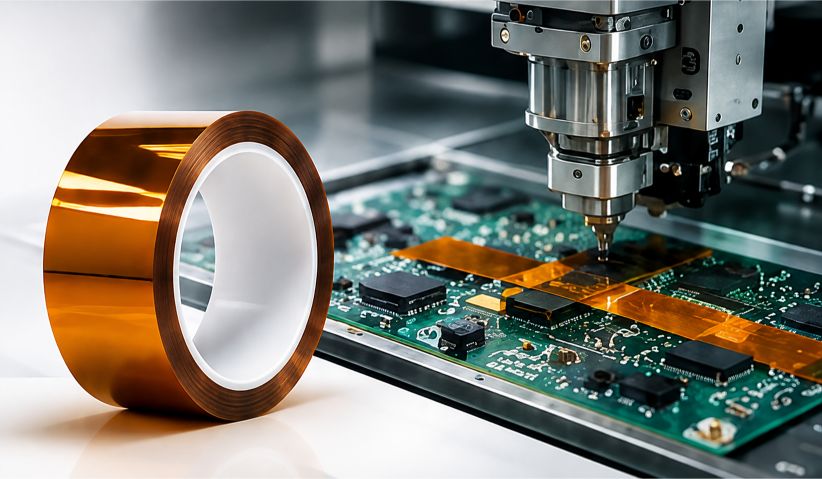
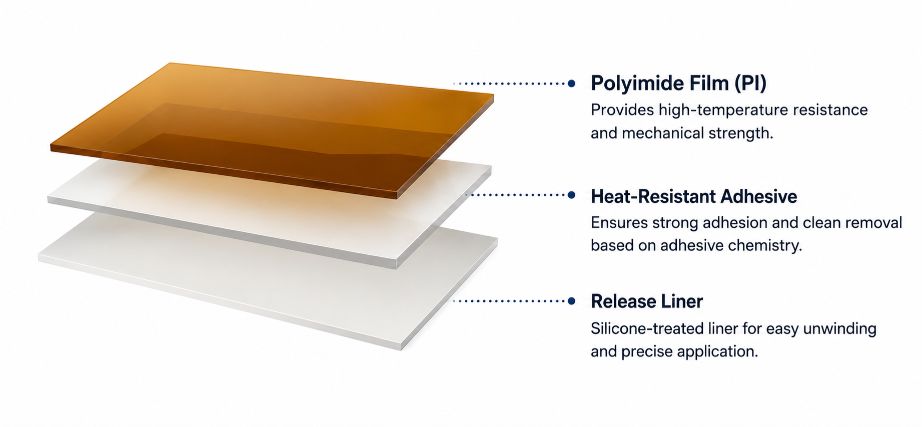
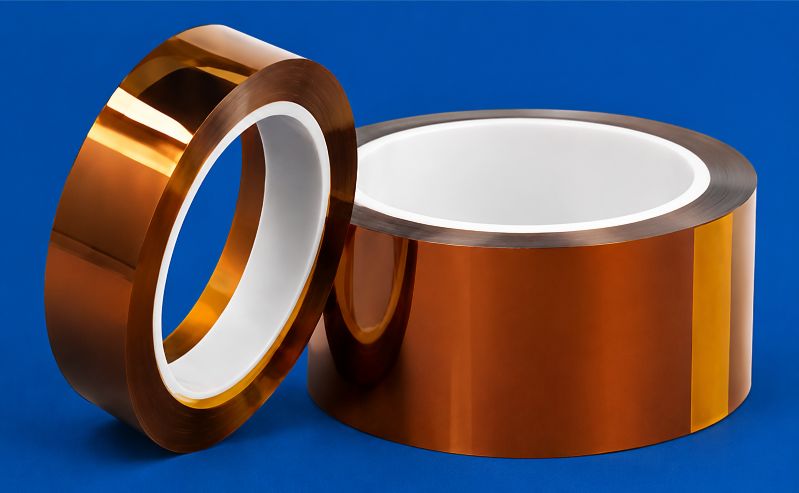
Polyimide tape is a high-performance film tape made from polyimide film coated with heat-resistant adhesive.
It delivers outstanding thermal stability, chemical resistance, and electrical properties.
3. SMT Masking vs Electrical Insulation
| SMT Masking | Electrical Insulation | |
|---|---|---|
| Primary Purpose | Protect PCB areas during soldering | Provide a dielectric barrier and electrical insulation |
| Typical Process | Reflow soldering or wave soldering | Transformer, motor, battery and coil insulation |
| Key Requirements | Heat resistance and clean removal | Dielectric strength and voltage resistance |
| Adhesive Preference | Silicone adhesive | Silicone or acrylic adhesive |
| Common Thickness | 0.025 mm–0.075 mm | 0.025 mm–0.125 mm |
| Removal Requirement | Clean removal with no adhesive residue | Long-term insulation reliability |
4. 8 Factors to Consider When Choosing Polyimide Tape
Temperature
Ensure the tape can withstand your maximum process or service temperature.
Adhesive Type
Silicone for high heat & clean removal; acrylic for stronger initial tack & cost efficiency.
Thickness
Select the right thickness for masking precision or insulation performance.
Clean Removal
Choose tapes that remove cleanly without residue or damage.
Dimensional Stability
Consider anti-static properties for sensitive electronic components.
Electrical Performance
Check dielectric strength, breakdown voltage, and insulation resistance.
Static Control
Consider anti-static properties for sensitive electronic components.
Compliance
Ensure RoHS, REACH, UL, or other regulatory compliance..
5. Silicone vs Acrylic Adhesive
| Property | Silicone Adhesive | Acrylic Adhesive |
|---|---|---|
| Heat Resistance | Excellent (up to 260°C) | Good (up to 150–180°C) |
| Clean Removal | Excellent | Good |
| Initial Tack | Low to Medium | High |
| Chemical Resistance | Excellent | Good |
| UV / Weather Resistance | Excellent | Good |
| Typical Applications | SMT masking, high-temp insulation | General masking, bundling, splicing |
6. Selection by Application

Reflow Soldering
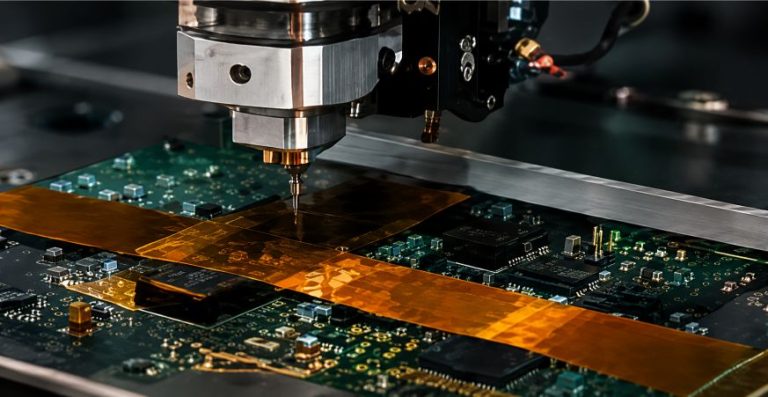
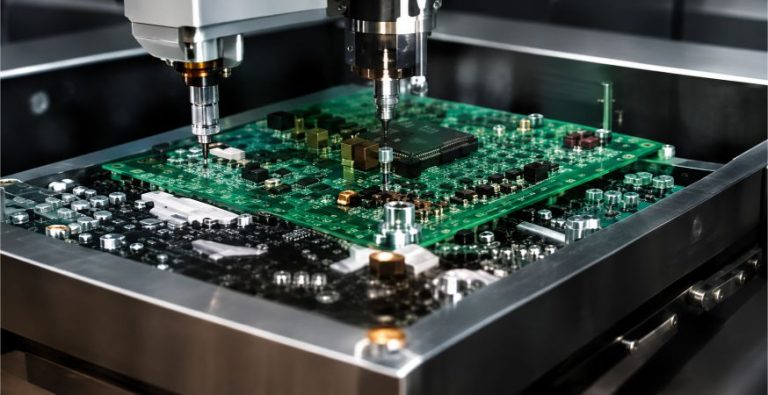
Protect gold fingers, connectors, and sensitive components during reflow. Use silicone adhesive tapes for clean removal.
Wave Soldering
Withstands wave soldering heat without bridging and protects critical areas.
Electrical Insulation
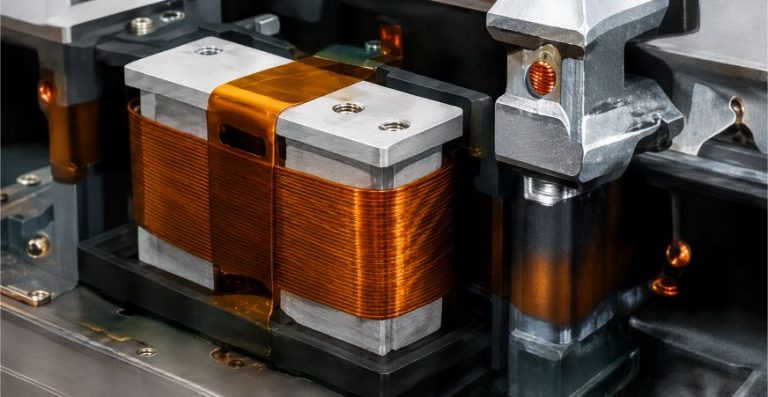
Provides high dielectric strength and long-term reliability for high-voltage applications.
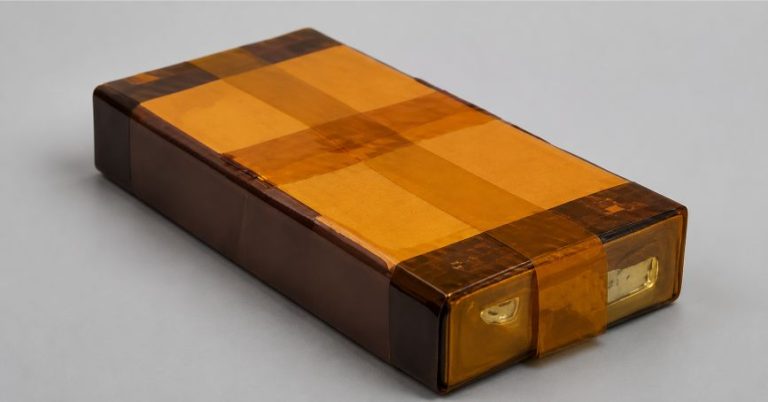
Battery Insulation
Used for cell wrapping, tab insulation, and other lithium-ion battery assemblies.
7. Common Problems and Solutions
Tape leaves residue after removal
Adhesive residue may occur when the tape is exposed to temperatures or processing times beyond its recommended range. It can also result from an unsuitable adhesive system, surface contamination, excessive storage time or incompatibility with the substrate.
Possible solutions:
• Confirm the actual peak temperature and exposure time.
• Select an adhesive designed for the specific thermal process
.• Test silicone and silicone-free adhesive options when necessary.
• Clean and dry the substrate before applying the tape.• Avoid leaving temporary masking tape in place longer than required.
• Evaluate removal at different temperatures and peel angles.
Always test the tape on the actual substrate and production process before full-scale use.
Tape lifting or curling during process
Tape lifting or curling is usually related to insufficient adhesion, surface contamination, thermal shrinkage, excessive application tension or incomplete edge contact.
Possible solutions:
• Remove dust, oil, moisture and processing residue from the surface.
• Apply firm and even pressure across the tape, especially along the edges.
• Avoid stretching the tape during application.
• Select a tape width and thickness suitable for the component geometry.
• Use die-cut shapes for small, curved or irregular areas.
• Verify that the backing and adhesive can withstand the complete heating cycle.
For critical masking areas, test the tape using the actual reflow or wave-soldering temperature profile.
Insufficient insulation / dielectric breakdown
Electrical insulation failure may result from insufficient material thickness, pinholes, sharp edges, excessive voltage, contamination, moisture or damage during assembly.
Possible solutions:
• Confirm the required working voltage and dielectric performance.
• Increase the polyimide film or total tape thickness when necessary.
• Inspect the tape for wrinkles, punctures, gaps and trapped particles.
• Avoid applying the tape directly over sharp edges or burrs.
• Ensure sufficient overlap when wrapping coils, wires or busbars.
• Consider multiple layers or a custom die-cut insulation component.
• Verify creepage and clearance requirements in the final assembly.
Electrical insulation performance should be validated in the complete end-use system, not only from the film datasheet.
Adhesive transfer to components
Adhesive transfer can occur when the adhesive softens under excessive heat, remains on the substrate for too long or is not compatible with the component surface.
Possible solutions:
• Select an adhesive rated for the actual temperature and exposure time.
• Reduce unnecessary heating duration when the process allows.
• Avoid using temporary masking tape as permanent insulation.
• Review whether silicone, acrylic or silicone-free adhesive is more suitable.
• Allow the component to cool to the recommended removal temperature.
• Remove the tape slowly at a consistent angle.
• Test clean-removal performance on FR-4, copper, gold, aluminum or other actual substrates.
When surface cleanliness is critical, request low-residue or low-contamination sample testing before production.
Need a Custom Polyimide Tape Solution?
Our engineers will help you select the right tape for your application.
8. Polyimide Tape Selection Checklist
- Confirm maximum temperature requirement
- Choose appropriate adhesive type
- Select suitable thickness
- Verify clean removal requirement
- Check dimensional stability
- Validate electrical performance
- Confirm static control needs
- Ensure regulatory compliance
9. Standard Rolls vs Custom Die-Cut Parts
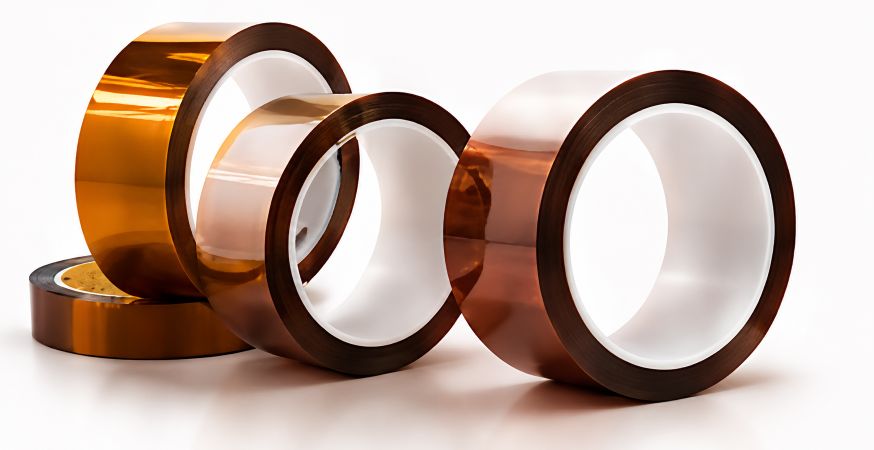
Standard Rolls
- Multiple widths and lengths
- Cost-effective for general use
- Fast lead times
Custom Die-Cut Parts
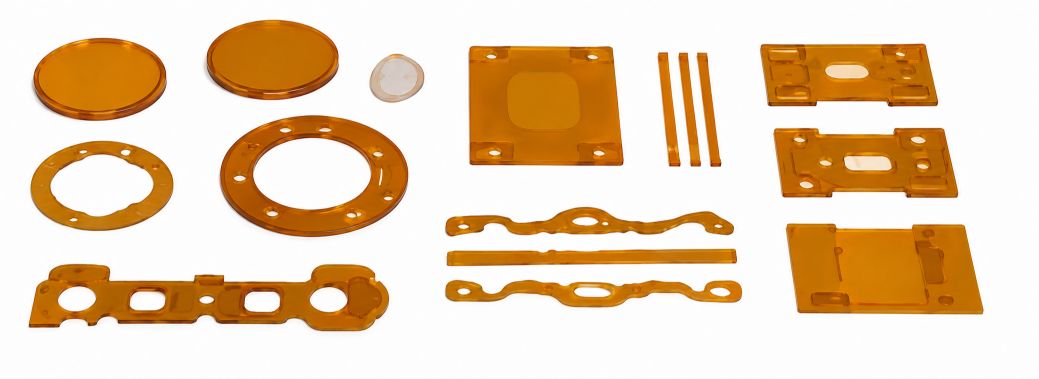
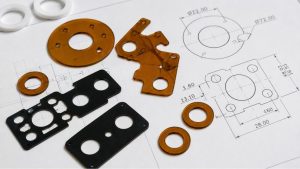
- Precise shapes and sizes
- Reduce assembly time
- Consistent quality and precision
10. Frequently Asked Questions
What temperature can polyimide tape withstand?
Temperature resistance depends on the complete tape construction, including the polyimide film, adhesive, thickness, exposure time and substrate. Always distinguish short-term process temperature from continuous operating temperature.
Is polyimide tape suitable for reflow soldering?
Yes, properly selected polyimide tape is commonly used for temporary masking during reflow soldering. The tape should be verified under the actual peak temperature, heating profile and removal conditions.
Does polyimide tape leave adhesive residue?
A correctly matched tape can remove cleanly from many surfaces, but residue performance depends on temperature, time, substrate condition, adhesive type and removal method.
What is the difference between silicone and acrylic polyimide tape?
Silicone adhesive is commonly selected for high-temperature masking. Specialized acrylic systems may be selected when silicone contamination is a concern or when different bonding characteristics are required.
11. Tell Us Your Application Requirements
Share your project details and our experts will recommend the best tape solution for you.
FEP vs PTFE Film: Key Differences in Processing and Performance
FEP and PTFE films belong to the fluoropolymer family and share valuable characteristics such as chemical resistance, electrical insulation, low surface energy and good performance in demanding environments. However, they are not interchangeable. Their different molecular structures lead to major differences in melt processing, transparency, heat sealing, temperature capability, stiffness and fabrication.
Case Study: UL94 VTM-0 PET Film for Battery Insulation Applications
How a flame-retardant PET insulation film helped a U.S. customer meet laboratory material requirements for a battery-powered product
When developing a new battery-powered product for the U.S. market, material selection is not only about thickness, flexibility, or cost. For products containing batteries, flammability, electrical insulation, and regulatory compliance can become critical factors during laboratory evaluation.
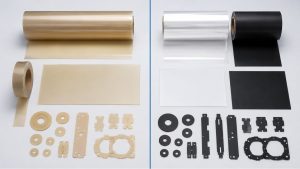
PPS vs PET Film: Which Electrical Insulation Film Should You Choose?
PPS film is generally selected for demanding environments involving higher temperatures, thermal aging, chemicals, humidity, or flame-performance requirements. PET film offers dependable electrical insulation, broad availability, convenient processing, and lower material cost for applications operating within its qualified limits.
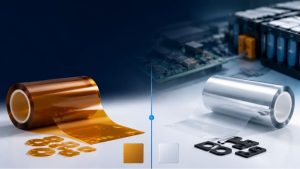
PI vs PET Film: Temperature Resistance, Insulation and Cost Comparison
PI film is generally selected when an application requires greater thermal stability or resistance to demanding processing conditions. PET film is often preferred when reliable electrical insulation, dimensional stability, and lower material cost are the main priorities.