
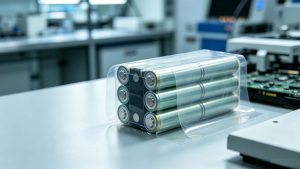

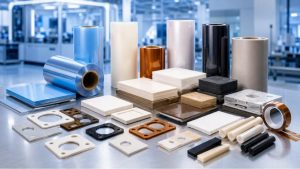
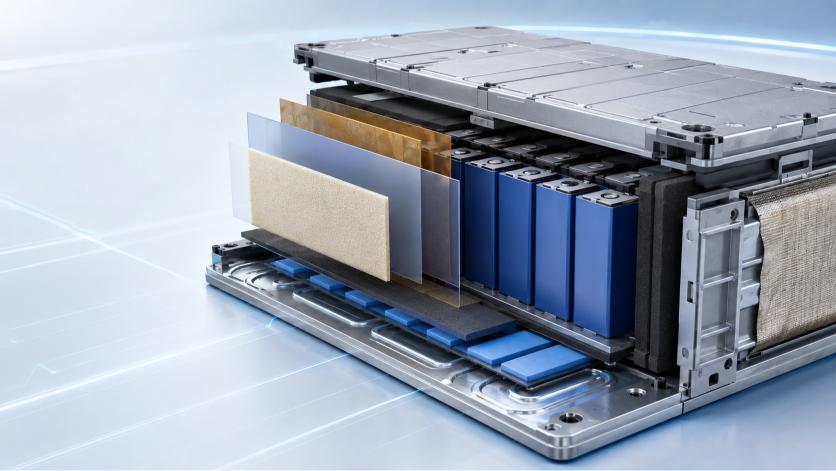
Lithium-ion batteries are widely used in electric vehicles, energy storage systems, consumer electronics, power tools and industrial equipment. As battery systems become more powerful and compact, safety requirements become increasingly demanding.
A reliable lithium battery pack requires more than high-quality cells and an advanced battery management system. The selection of suitable insulation, thermal management, sealing, cushioning and fire-resistant materials also has a direct impact on battery safety and service life.
Effective material solutions for lithium battery safety can help reduce electrical short-circuit risks, control heat transfer, delay flame propagation and protect critical components during mechanical or thermal events.
This article introduces seven important material solutions used to improve the safety and reliability of modern lithium battery systems.
Why Material Selection Matters for Lithium Battery Safety
Lithium-ion batteries store a large amount of energy in a relatively small space. During charging, discharging and long-term operation, battery cells may be exposed to heat, electrical stress, vibration, compression, moisture and chemical substances.
Potential battery safety risks include:
- Electrical short circuits
- Localized overheating
- Thermal runaway
- Flame and heat propagation
- Electrolyte leakage
- Mechanical deformation
- Vibration and impact damage
- Moisture and dust ingress
- Insulation breakdown
- Uneven pressure between battery cells
No single material can address every potential risk. Battery manufacturers normally use a combination of functional materials to create multiple layers of protection.
These materials must be selected according to the battery structure, operating voltage, temperature range, installation space, compression requirements and applicable safety standards.
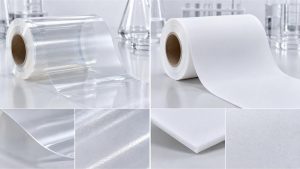
1. Electrical Insulation Films
Electrical insulation is one of the most fundamental requirements in a lithium battery pack. Insulation films are commonly installed between cells, modules, busbars, metal housings, cooling plates and electronic components.
Suitable insulation films can prevent unintended electrical contact while providing a lightweight and space-efficient protective layer.
Common Insulation Film Materials
Typical battery insulation films include:
- PET insulation film
- PPS insulation film
- PEN high-temperature film
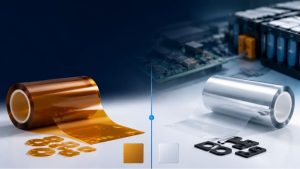
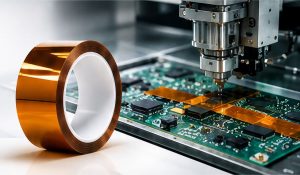
- Polyimide film
- Flame-retardant insulation film
- Composite laminated insulation film
PET film provides good dielectric strength, dimensional stability and processing performance. It is widely used for general battery insulation, wrapping and component separation.
PPS film offers higher temperature resistance and chemical stability, making it suitable for demanding battery modules, power electronics and inverter applications.
PEN film provides a balanced combination of heat resistance, mechanical strength and dimensional stability. It can be used in battery packaging, electrical isolation and high-temperature electronic components.
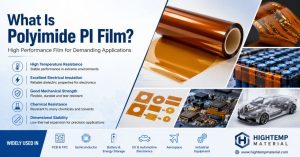
Polyimide film is commonly selected for applications requiring high dielectric strength, flexibility and resistance to elevated temperatures.
Key Selection Factors
When choosing an electrical insulation film, engineers should evaluate:
- Dielectric strength
- Volume resistivity
- Operating temperature
- Film thickness
- Dimensional stability
- Flame-retardant performance
- Chemical resistance
- Puncture resistance
- Adhesive compatibility
- Die-cutting performance
Insulation films can also be laminated, coated or supplied with pressure-sensitive adhesive to simplify battery pack assembly.
2. Aerogel Thermal Insulation Pads
Thermal runaway is one of the most critical safety concerns in lithium-ion battery systems. When one cell experiences uncontrolled heat generation, thermal energy may spread to neighboring cells and trigger a chain reaction.
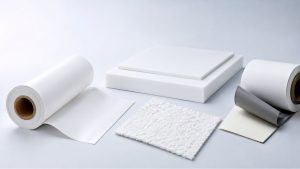
Aerogel thermal insulation pads are designed to reduce heat transfer between battery cells or modules. Their low thermal conductivity makes them especially useful in applications where limited space and high thermal protection are both important.
Main Functions of Aerogel Pads
Aerogel pads can help:
- Slow heat transfer between adjacent cells
- Delay thermal runaway propagation
- Protect neighboring battery modules
- Reduce localized thermal impact
- Improve the response time available for safety systems
- Provide thermal insulation within a compact structure
Aerogel materials are commonly integrated with fiberglass, ceramic fiber or other reinforcing layers to improve handling strength and dimensional stability.
They can be converted into custom pads, strips, frames and other die-cut components according to the battery cell layout.
Important Properties
Battery designers should consider:
- Thermal conductivity
- Maximum operating temperature
- Material thickness
- Compression characteristics
- Flame resistance
- Dust control
- Mechanical integrity
- Electrical insulation
- Custom shape tolerance
The thickness and structure of an aerogel pad should be determined through battery-level thermal testing rather than selected only from a general material datasheet.
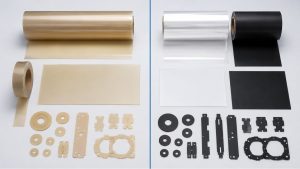
3. Mica Sheets and Die-Cut Mica Components
Mica is widely used in high-temperature electrical insulation and fire protection applications. It combines dielectric performance with resistance to heat and flame.
In lithium battery systems, mica sheets can be installed around modules, busbars, electrical terminals, pack covers and other areas requiring both electrical insulation and thermal protection.
Advantages of Mica Materials
Mica materials offer:
- High-temperature resistance
- Excellent electrical insulation
- Good flame resistance
- Low smoke generation
- Dimensional stability
- Resistance to electrical arcing
- Custom die-cutting capability
Mica sheets can be supplied in rigid or flexible forms. They can also be laminated with reinforcing materials to improve mechanical performance and assembly efficiency.
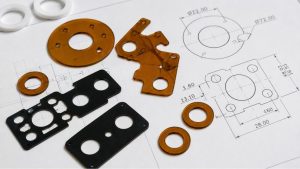
Custom die-cut mica parts may include insulation plates, terminal barriers, module separators, protective covers and complex-shaped gaskets.
For compact battery structures, precision cutting is important because inaccurate dimensions may create assembly gaps or interfere with other components.
4. Flame-Retardant Insulation Materials
Flame-retardant materials are used to reduce the risk of ignition and limit flame propagation within a battery pack. They are often installed around cells, modules, electrical connections and electronic control systems.
Potential material options include:
- UL 94-rated PET insulation film
- Flame-retardant PPS film
- Flame-resistant silicone sheets
- Mica-based barriers
- Ceramic fiber paper
- High-silica fiberglass cloth
- Basalt fiber fireproof fabric
Each material provides a different balance of flexibility, temperature resistance, thickness, dielectric performance and mechanical strength.
For example, flame-retardant polymer films may be suitable for thin electrical insulation, while mica or ceramic fiber products may be more appropriate for high-temperature barriers.
A flame-retardant rating alone does not confirm that a material is suitable for every battery application. Engineers should also review thickness, mounting method, heat exposure, smoke behavior and the overall battery pack design.
5. Silicone Foam for Cushioning and Gap Management
Battery cells can expand and contract during charging, discharging and temperature changes. Vibration and mechanical impact may also occur during transportation and vehicle operation.
Silicone foam pads can provide controlled cushioning between cells, modules and structural components.
Functions of Silicone Foam
Silicone foam materials can help with:
- Cell expansion compensation
- Vibration absorption
- Shock protection
- Gap filling
- Pressure distribution
- Thermal isolation
- Sealing against dust and moisture
- Prevention of direct contact between components
Closed-cell silicone foam is especially useful when the application requires low water absorption and stable performance across a wide temperature range.
Compression Performance
Compression behavior is a key consideration when selecting silicone foam. A pad that is too soft may not provide sufficient support, while a material that is too hard may create excessive pressure on the battery cells.
Important parameters include:
- Compression force deflection
- Compression set
- Foam density
- Thickness tolerance
- Temperature resistance
- Recovery performance
- Flame-retardant rating
- Adhesive strength
Custom die-cut silicone foam pads can be produced with positioning holes, frames, slots and adhesive backing to match the battery assembly design.
6. Thermal Interface Materials
Battery cells, electronic control units, power modules and cooling systems generate heat during operation. Thermal interface materials help transfer heat from heat-generating components to cooling plates, heat sinks or battery enclosures.
Common options include:
- Thermally conductive silicone pads
- Thermally conductive silicone sheets
- Gap-filling materials
- Insulating thermal pads
- Thermally conductive adhesive materials
These products conform to uneven surfaces and fill microscopic air gaps that would otherwise reduce heat-transfer efficiency.
Selection Considerations
Key parameters include:
- Thermal conductivity
- Electrical insulation
- Material thickness
- Hardness
- Compressibility
- Breakdown voltage
- Long-term temperature resistance
- Surface tack
- Thermal impedance
- Resistance to silicone oil bleeding
Higher thermal conductivity does not automatically mean better performance. The final result also depends on material thickness, contact pressure, surface flatness and the structure of the cooling system.
The correct thermal interface material should provide efficient heat transfer without applying damaging pressure to sensitive battery cells or electronic components.
7. Fireproof Fabrics and High-Temperature Barriers
Fireproof fabrics and high-temperature insulation materials can be used as secondary protective layers in battery packs, energy storage cabinets and battery fire-containment systems.
Common materials include:
- High-silica fiberglass cloth
- Silicone-coated fiberglass cloth
- Basalt fiber fabric
- Ceramic fiber paper
- Ceramic fiber board
- Fire-resistant composite laminates
High-silica fiberglass cloth is suitable for applications requiring resistance to high-temperature heat and flame exposure. Silicone-coated fiberglass cloth provides additional flexibility, surface protection and resistance to moisture.
Basalt fiber fabric offers good thermal stability and mechanical strength. It can be used in battery fire blankets, module protection layers and other industrial heat-shielding applications.
Ceramic fiber materials provide high-temperature insulation but must be selected and handled according to the specific application and relevant workplace requirements.
These materials may be used around:
- Battery module enclosures
- Energy storage cabinets
- Cooling and ventilation channels
- Battery pack covers
- Fire protection barriers
- Cable and connector areas
- Emergency containment systems
How to Select the Right Battery Safety Material
The appropriate solution depends on the battery chemistry, cell format, pack structure and target application.
Before choosing a material, consider the following questions:
What Is the Primary Safety Function?
Determine whether the component needs to provide electrical insulation, thermal isolation, heat transfer, sealing, cushioning or flame protection.
A material designed for heat dissipation may not provide the same performance as a thermal barrier. These functions should be clearly distinguished.
What Temperature Must the Material Withstand?
Consider both normal operating temperatures and possible short-term thermal events. The continuous-use temperature and short-duration temperature resistance may be different.
Is Electrical Insulation Required?
For components near busbars, cells and electrical terminals, review dielectric strength, breakdown voltage and insulation stability after aging.
How Much Space Is Available?
Battery packs often have strict thickness limitations. Material thickness, compression and tolerance must be evaluated during the design stage.
Will the Material Be Compressed?
For foam and thermal interface materials, the final compressed thickness and pressure are often more important than the original thickness.
Does the Material Need Adhesive Backing?
Adhesive-backed materials can simplify positioning and assembly. However, the adhesive must also withstand the required temperature, surface conditions and aging environment.
Is Custom Die Cutting Required?
Battery insulation components often require complex shapes, small holes and precise tolerances. The material must be compatible with slitting, laminating, adhesive coating, kiss cutting and precision die cutting.
Custom Converting for Lithium Battery Components
Many battery safety materials must be converted into application-specific components before assembly.
Typical converting services include:
- Precision die cutting
- CNC cutting
- Slitting and rewinding
- Sheet cutting
- Adhesive lamination
- Multi-layer material lamination
- Surface coating
- Hole and slot cutting
- Protective liner application
- Prototype and sample production
Custom converting helps reduce manual cutting, improve assembly consistency and minimize material waste.
For an accurate quotation, battery manufacturers should provide drawings, dimensions, material requirements, thickness, adhesive specifications, tolerance, application temperature and estimated order quantity.
Applications of Lithium Battery Safety Materials
These material solutions are used in many battery-related industries, including:
- Electric vehicle battery packs
- Hybrid vehicle battery modules
- Energy storage systems
- Solar energy storage cabinets
- Industrial battery systems
- Electric bicycles and scooters
- Power tools
- Consumer electronics
- Uninterruptible power supplies
- Battery chargers and power electronics
Different industries may have different requirements for flame resistance, electrical safety, vibration performance, environmental aging and regulatory compliance.
Building a Multi-Layer Battery Safety System
Lithium battery safety should be approached as a complete system rather than a single-material solution.
A typical multi-layer protection strategy may include:
- Electrical insulation films to prevent short circuits.
- Thermal interface materials to transfer normal operating heat.
- Aerogel or mica barriers to slow abnormal heat propagation.
- Silicone foam pads to manage vibration and cell expansion.
- Sealing materials to reduce moisture and dust ingress.
- Fireproof fabrics or boards to strengthen secondary fire protection.
- Precision die-cut parts to ensure reliable installation and consistent coverage.
The interaction between these materials must be considered during design. For example, a thermal barrier should not unintentionally interfere with necessary heat dissipation during normal battery operation.
Prototype testing and battery-level validation are therefore essential before mass production.
Frequently Asked Questions
What materials are commonly used for lithium battery insulation?
Common lithium battery insulation materials include PET film, PPS film, PEN film, polyimide film, mica sheet, silicone foam and flame-retardant composite materials. The correct choice depends on temperature, voltage, thickness and mechanical requirements.
Which material can help prevent thermal runaway propagation?
Aerogel insulation pads, mica barriers, ceramic fiber materials and other high-temperature thermal barriers can help slow heat transfer between cells or modules. Their performance must be verified in the actual battery structure.
Can silicone foam be used between battery cells?
Yes. Silicone foam can provide cushioning, pressure distribution, vibration absorption and gap filling. The compression force and long-term compression set must be suitable for the cell design.
What is the difference between a thermal pad and a thermal barrier?
A thermal pad is normally designed to transfer heat toward a cooling component. A thermal barrier is designed to reduce or delay heat transfer. They serve different thermal management functions.
Can battery insulation materials be custom die cut?
Yes. PET, PPS, PEN, polyimide, mica, silicone foam, aerogel composites and many other battery materials can be converted into custom shapes according to drawings or samples.
Is a UL 94 rating sufficient for selecting a battery material?
No. A UL 94 rating provides useful information about flammability under specific test conditions, but material selection must also consider temperature, dielectric strength, thickness, aging, mechanical performance and the complete battery design.
Conclusion
Material solutions for lithium battery safety play an essential role in electrical insulation, thermal management, fire protection, sealing and mechanical protection.
Insulation films, aerogel pads, mica sheets, silicone foam, thermal interface materials and fireproof fabrics each solve different safety challenges. When these materials are correctly selected and integrated, they can support safer, more stable and more durable lithium battery systems.
We provide a range of high-temperature insulation, thermal protection, sealing and precision-converted materials for lithium battery packs and energy storage applications.
Contact us with your material requirements, drawings, operating temperature, thickness and application details. Our team can help recommend a suitable material structure and provide custom samples for evaluation.