



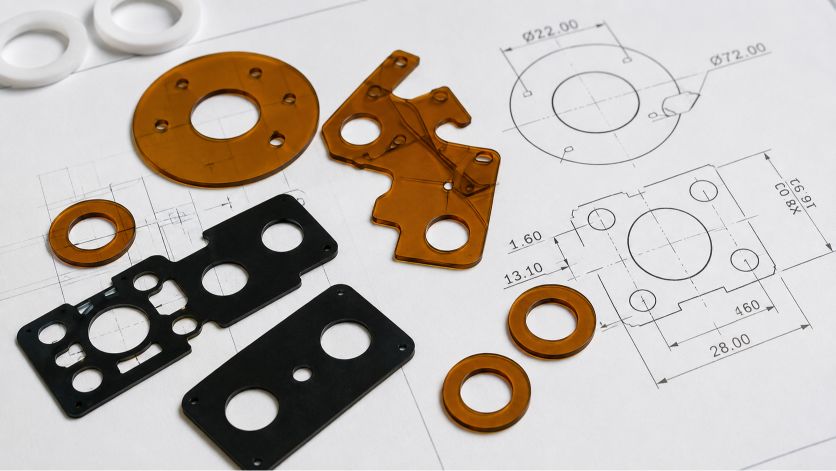
How to Request a Quote for Custom Die-Cut Insulation Parts

Custom die-cut insulation parts are widely used in electronics, battery systems, automotive components, electrical equipment, and industrial machinery. These parts help prevent short circuits, protect sensitive components, improve thermal resistance, and support reliable assembly.

Table of Contents

1. What Are Custom Die-Cut Insulation Parts?
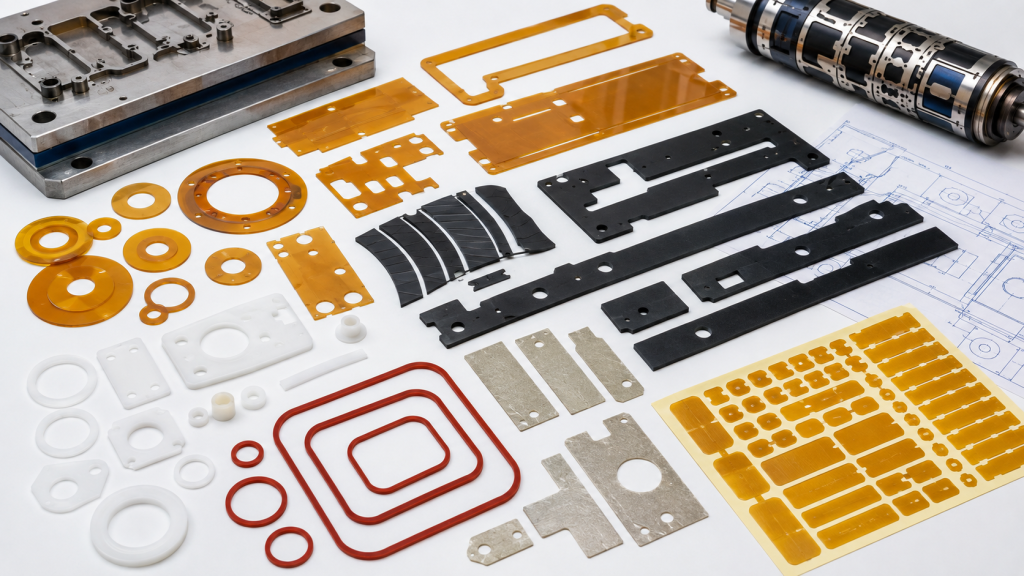
Custom die-cut insulation parts are components produced by cutting insulating materials into shapes designed for a specific assembly or application.

Depending on the material, part geometry, production volume, and tolerance requirements, manufacturers may use processes such as:

  • Flatbed die cutting.
  • Rotary die cutting.
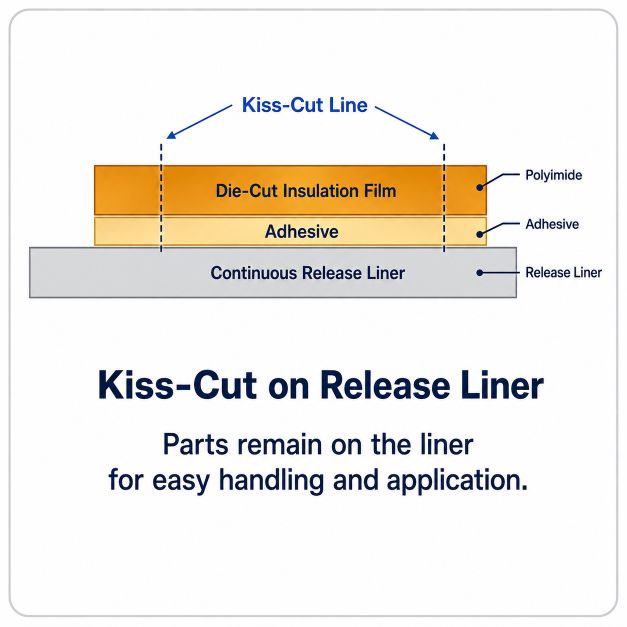
  • Kiss cutting.
  • Digital cutting.
  • Laser cutting.
  • CNC cutting.
  • Laminating and adhesive converting.

Common examples include:

  • Electrical insulation washers.
  • Battery cell insulation pads.
  • PCB masking components.
  • Transformer insulation sheets.
  • Motor slot insulation parts.
  • Busbar insulation barriers.
  • Battery module protective films.
  • Adhesive-backed insulating labels.
  • Die-cut thermal protection layers.
  • Custom gaskets and electrical spacers.

These components are commonly manufactured from polyimide film, polyester film, PTFE, silicone rubber, mica, fiberglass composites, and other engineered insulation materials.

custom die cut electrical insulation parts materials processes

2. Why Complete RFQ Information Matters

A supplier cannot provide reliable pricing without understanding what must be manufactured and how the component will be used.

For example, a simple PET insulation washer may be relatively straightforward to produce in high volumes. However, the same geometry may require a different process if the material must withstand elevated temperatures, include a silicone adhesive, or be supplied on a release liner for automated application.

A complete RFQ helps the supplier:

  • Select an appropriate material.
  • Determine whether the part can be manufactured.
  • Identify suitable tooling or cutting methods.
  • Calculate material consumption and waste.
  • Evaluate dimensional tolerances.
  • Recommend adhesive systems.
  • Estimate sample and production lead times.
  • Prepare consistent pricing across different quantities.

Providing the right details from the beginning also reduces the risk of unexpected changes after the project moves into sampling or production.

Buyer Tip: If some specifications are not yet finalized, clearly identify what is confirmed, what is preferred, and what can be adjusted.

3. Specify the Application and Operating Conditions

Start your RFQ by explaining what the insulation part is intended to do.

A short application description helps the supplier understand which properties are likely to matter.

Useful information includes:

  • The industry or equipment involved.
  • The location of the part within the assembly.
  • Whether it provides electrical insulation, thermal protection, masking, sealing, or mechanical separation.
  • Continuous operating temperature.
  • Short-term peak temperature.
  • Exposure to humidity, chemicals, vibration, or outdoor conditions.
  • Whether the part will contact metal, plastic, circuit boards, or battery cells.
  • Any required electrical insulation or dielectric performance.

For example:

The component will be used as an adhesive-backed electrical insulation barrier inside a battery module. It must withstand continuous operation at 120°C and intermittent exposure to 150°C during assembly.

This description gives a supplier more useful information than:

Please quote a custom insulation pad.

If the part will be used in SMT, PCB assembly, electrical equipment, or battery systems, mention the specific manufacturing conditions as well.

These may include:

  • Reflow soldering exposure.
  • Lamination temperature.
  • Pressure during assembly.
  • Required clean removal.
  • Automated placement.
  • Exposure to electrolyte, cleaning agents, or industrial chemicals.

The clearer the application description, the easier it is to recommend a suitable material and production method.

4. Identify the Required Insulation Material

If a specific material is already required, include the full material description in your request.

For example:

  • Amber polyimide film.
  • Black flame-retardant PET insulation film.
  • PTFE film.
  • Silicone rubber sheet.
  • Mica insulation sheet.
  • Fiberglass-reinforced insulation material.
  • Adhesive-backed polyimide film.

If you have an existing material reference, provide the brand, grade, manufacturer, or technical data sheet when available.

However, if the material has not been selected, explain the performance requirements and ask the supplier to recommend suitable options.

Material selection should be based on the actual application rather than material name alone.

For example:

  • A standard PET film may not be suitable for the same temperature exposure as a polyimide film.
  • PTFE may offer excellent chemical resistance but can require additional surface treatment or specialized adhesive selection.
  • Silicone rubber can provide flexibility but may not be the best choice when a very thin, rigid electrical barrier is required.
  • Mica may be appropriate for demanding thermal protection applications, but its processing characteristics differ from polymer films.

If your project requires material certification, flame-retardant performance, or a specific dielectric strength, include those requirements in the RFQ.

Important: Temperature resistance and electrical performance depend on the specific material grade, thickness, adhesive system, and application conditions. They should be verified using the relevant technical data sheet and actual testing requirements.

MaterialMain AdvantagesTypical Applications
Polyimide filmHigh-temperature resistance, electrical insulation, thin-film flexibilityPCB masking, motors, transformers, batteries, electronics
PET insulation filmCost-effective electrical insulation and dimensional stabilityElectrical equipment, labels, insulation barriers, general electronics
PTFE filmChemical resistance, low friction, electrical insulationIndustrial insulation, chemical environments, electrical components
Silicone rubberFlexibility, temperature resistance, compression characteristicsGaskets, cushioning, sealing, electrical insulation
Mica sheetHigh-temperature electrical insulation and flame-resistant propertiesBattery safety barriers, heating equipment, industrial insulation
Fiberglass compositeMechanical strength and thermal resistanceElectrical equipment, thermal barriers, industrial components

5. Confirm Material Thickness and Construction
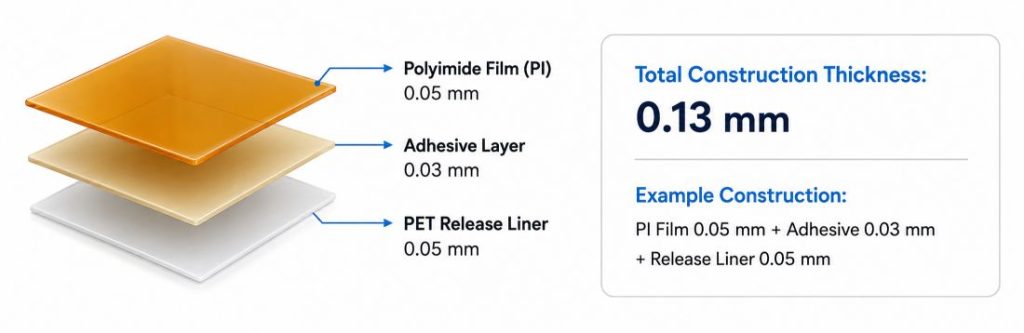
Thickness directly affects electrical insulation performance, flexibility, mechanical strength, manufacturability, and cost.

Your RFQ should clearly state:

  • Base material thickness.
  • Adhesive thickness, if applicable.
  • Release liner thickness, if relevant.
  • Total finished construction thickness.
  • Thickness tolerance, if required.
polyimide film adhesive release liner construction

6. Provide a Drawing, CAD File, or Physical Sample
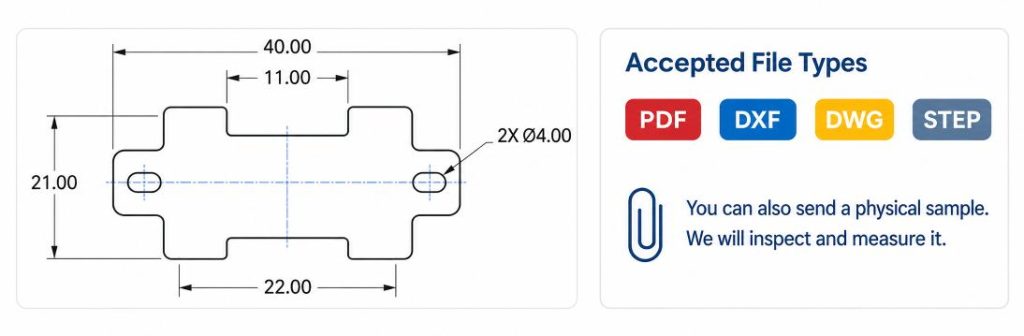
A technical drawing is one of the most useful documents in a custom die-cutting RFQ.Whenever possible, provide a dimensioned drawing or digital design file.

If a formal drawing is not available, a clear sketch with dimensions may be sufficient for an initial feasibility review.

A physical sample can also be helpful, especially when replacing an existing component.

However, a supplier may still need written confirmation of dimensions, materials, and performance requirements before preparing a final production quote.

Buyer Tip: When sending a drawing, identify the latest approved revision so that the supplier does not quote an outdated design.

custom die cut insulation part technical drawing formats

7. Define Critical Dimensions and Tolerances
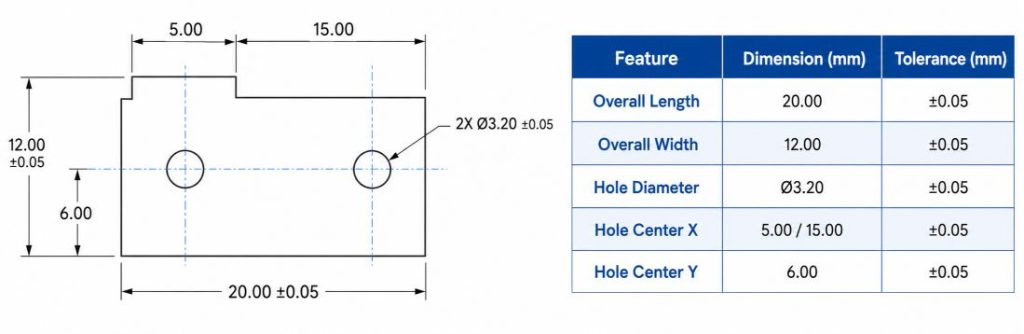
Not every dimension on a drawing necessarily requires the same manufacturing tolerance.

If some dimensions are critical for fit, electrical clearance, or automated assembly, clearly identify them.

Do not specify unnecessarily tight tolerances simply because a CAD file displays several decimal places.

A drawing dimension of 19.050 mm does not automatically mean that the finished part must be controlled to ±0.001 mm.

If tolerances are not yet established, ask the supplier what is achievable for the selected material and production method.

Final capabilities should always be confirmed against the actual design, material thickness, part size, and process conditions.

non adhesive insulation film construction

8. Specify Adhesive and Release Liner Requirements
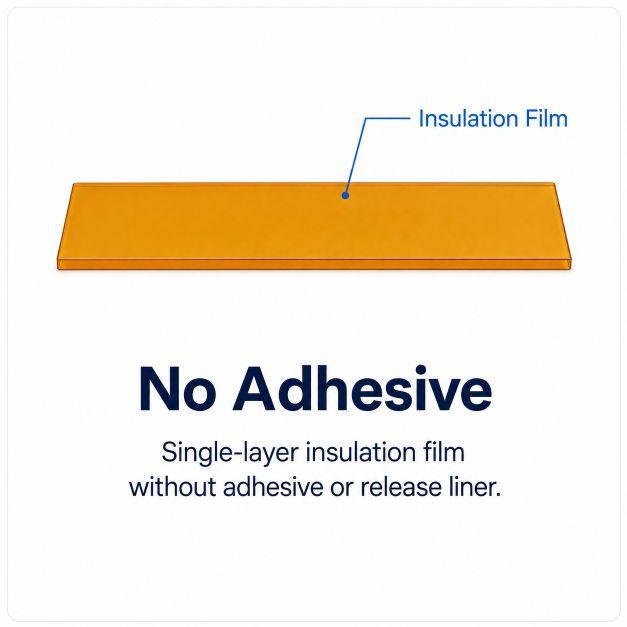
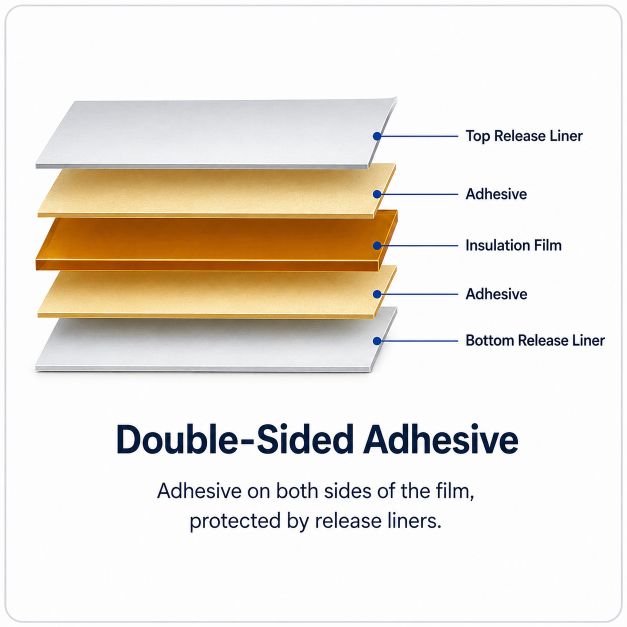
Many custom insulation parts require adhesive backing for easier installation.

However, the correct adhesive depends on the substrate, operating environment, temperature exposure, and application method.

die cut insulation part dimensions tolerances
double sided adhesive insulation film construction
kiss cut insulation parts release liner

9. Share Order Quantity and Annual Demand

Quantity is one of the biggest factors affecting the cost of custom die-cut insulation parts.

A supplier may need to know:

  • Prototype quantity.
  • Initial trial order quantity.
  • Standard purchase quantity.
  • Annual demand.
  • Forecasted demand.
  • Preferred delivery schedule.

For example:

Prototype samples: 50 pieces.
Initial production order: 5,000 pieces.
Estimated annual demand: 100,000 pieces.

This information helps the supplier determine whether to recommend:

  • Digital cutting for prototypes.
  • Flatbed die cutting for intermediate volumes.
  • Rotary die cutting for larger repeat orders.

Custom tooling for improved production efficiency.

Small sample quantities may have a higher unit cost because setup and engineering expenses are spread across fewer parts.

Higher production volumes can reduce the unit price, although they may require tooling investment or material minimum order quantities.

If possible, request pricing at several quantity levels.

For example:

  • 1,000 pieces.
  • 5,000 pieces.
  • 10,000 pieces.
  • 50,000 pieces.

A quantity-based quotation makes it easier to evaluate future production costs.

It can also help identify the point at which a different manufacturing method becomes more economical.

10. Explain Packaging and Delivery Requirements

Packaging is often overlooked during the initial RFQ stage, but it can significantly affect usability, shipping cost, and assembly efficiency.

Common packaging formats include:

  • Individual loose parts.
  • Parts stacked in bags.
  • Parts arranged on sheets.
  • Kiss-cut parts on release liners.
  • Parts supplied on continuous rolls.
  • Individually separated components.
  • Protective packaging for delicate materials.
  • Custom labeling and batch identification.

If the parts will be used in automated production, provide the relevant details.

These may include:

  • Roll width.
  • Core diameter.
  • Roll winding direction.
  • Part spacing.
  • Number of parts per roll.
  • Liner orientation.
  • Labeling requirements.
  • Barcode or batch traceability requirements.

Also specify:

  • Delivery destination.
  • Required delivery date.
  • Preferred shipping method.
  • Whether partial shipments are acceptable.
  • Required commercial terms.

If applicable, indicate whether pricing should be based on EXW, FOB, DAP, or another agreed Incoterms® rule, including the named location.

This avoids confusion when comparing quotations from multiple suppliers.

11. Confirm Testing and Compliance Requirements

Depending on the application, the insulation material or finished component may need to meet specific technical or regulatory requirements.

Your RFQ may need to include:

  • Dielectric strength.
  • Breakdown voltage.
  • Surface resistivity.
  • Volume resistivity.
  • Flame-retardant classification.
  • Continuous operating temperature.
  • Short-term heat resistance.
  • Adhesion strength.
  • Chemical resistance.
  • Moisture resistance.
  • RoHS compliance.
  • REACH-related documentation.
  • Material traceability.
  • Inspection reports.
  • Certificates of analysis or conformity.

If a specific test standard applies, identify the exact standard, test conditions, and acceptance criteria.

For example:

Material must meet the specified dielectric strength requirement under the test method stated on the approved drawing.

Or:

Please provide the relevant technical data sheet and available RoHS documentation with the quotation.

Be careful to distinguish between:

  • A material manufacturer’s published data.
  • A supplier’s internal test report.
  • A third-party laboratory report.
  • Certification for a specific material grade.
  • Qualification of the final finished component.

These are not always interchangeable.

For safety-critical or regulated applications, confirm whether the requirement applies to the base material, the adhesive, the complete laminated construction, or the final assembled product.

12. Understand the Main Factors That Affect Pricing

Custom die-cut insulation part pricing is influenced by several technical and commercial factors.

Material Type and Grade

Specialized high-temperature films, flame-retardant grades, and engineered composites may cost more than standard insulation materials.

Availability, material brand, and minimum order requirements can also influence the final price.

Material Thickness

Thicker materials may increase material consumption and require different cutting methods.

Very thin materials can also require special handling, lamination support, or more careful process control.

Part Size and Geometry

Larger parts generally use more material.

However, small parts with complicated shapes can also be expensive if they require:

  • Multiple internal cutouts.
  • Narrow bridges.
  • Tight feature spacing.
  • Precise registration.
  • Complex waste removal.

Material Utilization

Part nesting affects how efficiently components can be arranged on a sheet or roll.

A shape that produces significant unused material may have a higher unit cost than a design with better nesting efficiency.

Tooling Requirements

Depending on the design and order quantity, custom tooling may be required.

A quotation may include:

  • One-time tooling charges.
  • Engineering or setup charges.
  • Sample preparation fees.
  • Production unit pricing.

Ask whether tooling is quoted separately and whether modifications would require additional charges.

Adhesive and Lamination

Adding adhesive, release liners, or multiple material layers can increase both material and processing costs.

Partial adhesive patterns and registration requirements can also influence pricing.

Tolerances and Inspection

Tighter tolerances may require more precise tooling, slower production speeds, or additional inspection.

Special inspection reports and traceability requirements can also affect cost.

Quantity and Delivery Time

Larger order quantities may reduce the unit cost.

Urgent production schedules, expedited shipping, and limited material availability may increase the total project cost.

13.Frequently Asked Questions

What information is most important when requesting a quote?

The most important information includes the application, material, thickness, part dimensions, drawing, adhesive requirements, quantity, packaging format, and delivery timeline.If some details are not finalized, provide the available information and explain which specifications still need to be confirmed.

Yes. Many suppliers can provide an initial estimate based on a dimensioned sketch, a clear photograph with measurements, or an existing physical sample.However, a formal drawing is usually recommended before final production begins.

Common materials include polyimide film, PET insulation film, PTFE film, silicone rubber, mica sheet, and fiberglass-based insulation materials.The best option depends on the required electrical, thermal, mechanical, and chemical properties.

Yes. Depending on the application, parts can be supplied with single-sided or double-sided adhesive and with different release liner configurations.Adhesive compatibility should be evaluated according to the bonding surface, temperature, exposure conditions, and expected service life.

Sample availability depends on material stock, part complexity, tooling requirements, and the selected manufacturing process.Some designs can be produced using digital cutting before production tooling is made.

Minimum order quantity may depend on the material type, custom material requirements, adhesive construction, tooling investment, part size, and production method.Using standard materials may help reduce the minimum order quantity for initial projects.

Pricing generally depends on material cost, part geometry, thickness, manufacturing method, tooling, tolerances, adhesive requirements, packaging, quantity, and delivery schedule.

Yes. If you provide the application details, operating temperature, electrical requirements, installation conditions, and target cost, a supplier can suggest suitable material options for further evaluation.

Need a Custom Polyimide Tape Solution?

Our engineers will help you select the right tape for your application.
fep vs ptfe film processing performance 2

FEP vs PTFE Film: Key Differences in Processing and Performance

FEP and PTFE films belong to the fluoropolymer family and share valuable characteristics such as chemical resistance, electrical insulation, low surface energy and good performance in demanding environments. However, they are not interchangeable. Their different molecular structures lead to major differences in melt processing, transparency, heat sealing, temperature capability, stiffness and fabrication.
Read More »
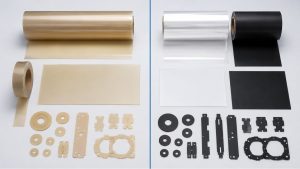
1.ul94 vtm 0 pet film battery insulation

Case Study: UL94 VTM-0 PET Film for Battery Insulation Applications

How a flame-retardant PET insulation film helped a U.S. customer meet laboratory material requirements for a battery-powered product

When developing a new battery-powered product for the U.S. market, material selection is not only about thickness, flexibility, or cost. For products containing batteries, flammability, electrical insulation, and regulatory compliance can become critical factors during laboratory evaluation.
Read More »
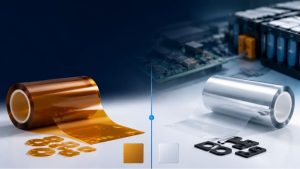
1.pps vs pet electrical insulation film

PPS vs PET Film: Which Electrical Insulation Film Should You Choose?

PPS film is generally selected for demanding environments involving higher temperatures, thermal aging, chemicals, humidity, or flame-performance requirements. PET film offers dependable electrical insulation, broad availability, convenient processing, and lower material cost for applications operating within its qualified limits.
Read More »

Request a Polyimide Tape Sample

Tell us about your application and testing requirements. We will recommend a suitable polyimide tape sample for evaluation.

PI tape-Request a Sample

Samples are provided for material evaluation. Shipping costs and sample availability will be confirmed after review.


Upload Your Drawing

Upload your drawing and application requirements for a preliminary manufacturing review. We can support custom die cutting, slitting, laminating and adhesive-backed parts.

PI pate-Upload Your Drawing

Request a Quote

Tell us what material or custom component you need. Provide as much information as possible to receive a faster and more accurate quotation.

PI tape-Request a Quote

Upload Your Drawings

Send your CAD files and requirements for a fast technical review.

Upload your drawings

1.Contact Information

2. Project Basics

3. Upload Files

Request a Custom Manufacturing Quote

Tell us about your project. Our engineering team will respond within 1 business day.

Request a CustomManufacturing Quote

1.Contact Information

2. Project Requirements

3. Drawings & Details