


Table of Contents
1. What Is PI Film?
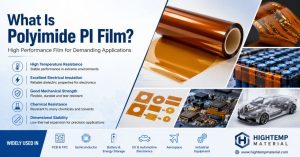
PI film is a polymer film made from polyimide resin.
It is known for its thermal stability, electrical insulation properties, flexibility, and ability to perform in demanding industrial environments.
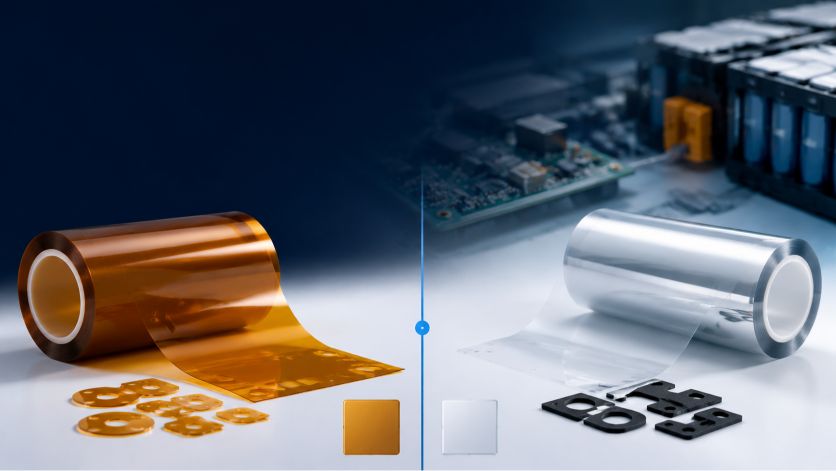
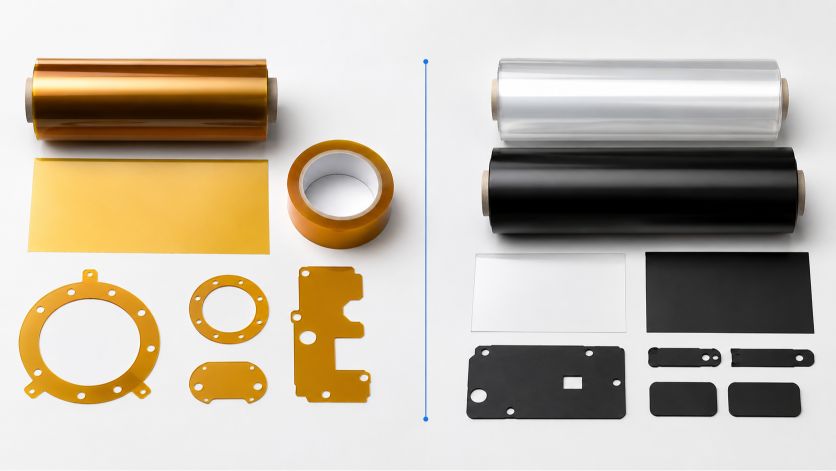
Standard polyimide film often has a recognizable amber appearance. However, black, anti-static, composite, and other specialized constructions are also available.
Depending on the formulation and construction, PI film may be supplied as:
- Plain polyimide film.
- Adhesive-backed polyimide film.
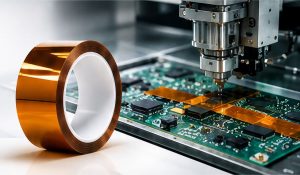
- High-temperature polyimide tape.
- Black polyimide film.
- Anti-static polyimide film.
- FEP-laminated polyimide film.
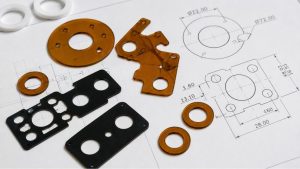
- Custom die-cut polyimide insulation parts.
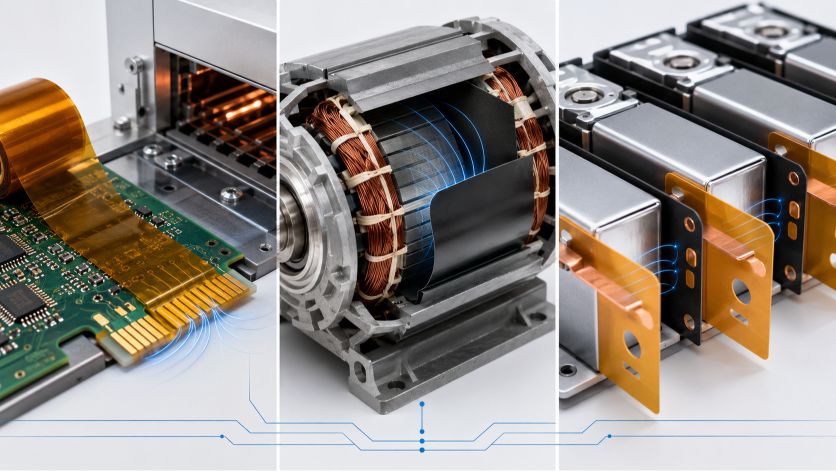
PI film is frequently used where a thin electrical insulation layer must remain functional under elevated temperatures or thermal cycling.
Common applications include:
- PCB masking.
- SMT reflow protection.
- Transformer insulation.
- Motor insulation.
- Flexible electronics.
- Battery insulation.
- Electrical component protection.
- Aerospace and industrial insulation.
Polyimide is often associated with the Kapton® brand, but Kapton® is a registered trademark associated with specific branded products. Not every polyimide film is Kapton®, and material performance should be confirmed using the technical data sheet for the actual grade being offered.
Practical Tip: When requesting a quotation, specify whether you require a particular branded film or whether a technically suitable polyimide alternative is acceptable.
2. What Is PET Film?
PET film is a polyester film made from polyethylene terephthalate.
It is widely used because it offers a useful combination of electrical insulation, mechanical strength, dimensional stability, availability, and cost efficiency.
PET film can be produced in different forms, including:
- Clear PET film.
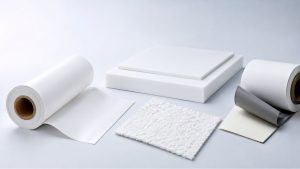
- White PET film.
- Black PET film.
- Flame-retardant PET insulation film.
- Matte PET film.
- Anti-static PET film.
- Silicone-coated PET release film.
- Adhesive-backed PET film.
- Custom die-cut PET insulation parts.
PET film is commonly used in:
- Electrical insulation barriers.
- Electronic assemblies.
- Battery components.
- Labels and protective films.
- Motor and transformer components.
- Insulating washers.
- Die-cut electrical spacers.
- Industrial laminates.
- Packaging and handling applications.
The exact grade matters because different PET films can vary in:
- Thickness.
- Color.
- Surface treatment.
- Flame-retardant performance.
- Shrinkage.
- Dielectric properties.
- Heat resistance.
- Adhesive compatibility.
Important: PET can refer to multiple film constructions and processing methods. For technical insulation applications, confirm the intended film grade, orientation, thermal performance, and compliance requirements with the supplier.
3. PI vs PET Film: Quick Comparison
The following table provides a general comparison.
Actual performance depends on the selected material grade, thickness, manufacturing process, adhesive, and testing conditions.
| Property | PI Film | PET Film |
|---|---|---|
| Material name | Polyimide | Polyethylene terephthalate |
| Typical appearance | Often amber; black and other versions available | Often clear, white, or black |
| Temperature resistance | Generally higher | Generally lower |
| Electrical insulation | Strong insulation performance across demanding conditions | Strong insulation performance in suitable operating conditions |
| Flexibility | Flexible, particularly in thin gauges | Flexible, with good mechanical strength |
| Dimensional stability | Suitable for demanding thermal applications when correctly specified | Good dimensional stability within its intended temperature range |
| Cost | Typically higher | Typically lower |
| Availability | Available in standard and specialized grades | Broadly available in many grades and constructions |
| Common applications | SMT masking, high-temperature insulation, flexible electronics | Electrical barriers, general electronics, battery insulation |
| Adhesive options | Often combined with silicone or other application-specific adhesives | Often combined with acrylic, silicone, or other suitable adhesives |
| Custom converting | Slitting, die cutting, laminating, adhesive coating | Slitting, die cutting, laminating, adhesive coating |
The key difference is not that one material is universally better.
Rather, PI and PET are optimized for different combinations of temperature, electrical performance, manufacturing conditions, and cost.
4. Temperature Resistance
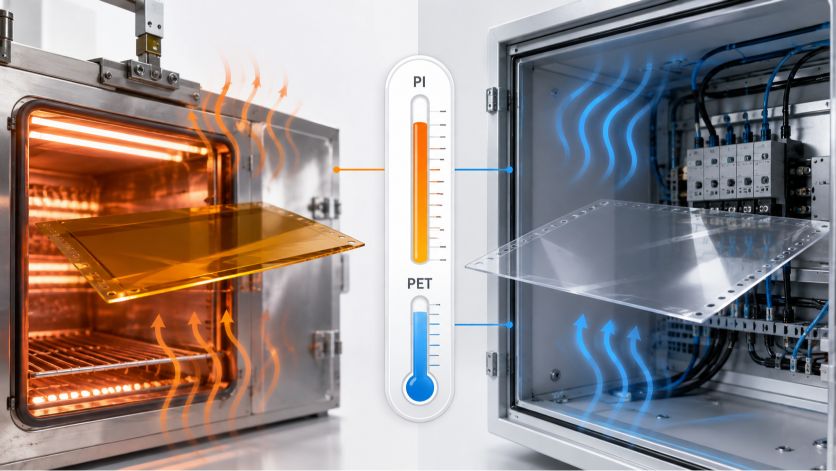
PI film is generally selected when the insulation material must withstand higher temperatures or demanding thermal processes.
Depending on the specific material grade, polyimide films can be suitable for applications involving temperatures in the range of approximately 200°C to 260°C.
Certain products or applications may involve different short-term exposure conditions, but allowable temperatures must be confirmed using the relevant technical data sheet and actual process validation.
PI film is frequently considered for:
- SMT reflow masking.
- High-temperature electrical insulation.
- Transformer and motor components.
- Heated industrial equipment.
- Battery applications with demanding thermal requirements.
However, the heat resistance of a polyimide tape is not determined by the PI film alone.
The adhesive may become the limiting factor, particularly when clean removal, adhesion retention, or residue control is required.
PET Film Temperature Resistance
PET film generally has a lower operating temperature capability than PI film.
Depending on the specific grade and application, many PET insulation films are used in moderate-temperature conditions, often in ranges around 105°C to 150°C.
Some specialized or heat-stabilized PET constructions may tolerate higher short-term processing temperatures under defined conditions, but these figures should not be assumed without supplier documentation and testing.
PET film may be suitable for:
- General electrical insulation.
- Electronic component protection.
- Motor and transformer insulation within the appropriate thermal class.
- Battery insulation barriers.
- Die-cut electrical spacers.
- Protective films used in controlled manufacturing processes.
If a PET film is exposed to temperatures beyond its qualified limits, potential issues may include:
- Dimensional distortion.
- Loss of mechanical strength.
- Adhesive failure.
- Changes in electrical performance.
- Difficulty removing the material after processing.
Continuous Temperature vs. Peak Temperature
A common mistake is comparing one material’s short-term peak temperature with another material’s continuous operating temperature.
For example:
A short process exposure at a higher temperature does not automatically mean a material is suitable for continuous service at that temperature.
A supplier should be asked to clarify:
- The maximum continuous operating temperature.
- The maximum short-term exposure temperature.
- The test duration.
- The impact on adhesion and dimensional stability.
- Whether the figures apply to the base film or the complete construction.
Thermal Ratings Are Grade-Specific
Electrical insulation systems may be evaluated using recognized thermal classes or other application-specific qualification methods.
However, a thermal rating belongs to a particular material, construction, or insulation system. It should not be assigned automatically to every PI or PET film.
When thermal classification is important, request documentation for the exact product being quoted.
Selection Guidance: Choose PI when the application genuinely requires its higher thermal capability. Consider PET when the operating and processing temperatures remain within the limits of the selected PET grade.
5. Electrical Insulation Performance
Both PI and PET films are widely used as electrical insulation materials.
However, electrical performance depends on more than the polymer name.
Relevant considerations include:
- Dielectric strength.
- Breakdown voltage.
- Material thickness.
- Operating temperature.
- Surface contamination.
- Mechanical damage.
- Adhesive construction.
- Aging conditions.
- Required electrical clearance.
PI Film Electrical Insulation
PI film is valued for maintaining useful electrical insulation characteristics in demanding thermal environments.
It is commonly considered for:
- High-temperature motor insulation.
- Transformer insulation.
- Flexible circuit assemblies.
- PCB masking and insulation.
- Battery component insulation.
- Industrial electrical equipment.
Thin PI film can provide electrical separation while allowing compact product designs.
However, the required breakdown voltage must still be confirmed for the actual film thickness and test conditions.
PET Film Electrical Insulation
PET film also provides reliable electrical insulation when used within its intended operating conditions.
It is commonly selected for:
- Electrical barriers.
- Insulating labels.
- Battery module separators.
- General electronic assemblies.
- Motor and transformer components.
- Adhesive-backed die-cut insulation parts.
Electrical-grade PET may offer a practical balance between insulation performance and cost.
However, buyers should confirm whether the chosen PET grade meets the required:
- Dielectric strength.
- Flame-retardant performance.
- Thickness tolerance.
- Thermal requirements.
- Relevant compliance documentation.
Thickness Matters
A comparison between PI and PET should always account for thickness.
For example:
A 0.125 mm PET film and a 0.025 mm PI film cannot be evaluated fairly without considering the difference in thickness and the required electrical performance.
When requesting a quotation, specify:
- Film thickness.
- Minimum breakdown voltage.
- Test method.
- Whether the requirement applies before or after aging.
- Whether adhesive is included.
- The actual operating environment.
Practical Tip: If the required insulation performance can be achieved using a suitable PET grade within the operating temperature range, PET may provide a more economical solution.
6. Mechanical Properties and Dimensional Stability
Mechanical performance influences how a film behaves during handling, cutting, installation, and long-term use.
Relevant factors include:
- Tensile strength.
- Flexibility.
- Tear resistance.
- Elongation.
- Puncture resistance.
- Dimensional stability.
- Thickness consistency.
- Shrinkage.
- Resistance to repeated bending.
PI Film Mechanical Performance
PI films are commonly used where thin, flexible insulation must tolerate demanding processing or elevated temperatures.
They may be appropriate for:
- Flexible electrical insulation.
- Complex die-cut shapes.
- Components exposed to thermal cycling.
- Applications with limited installation space.
However, a specific PI film’s suitability depends on thickness, formulation, handling conditions, and the required part geometry.
PET Film Mechanical Performance
PET films are widely appreciated for their mechanical strength and dimensional stability under suitable conditions.
They may be a practical option for:
- Flat electrical barriers.
- Insulating sheets.
- Die-cut spacers.
- Product labels.
- Protective layers.
- Parts requiring consistent thickness and shape.
PET is available in a broad range of thicknesses and surface finishes, making it useful for many standard insulation designs.
Dimensional Stability During Heating
Dimensional stability should be evaluated under actual production conditions.
A film that appears stable at room temperature may behave differently during:
- Reflow exposure.
- Hot pressing.
- Lamination.
- Adhesive curing.
- Heated assembly.
- Repeated thermal cycling.
For both PI and PET films, ask the supplier about:
- Heat shrinkage.
- Dimensional change after exposure.
- Material orientation.
- Thickness variation.
- Curling or warping.
- Compatibility with the intended cutting process.
For precision components, dimensional changes can affect hole alignment, part fit, and automated placement.
7. Chemical and Environmental Resistance
Chemical and environmental exposure can influence long-term film performance.
Potential exposure conditions include:
- Cleaning agents.
- Industrial oils.
- Moisture
- Humidity
- Battery-related chemicals.
- Adhesives
- Coatings
- Solvents
- Outdoor conditions.
Both PI and PET can be suitable for industrial applications, but chemical resistance must be evaluated against the actual substance, concentration, temperature, and exposure duration.
Moisture and Humidity
Humidity can affect:
- Film dimensions.
- Surface properties.
- Adhesive bonding.
- Electrical performance.
- Storage conditions.
Applications involving prolonged humidity exposure should be evaluated using the appropriate material data and environmental testing.
Chemical Exposure
Do not assume that a film will tolerate every cleaning chemical simply because it is used in an industrial environment.
Ask the supplier to confirm compatibility with:
- The specific chemical.
- The concentration.
- The exposure temperature.
- The contact duration.
- The cleaning frequency.
Adhesive-backed constructions require additional evaluation because the adhesive may react differently from the base film.
Outdoor and UV Conditions
If the insulation film will be exposed to sunlight or outdoor conditions, confirm whether UV resistance or weathering performance is required.
The suitability of PI or PET will depend on:
- The film formulation.
- Color
- Protective layers.
- Exposure duration.
- The overall product construction.
Selection Guidance: Evaluate the complete operating environment rather than comparing only room-temperature laboratory properties.
8. Adhesive Compatibility and Tape Construction
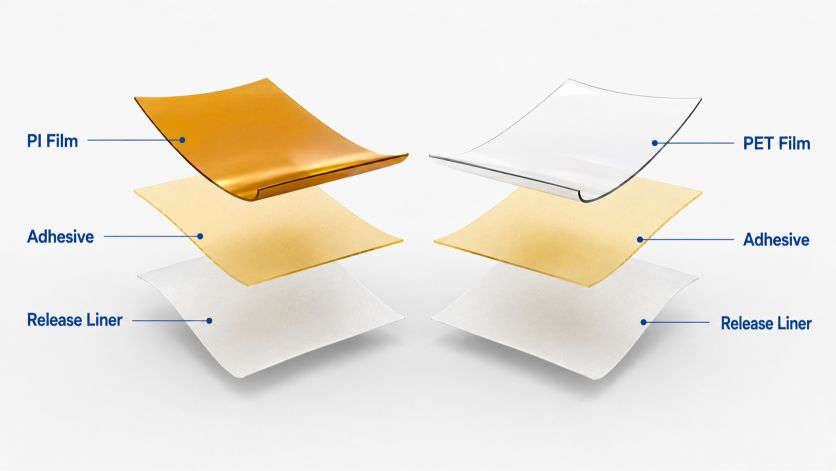
Many PI and PET films are converted into pressure-sensitive tapes or adhesive-backed insulation parts.
The adhesive system can significantly change the final product’s performance.
Common options include:
- Silicone adhesive.
- Acrylic adhesive.
- Rubber-based adhesive.
- Specialized high-temperature adhesive.
- Removable adhesive.
- Permanent adhesive.
PI Film with Silicone Adhesive
Polyimide film combined with silicone adhesive is frequently considered for high-temperature masking and electrical insulation applications.
This construction can be useful when the application involves:
- Heat exposure.
- SMT processing.
- High-temperature masking.
- Electrical insulation.
- Removal after a defined manufacturing step.
However, actual performance depends on:
- Adhesive formulation.
- Coating thickness.
- Surface preparation.
- Exposure temperature.
- Dwell time.
- Removal conditions.
Clean removal should be confirmed through application testing rather than assumed from the material name alone.
PET Film with Acrylic or Silicone Adhesive
PET film may be combined with different adhesive systems depending on the intended application.
Acrylic adhesives are often considered for general bonding and insulation requirements, while silicone adhesives may be considered for selected high-temperature or difficult-surface applications.
The best choice depends on:
- Bonding surface.
- Required adhesion level.
- Temperature.
- Aging conditions.
- Chemical exposure.
- Removal requirements.
Liner Considerations
Adhesive-backed films may be supplied:
- Without a separate release liner, depending on the construction.
- With a paper release liner.
- With a PET release liner.
- On sheets.
- On rolls.
- As kiss-cut parts on a continuous liner.
The presence of a liner should not be confused with the film backing itself.
For example:
A PET-backed tape uses PET as its carrier film. A separate PET release liner, if present, is an additional removable layer protecting the adhesive.
When requesting a quotation, clearly specify:
- Base film material.
- Base film thickness.
- Adhesive type.
- Adhesive thickness.
- Whether a separate release liner is required.
- Release liner material.
- Total supplied construction thickness.
- Whether the liner is removed before use.
This distinction is particularly important when comparing lined and unlined tape products.
9. Die Cutting, Slitting, and Custom Converting
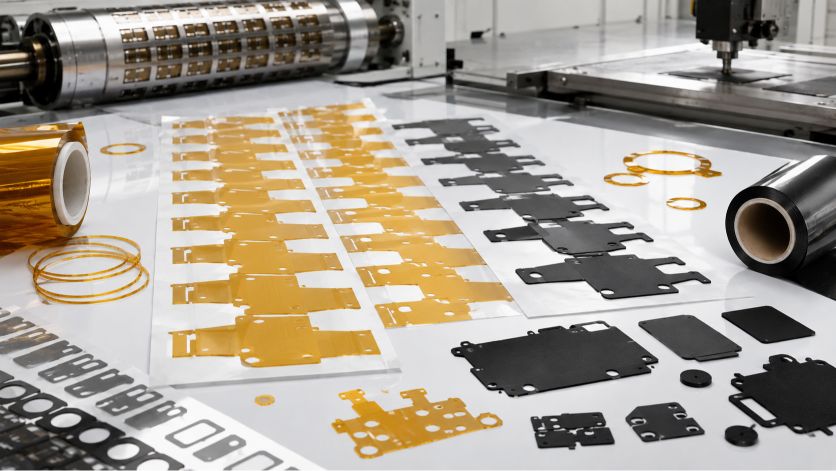
Both PI and PET films can be converted into customized formats for specific applications.
Common converting processes include:
- Sheet cutting.
- Die cutting.
- Kiss cutting.
- Rotary die cutting.
- Flatbed die cutting.
- Laser cutting, where suitable.
- Adhesive coating.
- Multi-layer assembly.
PI Film Converting
PI film may be converted into:
- Electrical insulation washers.
- PCB masking shapes.
- Battery insulation pads.
- Motor and transformer components.
- Adhesive-backed insulating labels.
- Custom die-cut protection films.
Processing considerations may include:
- Film thickness.
- Part geometry.
- Minimum feature size.
- Adhesive behavior.
- Release liner stability.
- Dimensional tolerances.
- Edge quality.
PET Film Converting
PET film may be converted into:
- Electrical insulation barriers.
- Battery module protection sheets.
- Insulating spacers.
- Die-cut labels.
- Motor insulation components.
- Custom protective films.
- Adhesive-backed assembly parts.
PET may offer cost advantages in projects requiring higher volumes of standardized insulation components.
However, the material still needs to meet the required temperature, dielectric, and mechanical specifications.
Production Method Selection
The appropriate manufacturing method depends on:
- Order quantity.
- Part geometry.
- Material thickness.
- Tolerance requirements.
- Tooling cost.
- Required packaging.
- Whether the parts are supplied loose, on sheets, or on rolls.
For prototypes, digital cutting may be suitable for certain designs.
For larger production quantities, flatbed or rotary die cutting may provide better manufacturing efficiency, depending on the part and material.
Buyer Tip: Ask the supplier to quote both prototype and production quantities so you can evaluate tooling costs and unit-price differences.
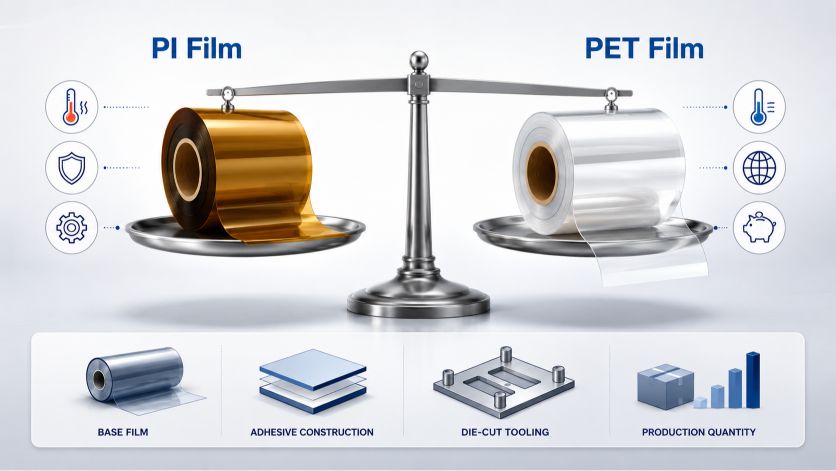
10. Cost Comparison
Cost is one of the most important practical differences between PI and PET films.
In many applications, PET film is less expensive than PI film.
However, the correct comparison should consider total application cost rather than material price alone.
Why PI Film Typically Costs More
PI film generally involves:
- Specialized polymer chemistry.
- More demanding manufacturing conditions.
- Higher thermal performance.
- Specialized application requirements.
- Premium material positioning.
Additional cost may come from:
- Silicone adhesive.
- Specialized coatings.
- Anti-static treatment.
- Black or opaque formulations.
- Tight thickness tolerances.
- Specific branded material requirements.
Why PET Film Is Often More Economical
PET film is widely produced and available in many standard grades.
Its broader availability can support:
- Competitive material pricing.
- Standard thickness options.
- Flexible sourcing.
- Larger production volumes.
- Cost-effective converting.
However, specialized PET films can still cost more than standard polyester film.
Examples include:
- Flame-retardant PET film.
- Anti-static PET film.
- High-performance electrical-grade PET.
- Heat-stabilized PET film.
Specialty adhesive constructions.
Compare Total Cost, Not Only Price per Square Meter
A lower-cost film may not be economical if it causes:
- Heat-related shrinkage.
- Adhesive residue.
- Higher defect rates.
- Assembly problems.
- Electrical failures.
- Reduced product life.
- Additional quality inspections.
- Customer complaints.
Similarly, using PI film where a qualified PET film would meet all requirements may increase material cost without adding meaningful value.
A practical comparison should include:
- Base material cost.
- Adhesive cost.
- Converting cost.
- Tooling cost.
- Scrap rate.
- Minimum order quantity.
- Production yield.
- Lead time.
- Packaging
- Shipping
- Expected service life.
Example Selection Scenario
Consider two electrical insulation applications.
Application A:
A part experiences elevated process temperatures and must remain stable during a demanding manufacturing cycle.
PI film may be worth the additional cost if the higher thermal capability prevents distortion or product failure.
Application B:
A part operates under moderate temperatures and requires general electrical insulation.
A properly specified PET film may offer the necessary performance at a lower total cost.
The objective is not to select the cheapest or most premium film.
The objective is to choose the material that meets the application requirements with a suitable overall cost.
11. Which Film Is Better for SMT and PCB Applications?
SMT and PCB applications can involve elevated temperatures, sensitive components, adhesive requirements, and precision masking.
However, not every PCB-related application requires the same material.
When PI Film May Be Preferred
PI film is commonly considered when the application involves:
- Reflow soldering exposure.
- High-temperature PCB masking.
- Gold finger protection.
- Temporary protection during thermal processing.
- Electrical insulation near heat-sensitive assemblies.
- Clean removal requirements, when matched with a suitable adhesive.
An adhesive-backed PI film may be appropriate when the complete construction is qualified for the actual thermal profile.
For example:
An amber polyimide masking tape with a suitable silicone adhesive may be selected for temporary protection of PCB contact areas during a controlled high-temperature process.
The supplier should still confirm:
- Peak temperature.
- Exposure duration.
- Adhesive residue performance.
- Surface compatibility.
- Removal timing.
- Film thickness.
- ESD requirements, if applicable.
When PET Film May Be Suitable
PET film may be appropriate for:
- Lower-temperature masking.
- Protective films.
- Electrical insulation layers.
- Temporary handling protection.
- Die-cut PCB assembly components.
- Applications using qualified high-temperature polyester constructions.
Some specialty PET tapes are marketed for high-temperature masking processes, but their suitability depends on the exact film, adhesive, process temperature, and exposure time.
A “high-temperature PET tape” designation should not be interpreted as proof that the product can replace PI tape in every reflow or soldering application.
Questions to Ask
Before selecting PI or PET for PCB processing, confirm:
- What is the actual process temperature?
- How long is the material exposed?
- Does the adhesive need to remove cleanly?
- Is the film exposed to soldering chemicals or cleaning agents?
- Is electrical insulation required after processing?
- Are anti-static properties necessary?
- Is the part applied manually or automatically?
- Are custom die-cut shapes required?
The answers will determine whether a PI or PET construction is technically appropriate.
12. Which Film Is Better for Battery and Electrical Insulation?
Battery assemblies and electrical equipment often require thin insulating barriers to reduce the risk of electrical contact between components.
Both PI and PET films may be suitable, depending on the specific design.
PET Film for Battery Insulation
PET film may be appropriate for:
- Battery cell insulation pads.
- Module insulation barriers.
- Adhesive-backed protective films.
- Electrical separation layers.
- Die-cut insulation labels.
- Components operating within the qualified temperature range.
Flame-retardant PET grades may be considered where the application requires a specified flame performance.
However, flame classification should be confirmed for the actual material grade and thickness rather than inferred from a generic product description.
PI Film for Battery Insulation
PI film may be preferred when the application involves:
- Higher operating temperatures.
- Demanding thermal processing.
- Thin insulation requirements.
- Components near heat-generating electrical parts.
- Specialized electrical or mechanical conditions.
PI may also be considered when the design requires a combination of:
- Flexibility.
- Electrical insulation.
- Elevated temperature resistance.
- Compact material thickness.
Other Materials May Be Required
PI and PET are not the only materials used in battery and electrical insulation.
Depending on the application, engineers may also evaluate:
- PPS film.
- PEN film.
- PTFE film.
- Mica insulation materials.
- Silicone rubber.
- Fiberglass composites.
- Multi-layer insulation constructions.
For thermal runaway protection or other safety-critical functions, material selection must be based on the actual system requirements and validated testing.
Neither PI nor PET should be assumed to provide a complete battery safety solution without appropriate engineering evaluation.
Key Battery Application Questions
When comparing PI and PET for battery insulation, clarify:
- Operating temperature.
- Peak temperature.
- Required dielectric strength.
- Flame-retardant requirements.
- Mechanical compression.
- Adhesive compatibility.
- Exposure to battery-related chemicals.
- Thickness limitations.
- Traceability requirements.
- Production volume.
A cost-effective PET film may be suitable for one battery component, while another component in the same assembly may require PI or a different material entirely.
13. Common Material Selection Mistakes
Battery assemblies and electrical equipment often require thin insulating barriers to reduce the risk of electrical contact between components.
Both PI and PET films may be suitable, depending on the specific design.
Mistake 1: Comparing Only Maximum Temperature Numbers
A maximum temperature claim may refer to a short exposure rather than continuous operation.
Always confirm the actual test conditions and operating requirements.
Maximum Temperature Numbers
A maximum temperature claim may refer to a short exposure rather than continuous operation.
Always confirm the actual test conditions and operating requirements.
Mistake 3: Assuming All PET Films Are the Same
PET films can differ significantly in:
- Thermal performance.
- Flame resistance.
— Surface treatment. - Color
- Thickness
- Electrical grade.
- Mechanical properties.
Mistake 4: Assuming All PI Films Are the Same
Polyimide films can also vary in:
- Thickness
- Electrical performance.
- Surface treatment.
- Color
- Adhesive compatibility.
- Dimensional stability.
- Manufacturing origin.
- Certification documentation.
A generic PI description is not enough for a safety-critical application.
Mistake 5: Over-Specifying the Material
Using an expensive high-temperature film in a moderate-temperature application may unnecessarily increase project cost.
If a documented PET grade meets all requirements, PI may not be needed.
Mistake 6: Under-Specifying the Material
Selecting PET only because it is cheaper can create problems if the actual process exceeds the film’s qualified thermal limits.
Potential consequences include distortion, adhesive failure, and electrical reliability issues.
Mistake 7: Ignoring Film Thickness
Electrical insulation and mechanical performance depend heavily on thickness.
Compare materials using relevant thicknesses and testing conditions.
Mistake 8: Confusing a PET Backing with a PET Release Liner
A PET carrier film and a PET release liner serve different functions.
A tape can contain:
- A PI or PET backing.
- An adhesive layer.
- An optional separate release liner.
Specify each layer clearly to avoid misunderstandings during quotation and production.
Mistake 9: Assuming Certifications Apply to Every Construction
RoHS documentation, flame classifications, and other compliance records may apply only to specific materials, thicknesses, or product constructions.
Request documentation for the exact grade being supplied.
Mistake 10: Skipping Application Testing
A material that looks suitable on paper may still behave differently in the actual production environment.
Testing should reflect:
- Real operating temperatures.
- Actual bonding surfaces.
- Required exposure times.
- Assembly methods.
- Storage conditions.
- Product life expectations.
14. How to Choose Between PI and PET Film
Battery assemblies and electrical equipment often require thin insulating barriers to reduce the risk of electrical contact between components.
Both PI and PET films may be suitable, depending on the specific design.
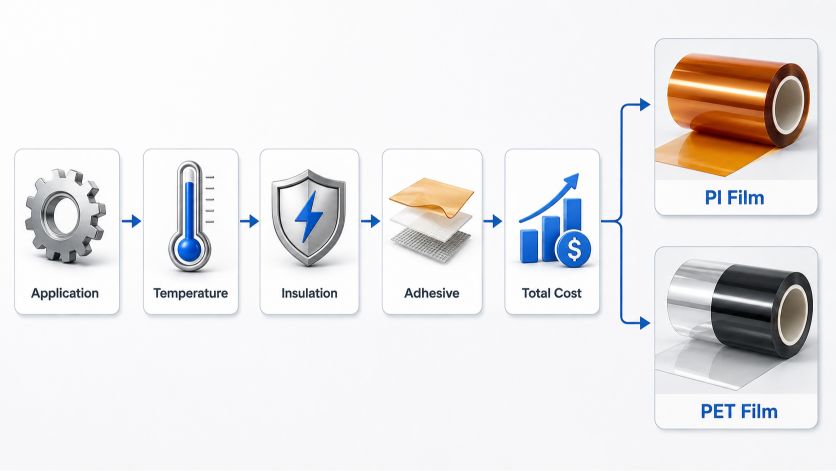
Step 1: Define the Application
Identify the primary function:
- Electrical insulation.
- High-temperature masking.
- Protective covering.
- Battery separation.
- Mechanical spacing.
- Adhesive bonding.
- Die-cut assembly.
Step 2: Confirm Operating Conditions
Document:
- Continuous operating temperature.
- Maximum short-term temperature.
- Exposure duration.
- Humidity
- Chemical contact.
- Mechanical stress.
- Indoor or outdoor exposure.
Step 3: Establish Electrical Requirements
Confirm:
- Required dielectric strength.
- Minimum breakdown voltage.
- Film thickness.
- Electrical clearance.
- Relevant testing requirements.
Step 4: Review Adhesive and Liner Needs
Determine:
- Whether adhesive is required.
- Whether the adhesive is permanent or removable.
- Which surface the part will bond to.
- Whether clean removal is necessary.
- Whether a release liner is needed.
- Whether the product must be supplied on sheets or rolls.
Step 5: Consider Manufacturing Requirements
Identify:
- Part dimensions.
- Critical tolerances.
- Slitting width.
- Die-cut geometry.
- Packaging format.
- Production quantity.
- Annual usage.
- Sample requirements.
Step 6: Compare Total Cost
Evaluate:
- Material price.
- Adhesive construction.
- Tooling
- Production yield.
- Minimum order quantity.
- Lead time.
- Shipping
- Long-term reliability.
Step 7: Request Samples and Technical Data
Before approving a material, request:
- Technical data sheet.
- Available compliance documents.
- Sample material.
- Representative die-cut parts, if applicable.
- Quotation at relevant quantities.
- Confirmation of material availability.
- Production and delivery lead times.
Practical Selection Summary
Consider PI film when:
- The application involves higher temperatures.
- Thermal stability is critical.
- The part is exposed to demanding manufacturing processes.
- Thin insulation is required under challenging conditions.
- The additional material cost is justified by performance.
Consider PET film when:
- The application operates within the qualified PET temperature range.
- Electrical insulation is required at a lower cost.
- Standard thicknesses and broad availability are important.
- High-volume production favors a more economical material.
- The selected PET grade meets all electrical and compliance requirements.
The best choice should always be based on the complete application rather than on a general assumption about either material.
15. Frequently Asked Questions
Is PI film more heat-resistant than PET film?
Generally, yes. PI film is commonly selected for applications requiring higher temperature resistance than standard PET film.However, the actual operating limit depends on the specific film grade, thickness, adhesive construction, exposure time, and application conditions.
Is PET film suitable for electrical insulation?
Yes. Electrical-grade PET film is widely used for insulation barriers, die-cut electrical parts, battery components, and electronic assemblies.Its suitability depends on the actual electrical, thermal, mechanical, and compliance requirements.
Is PI film always better than PET film?
No. PI film may offer higher thermal capability, but PET can be a more practical and economical choice when the application does not require PI’s additional temperature resistance.
Is PET film less expensive than PI film?
PET film is often less expensive than PI film, particularly in standard grades and larger production volumes.However, pricing varies according to thickness, flame-retardant performance, adhesive construction, order quantity, and supplier.
Can PET film replace PI film in SMT applications?
It depends on the process.Some specialized PET constructions may be suitable for certain masking or protection applications, but PET should not automatically be substituted for PI in high-temperature reflow or soldering processes.Confirm the actual temperature profile and test the complete film-and-adhesive construction.
Can PI and PET films both be die cut?
Yes. Both materials can be slit, die cut, kiss cut, laminated, and converted into customized insulation components, depending on thickness, design, and manufacturing requirements.
Which film is better for battery insulation?
Both PI and PET can be suitable, depending on operating temperature, dielectric requirements, flame performance, mechanical conditions, adhesive needs, and cost.Different components within the same battery system may require different insulation materials
Does a higher-temperature film always provide better electrical insulation?
Not necessarily. Temperature resistance and electrical insulation performance are related but distinct properties.The correct material should be evaluated using the required dielectric strength, thickness, operating environment, and relevant test methods.
Do PI tapes and PET tapes always include a release liner?
No. Some adhesive tapes are supplied without a separate release liner, while others include paper or film liners depending on the product construction and intended use.The backing material and release liner should be specified separately.
What information should I provide when requesting a PI or PET film quotation?
Provide:
· Application.
· Required film material or performance.
· Thickness.
· Width and roll length.
· Operating temperature.
· Adhesive requirements.
· Release liner requirements.
· Die-cut dimensions, if applicable.
· Quantity.
· Annual usage.
· Technical documentation requirements
· Delivery location.
A clear RFQ helps suppliers recommend an appropriate film and prepare a more accurate quotation.
Find the Right PI or PET Film for Your Application
Our engineers will help you select the right film for your application.
FEP vs PTFE Film: Key Differences in Processing and Performance
FEP and PTFE films belong to the fluoropolymer family and share valuable characteristics such as chemical resistance, electrical insulation, low surface energy and good performance in demanding environments. However, they are not interchangeable. Their different molecular structures lead to major differences in melt processing, transparency, heat sealing, temperature capability, stiffness and fabrication.
Case Study: UL94 VTM-0 PET Film for Battery Insulation Applications
How a flame-retardant PET insulation film helped a U.S. customer meet laboratory material requirements for a battery-powered product
When developing a new battery-powered product for the U.S. market, material selection is not only about thickness, flexibility, or cost. For products containing batteries, flammability, electrical insulation, and regulatory compliance can become critical factors during laboratory evaluation.
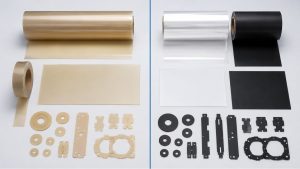
PPS vs PET Film: Which Electrical Insulation Film Should You Choose?
PPS film is generally selected for demanding environments involving higher temperatures, thermal aging, chemicals, humidity, or flame-performance requirements. PET film offers dependable electrical insulation, broad availability, convenient processing, and lower material cost for applications operating within its qualified limits.
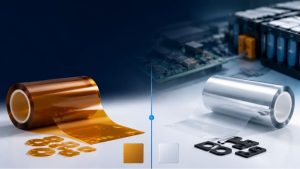
PI vs PET Film: Temperature Resistance, Insulation and Cost Comparison
PI film is generally selected when an application requires greater thermal stability or resistance to demanding processing conditions. PET film is often preferred when reliable electrical insulation, dimensional stability, and lower material cost are the main priorities.