

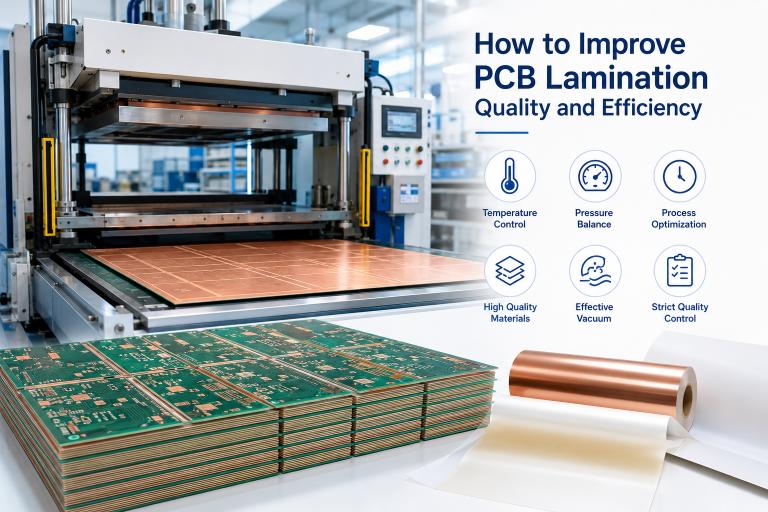
PCB lamination is one of the most critical processes in printed circuit board manufacturing. It determines the bonding strength between copper foil, prepreg, and core materials while directly affecting electrical performance, dimensional stability, reliability, and final product yield.
As PCB designs become more complex—with higher layer counts, finer circuits, and demanding thermal requirements—manufacturers must optimize every aspect of the lamination process. Proper material selection, process control, and equipment maintenance are essential for producing defect-free multilayer PCBs.
This guide explains the key factors affecting PCB lamination quality, common manufacturing defects, and practical solutions for improving production efficiency.
What Is PCB Lamination?
PCB lamination is the manufacturing process that bonds multiple layers of copper foil, prepreg, and PCB cores together under controlled temperature, pressure, vacuum, and time.
During lamination, the resin inside the prepreg softens and flows, filling gaps between layers before curing into a rigid structure. Proper resin flow and complete curing ensure excellent adhesion and mechanical strength.
A well-controlled lamination process results in:
- Strong interlayer bonding
- Stable electrical insulation
- High dimensional accuracy
- Excellent thermal reliability
- Improved PCB yield
Key Factors Affecting PCB Lamination Quality
1. Temperature Control
Temperature determines resin flow and curing behavior.
Excessive temperatures may cause:
- Resin squeeze-out
- Material degradation
- Internal stress
Insufficient temperatures may lead to:
- Incomplete curing
- Weak bonding
- Delamination
Maintaining a precise heating profile ensures consistent resin flow and full polymerization.
2. Pressure Distribution
Uniform pressure allows prepreg resin to spread evenly throughout the PCB stack-up.
Improper pressure can result in:
- Air pockets
- Voids
- Uneven thickness
- Poor copper adhesion
Modern hydraulic presses with precise pressure control significantly improve lamination consistency.
3. Lamination Time
Each material system requires an optimized heating and curing cycle.
Insufficient curing time may reduce bond strength, while excessive curing lowers production efficiency and can damage material performance.
Manufacturers should optimize the complete heating, dwell, and cooling profile according to material specifications.
4. Material Quality
High-quality materials are essential for reliable PCB production.
Critical materials include:
- Prepreg
- Copper foil
- Copper clad laminate (CCL)
- Release film
- Breather fabric
- Separator plates
Premium materials provide:
- Stable resin flow
- Low contamination
- Uniform thickness
- Excellent dimensional stability
5. Clean Manufacturing Environment
Dust, oil, moisture, or fingerprints can cause bonding failures during lamination.
A clean production environment helps prevent:
- Delamination
- Resin contamination
- Surface defects
- Electrical failures
Many high-end PCB manufacturers perform lamination in controlled cleanroom environments.
6. Vacuum Performance
Vacuum lamination removes trapped air and volatile gases before curing.
Effective vacuum systems help eliminate:
- Internal voids
- Blisters
- Air bubbles
- Poor adhesion
Vacuum-assisted lamination is especially important for multilayer and HDI PCB production.
Best Practices to Improve PCB Lamination Efficiency
Select Reliable Lamination Materials
Choosing high-quality materials is the foundation of consistent PCB production.
Recommended materials include:
- High Tg prepreg
- Low-flow prepreg
- High-performance release film
- Premium copper foil
- Stable copper clad laminate
These materials improve resin control and reduce manufacturing defects.
Optimize Lamination Parameters
Every PCB design requires its own optimized process.
Adjust:
- Heating rate
- Pressure profile
- Vacuum level
- Holding time
- Cooling rate
Continuous process optimization improves yield while reducing energy consumption.
Improve Stack-Up Design
Balanced layer structures minimize internal stress during curing.
Good stack-up design helps reduce:
- Warpage
- Misalignment
- Internal stress
- Copper imbalance
Maintain Equipment Regularly
Production equipment should be inspected routinely.
Preventive maintenance includes:
- Press calibration
- Temperature verification
- Pressure testing
- Vacuum inspection
- Plate cleaning
Stable equipment delivers repeatable production results.
Monitor Production Data
Modern factories use real-time monitoring systems to record:
- Temperature curves
- Pressure profiles
- Vacuum levels
- Cycle times
Production data enables continuous improvement and full process traceability.
Common PCB Lamination Defects and Solutions
| Defect | Possible Cause | Recommended Solution |
|---|---|---|
| Delamination | Poor bonding or contamination | Improve cleaning and material quality |
| Voids | Trapped air or insufficient vacuum | Increase vacuum efficiency |
| Resin Starvation | Excessive pressure | Reduce pressure and optimize prepreg selection |
| Resin Squeeze-Out | High temperature or excessive pressure | Optimize process parameters |
| Warpage | Unbalanced stack-up | Improve layer design and cooling process |
| Blisters | Moisture contamination | Bake materials before lamination |
Recommended PCB Lamination Materials
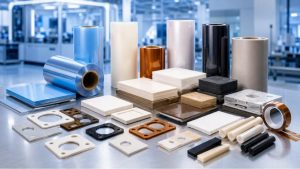
A complete PCB lamination solution typically includes:
PCB Prepreg
Provides resin flow and strong interlayer bonding for multilayer PCBs.
Copper Clad Laminate (CCL)
Offers excellent mechanical strength, electrical insulation, and dimensional stability.
Copper Foil
Provides high conductivity and reliable circuit formation.
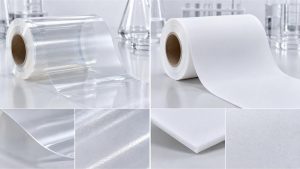
Release Film
Ensures easy separation after lamination while protecting PCB surfaces.
Breather / Bleeder Fabric
Promotes even air evacuation and resin flow throughout the lamination process.
Why Choose Our PCB Lamination Materials?
We provide professional material solutions for PCB manufacturers worldwide.
Our advantages include:
- High-performance insulation materials
- Stable resin flow properties
- Strict quality inspection
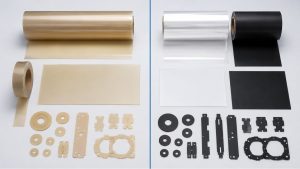
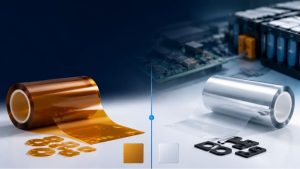
- Custom converting services
- Precision slitting and die cutting
- OEM & ODM manufacturing
- Fast sampling
- Global delivery
Whether you are manufacturing standard multilayer PCBs, HDI boards, automotive PCBs, or high-frequency circuit boards, our materials help improve lamination quality, increase production efficiency, and reduce manufacturing costs.
Conclusion
Improving PCB lamination quality requires more than advanced equipment. Success depends on selecting premium materials, optimizing process parameters, maintaining clean manufacturing conditions, and continuously monitoring production performance.
By combining high-quality prepreg, copper foil, release films, and professional lamination solutions with proven manufacturing practices, PCB manufacturers can significantly reduce defects, increase production yield, and deliver highly reliable electronic products.
If you are looking for reliable PCB lamination materials or custom converting solutions, our engineering team is ready to help you select the right materials for your specific application.
FAQ
What is the ideal lamination temperature for PCBs?
The ideal temperature depends on the prepreg resin system and laminate type. Always follow the material supplier’s recommended lamination profile.
How can I reduce PCB delamination?
Use clean materials, optimize vacuum and pressure settings, ensure complete resin curing, and maintain a contamination-free production environment.
Why is vacuum important in PCB lamination?
Vacuum removes trapped air and volatile gases, reducing voids, blisters, and bonding defects while improving overall PCB reliability.
What materials are commonly used in PCB lamination?
Common materials include prepreg, copper clad laminate (CCL), copper foil, release film, breather fabric, and separator plates.