
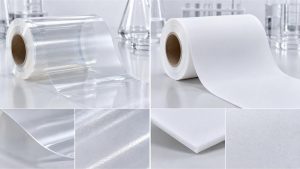
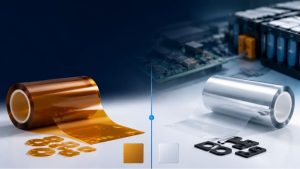


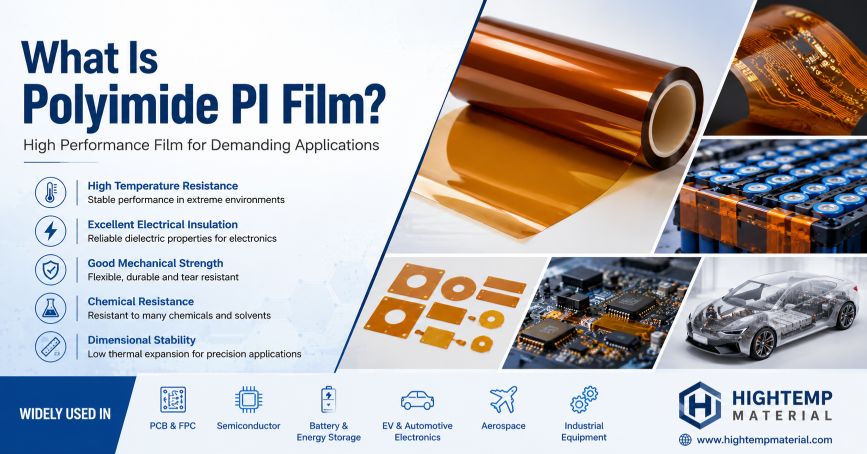
Polyimide (PI) film is a high-performance polymer film known for its excellent thermal stability, electrical insulation, mechanical strength, and chemical resistance. Because of these properties, PI film is widely used in applications where conventional plastic films cannot withstand high temperatures or demanding operating conditions.
Polyimide film is commonly used in electronics, PCB manufacturing, flexible circuits, electrical insulation, batteries, aerospace, automotive electronics, and other high-temperature industrial applications.
For engineers and purchasing teams, understanding the properties and applications of PI film is important when selecting a reliable insulation or high-temperature material.
What Is Polyimide Film?
Polyimide film is a thin film made from polyimide resin, an aromatic polymer containing imide groups in its molecular structure.
Unlike conventional films such as PET or PE, polyimide film can maintain its mechanical and electrical performance over a much wider temperature range.
This makes PI film particularly suitable for:
- High-temperature electrical insulation
- Flexible printed circuit boards
- PCB and electronics manufacturing
- Battery insulation
- Wire and cable insulation
- Semiconductor applications
- Automotive electronics
- Aerospace and industrial equipment
PI film can be supplied in different thicknesses, widths, colors, surface treatments, and configurations depending on the application.
Key Properties of Polyimide PI Film
The performance of PI film comes from its unique molecular structure. Several properties make it one of the most widely used high-temperature polymer films.
1. Excellent Temperature Resistance
One of the most important advantages of polyimide film is its ability to operate at elevated temperatures.
Depending on the specific grade and application conditions, PI film can withstand continuous high-temperature exposure and short-term temperature peaks.
This makes it suitable for applications where materials such as PET or ordinary plastic films may deform, shrink, or lose their electrical properties.
Typical high-temperature applications include:
- Electrical insulation
- Heating elements
- Motor and transformer insulation
- PCB processing
- Battery components
- Industrial equipment
Important: Actual temperature limits depend on the specific PI film grade, thickness, operating time, mechanical load, and environmental conditions. Engineers should always refer to the manufacturer’s technical data sheet before final material selection.
2. Excellent Electrical Insulation
Polyimide film has excellent dielectric properties and is widely used as an electrical insulation material.
It can provide reliable insulation between conductive components while maintaining performance under elevated temperatures.
Typical applications include:
- Flexible circuits
- PCB insulation
- Transformer insulation
- Motor insulation
- Wire and cable insulation
- Battery insulation
- Electronic component insulation
This combination of electrical insulation and temperature resistance is one of the main reasons PI film is widely used in electronics manufacturing.
3. High Mechanical Strength
Although PI film can be extremely thin, it can provide good mechanical strength and dimensional stability.
This is particularly important for flexible electronic applications where the film may need to withstand:
- Bending
- Folding
- Tension
- Lamination
- Cutting
- Punching
- Repeated handling
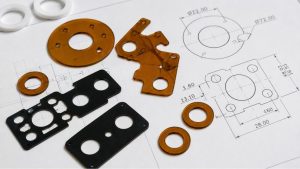
For precision converting applications, the film can also be processed into custom shapes and sizes.
4. Good Chemical Resistance
Polyimide film generally provides good resistance to many chemicals and solvents.
This makes it suitable for demanding industrial environments where the material may be exposed to processing chemicals or other aggressive conditions.
However, chemical compatibility depends on the specific chemical, concentration, temperature, exposure time, and PI film grade.
For critical applications, compatibility testing should be performed before mass production.
5. Dimensional Stability
PI film offers good dimensional stability across temperature changes.
This is particularly valuable for precision electronic applications where excessive thermal expansion or shrinkage could affect:
- Alignment
- Insulation spacing
- Circuit dimensions
- Lamination quality
- Component positioning
For high-precision applications, engineers should evaluate the specific coefficient of thermal expansion and dimensional stability data of the selected PI film.
Polyimide Film vs PET Film
PI film and PET film are both widely used polymer films, but they are designed for different performance requirements.
| Property | PI Film | PET Film |
|---|---|---|
| Temperature Resistance | Excellent | Moderate |
| Electrical Insulation | Excellent | Good |
| Mechanical Strength | Excellent | Good |
| Dimensional Stability | Excellent | Good |
| Flexibility | Excellent | Good |
| High-Temperature Applications | Excellent | Limited |
| Typical Cost | Higher | Lower |
If the application requires high-temperature resistance and long-term electrical reliability, PI film is generally a better choice.
If the application has moderate temperature requirements and cost is a major consideration, PET film may be more economical.
Common Applications of Polyimide PI Film
1. PCB and FPC Manufacturing
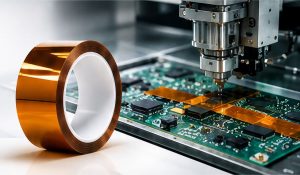
PI film is widely used in flexible printed circuit boards and electronic manufacturing.
Its combination of:
- Flexibility
- Electrical insulation
- Thermal resistance
- Dimensional stability
makes it suitable for flexible circuits and high-temperature processing environments.
2. Electrical Insulation
PI film is widely used for insulating electrical components such as:
- Motors
- Transformers
- Coils
- Cables
- Busbars
- Electronic components
Its high-temperature electrical insulation capability allows it to operate in environments where conventional insulating films may not be suitable.
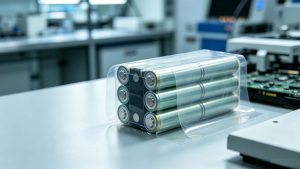
3. Battery and Energy Storage
As battery technologies continue to develop, high-performance insulation materials are increasingly important.
PI film can be used in areas such as:
- Battery insulation
- Cell insulation
- Tab insulation
- Electrical separation
- High-temperature protective layers
Material selection should consider the battery chemistry, operating temperature, dielectric requirements, thickness, and long-term reliability.
4. Semiconductor and Electronics
PI film is also used in semiconductor and electronic manufacturing because of its:
- Thermal stability
- Electrical insulation
- Low thickness
- Mechanical flexibility
- Processing compatibility
It can be converted into custom components for different electronic assemblies.
5. Automotive and EV Applications
Modern vehicles contain a growing number of electronic and high-voltage components.
PI film can be used in:
- EV electrical insulation
- Motor insulation
- Battery components
- Wire insulation
- Power electronics
- High-temperature electronic assemblies
Its ability to maintain performance under elevated temperatures makes it attractive for demanding automotive applications.
How to Choose the Right PI Film
When selecting polyimide film, temperature resistance is only one consideration.
Engineers should also evaluate the following factors.
1. Film Thickness
Common applications may require different thicknesses depending on insulation, mechanical strength, flexibility, and dimensional requirements.
2. Width and Length
For converting or production applications, roll width and length should match the customer’s processing equipment.
3. Temperature Requirements
Consider both:
- Continuous operating temperature
- Short-term peak temperature
4. Electrical Requirements
Important parameters may include:
- Dielectric strength
- Volume resistivity
- Surface resistivity
- Insulation resistance
5. Mechanical Requirements
Consider:
- Tensile strength
- Elongation
- Flexibility
- Tear resistance
- Dimensional stability
6. Surface Requirements
Depending on the application, PI film may require specific surface characteristics for:
- Adhesive bonding
- Lamination
- Coating
- Printing
- Die cutting
7. Converting Requirements
For industrial applications, standard rolls may not always be the best solution.
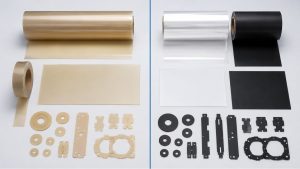
PI film can potentially be converted into:
- Die-cut parts
- Insulation pieces
- Strips
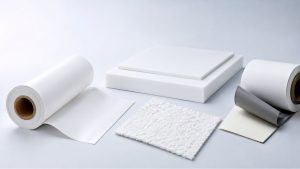
- Slit rolls
- Laminated structures
- Custom components
Can Polyimide Film Be Customized?
Yes. Depending on the supplier and production capabilities, PI film can be supplied in customized formats.
Typical customization options include:
- Thickness
- Width
- Roll length
- Slitting
- Die cutting
- Laminating
- Adhesive coating
- Custom shapes
For OEM applications, customers can provide drawings, dimensions, samples, or technical specifications for evaluation.
This is particularly useful for PCB, battery, electronics, and industrial applications where standard film dimensions may not meet the production requirements.
Why Choose PI Film for High-Temperature Applications?
The main advantage of polyimide film is not simply its temperature resistance.
It is the combination of multiple performance characteristics:
High temperature resistance + electrical insulation + mechanical strength + dimensional stability + chemical resistance
This combination allows PI film to perform reliably in demanding applications where ordinary polymer films may not be suitable.
Conclusion
Polyimide PI film is a high-performance material designed for applications requiring reliable electrical insulation, thermal stability, mechanical strength, and dimensional stability.
It is widely used in:
- PCB and FPC manufacturing
- Electrical insulation
- Semiconductor applications
- Battery and energy storage
- EV and automotive electronics
- Industrial equipment
- Aerospace and other demanding applications
When selecting PI film, engineers should consider temperature, thickness, dielectric properties, mechanical performance, chemical compatibility, dimensions, and converting requirements.
For customized PI film requirements, working with a supplier capable of slitting, die cutting, laminating, adhesive coating, and precision converting can help simplify material sourcing and improve production efficiency.
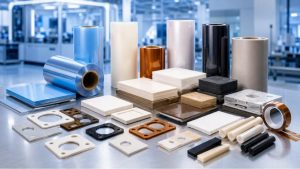
HighTemp Material supplies high-temperature and insulation materials for industrial and electronic applications, including PI film, PTFE film, PET, PPS, PEN, fiberglass insulation materials, silicone rubber and customized converting solutions.