

Table of Contents
- What Is PTFE Film?
- How PTFE Materials Are Manufactured
- 1. Skived PTFE Film
- 2. Molded PTFE Sheet
- 3. Expanded PTFE
- 4. Adhesive-Backed PTFE
- PTFE Film Type Comparison
- How to Choose the Right PTFE
- Selection by Application
- Common Selection Mistakes
- Custom PTFE Converting Options
- Information to Include in Your RFQ
- Frequently Asked Questions
- Conclusion
Choose skived PTFE film for flexible dense insulation and release surfaces; molded PTFE sheet for thicker machined parts; expanded PTFE for compressible sealing or microporosity; and adhesive-backed PTFE when direct installation onto a substrate is required.
What Is PTFE Film?
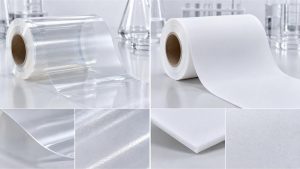
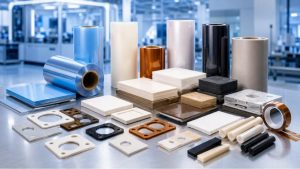
PTFE, or polytetrafluoroethylene, is a fluoropolymer valued for chemical resistance, low friction, electrical insulation and reliable performance across a broad temperature range. Depending on the manufacturing process, it may be supplied as thin rolls, sheets and plates, porous membranes, adhesive tapes, gaskets, washers, machined components or custom die-cut parts.
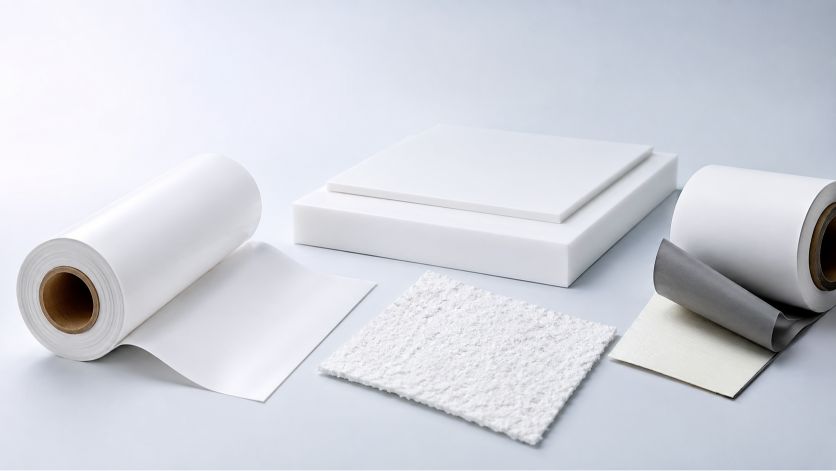
The phrase “PTFE film” is often used broadly, but the products grouped under this name can have very different density, flexibility, permeability and bonding behavior. A dense skived film does not perform like a microporous expanded membrane, and a molded sheet is usually not a continuous roll film. The manufacturing method should therefore be one of the first items checked during material selection.
PTFE also has inherently low surface energy. This creates its useful non-stick behavior, but it makes ordinary adhesive bonding difficult. When a permanent adhesive layer is required, the bonding surface may need chemical treatment or another controlled surface-preparation process.
How PTFE Materials Are Manufactured
Skiving
PTFE resin is compressed and sintered into a cylindrical billet. A precision blade peels a continuous layer from the rotating billet, producing flexible film suitable for rolls, sheets, slitting and die cutting.
Molding
PTFE resin is compressed inside a mold and then sintered. The result is normally a thicker sheet, plate, block, tube or machinable blank. Although thin molded material may occasionally be marketed as film, it is generally not a continuous roll product.
Expansion
PTFE is stretched under controlled conditions to create a network of microscopic nodes and fibrils. This expanded structure can be lightweight, porous, soft and compressible.
Adhesive Lamination
A PTFE film is surface treated and combined with a pressure-sensitive adhesive. A release liner is commonly added so the finished construction can be supplied as rolls, slit tape, sheets or kiss-cut components.
1. Skived PTFE Film
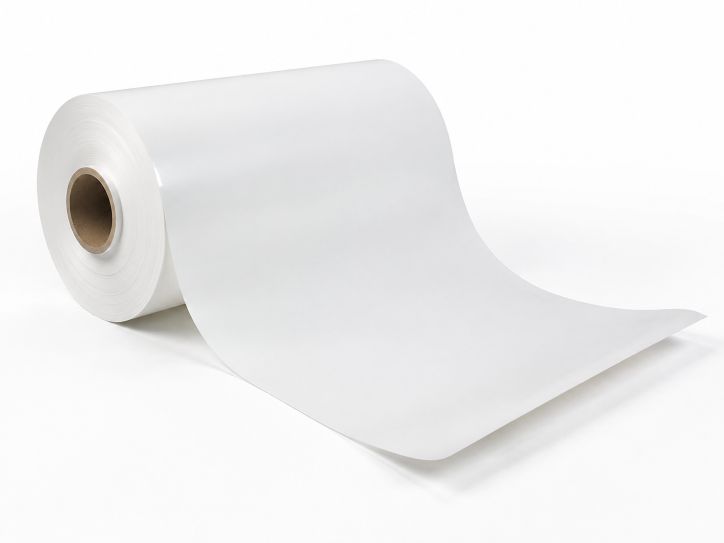
Skived PTFE film is shaved as a continuous layer from a sintered PTFE billet. It is one of the most practical choices when flexible, dense and nonporous PTFE is required in roll or sheet form.
Key characteristics
- Dense and generally nonporous
- Flexible in thinner gauges
- Low-friction, non-stick surface
- Good electrical insulation and chemical resistance
- Suitable for slitting, laminating and precision die cutting
Common applications
Electrical insulation, cable wrapping, release surfaces, chemical barriers, sliding surfaces, seals, gaskets, insulation washers and custom converted parts.
Advantages and limitations
Its continuous format works well for roll-to-roll converting and automated production. However, very thin material can wrinkle or stretch if web tension is not controlled, and untreated PTFE is difficult to bond with conventional adhesives.
2. Molded PTFE Sheet
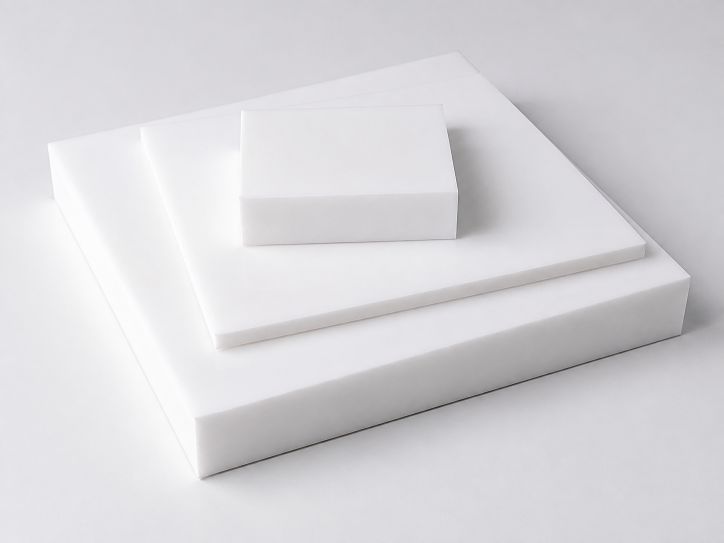
Molded PTFE is produced by compressing resin in a mold and sintering it into a solid form. It is generally thicker and more rigid than skived film.
Key characteristics
- Dense solid structure and thicker gauges
- Good dimensional stability
- Suitable for drilling, turning, milling and CNC machining
- Available as sheet, plate, block or tube
Common applications
Thick electrical insulation pads, valve and pump components, bearing pads, chemical equipment parts, machined seals, structural insulation and wear plates.
Molded PTFE is useful when a part must maintain a defined shape or requires machining. It is less suitable for wrapping, conforming around complex surfaces or continuous roll processing, and subtractive machining may create more waste than die cutting.
3. Expanded PTFE
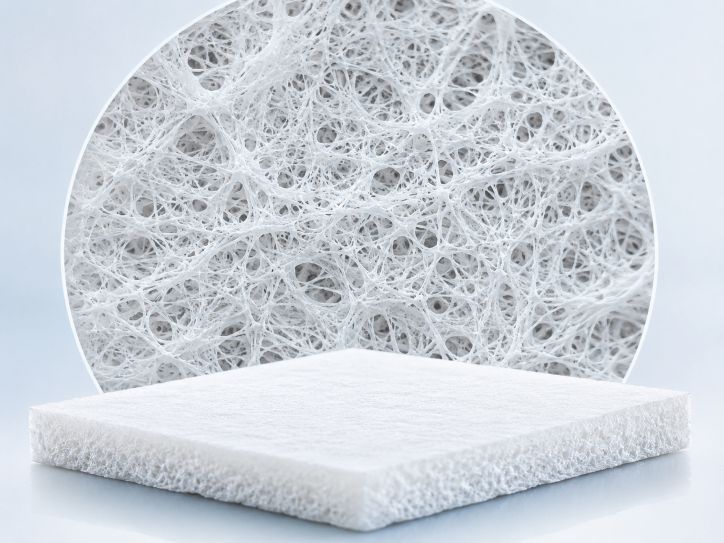
Expanded PTFE, or ePTFE, is stretched to create an interconnected microporous network. Unlike dense skived or molded PTFE, its structure contains controlled pore space.
Key characteristics
- Microporous and lightweight
- Soft, conformable and compressible
- Available in different densities and structures
- Selected grades permit controlled gas or vapor transmission
- Excellent chemical resistance
Common applications
Flange gaskets, sealing tape, venting membranes, filtration, pressure equalization, breathable barriers and specialized cable or electronic components.
The compressible structure can conform to irregular mating surfaces. However, expanded PTFE should not be chosen where a dense impermeable barrier is required. Density, pore size, airflow, compression and mechanical strength differ substantially between grades, so buyers should review data for the exact product.
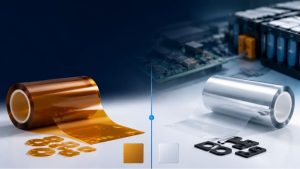
4. Adhesive-Backed PTFE
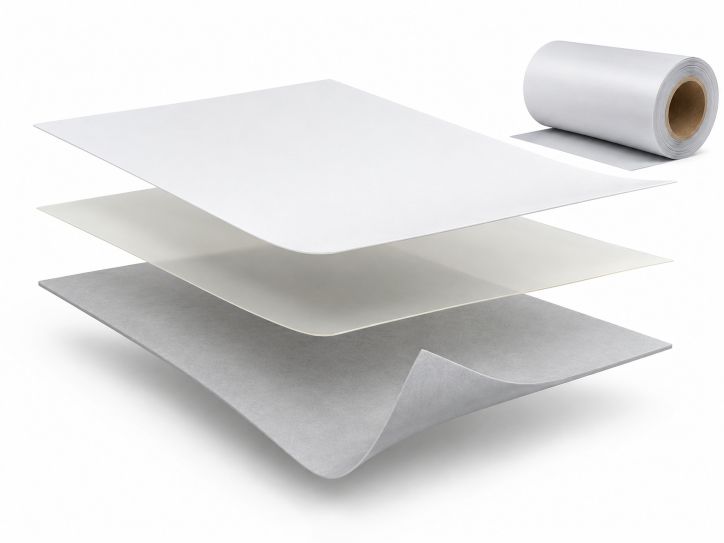
Adhesive-backed PTFE combines a PTFE backing with a pressure-sensitive adhesive and usually a release liner. The bonding side is commonly surface treated before coating or lamination.
Typical construction
- PTFE film or sheet
- Surface treatment
- Pressure-sensitive adhesive
- Optional release liner
Silicone, acrylic, rubber-based and specialized high-temperature adhesives may be used. The correct system depends on the substrate, service temperature, chemicals, required removal behavior and contamination restrictions.
Common applications
Chute and hopper liners, heat-sealing equipment, low-friction guides, mold release, machinery wear surfaces, conveyor systems, insulation and custom adhesive-backed gaskets.
The adhesive often has a lower temperature or chemical-resistance limit than the PTFE backing. Always evaluate the complete construction, not only the PTFE layer.
PTFE Film Type Comparison
| Property | Skived PTFE film | Molded PTFE sheet | Expanded PTFE | Adhesive-backed PTFE |
|---|---|---|---|---|
| Structure | Dense | Dense | Microporous | PTFE with adhesive |
| Typical format | Roll or sheet | Sheet, plate or block | Membrane or sealing tape | Roll, sheet or die-cut part |
| Flexibility | High in thin gauges | Low to moderate | Usually high | Depends on backing |
| Porosity | Generally nonporous | Nonporous | Porous | Usually nonporous |
| Compressibility | Low | Low | High, grade-dependent | Low to moderate |
| Main benefit | Flexible dense film | Thick structural stock | Conformability and microporosity | Easy installation |
| Typical uses | Insulation, barriers, seals | Machined parts and pads | Gaskets, vents, filters | Liners, tapes, wear surfaces |
This table provides general guidance. Exact performance depends on grade, thickness, fillers, adhesive chemistry, density and manufacturing process. Confirm the supplier’s technical data and test samples under actual conditions.
How to Choose the Right PTFE Material
1. Define the operating temperature
Specify continuous temperature, peak temperature, exposure time, thermal cycles, heating rate and any simultaneous mechanical load. For adhesive-backed products, check the adhesive limit separately.
2. Select the required thickness
Thin skived film suits wrapping, flexible insulation and precision die-cut parts. Thicker molded PTFE suits structural pads, machined seals and wear components. Clarify whether thickness means the PTFE backing, adhesive, total construction or total including the liner.
3. Decide whether porosity is required
Choose dense PTFE to block air and liquids. Consider ePTFE for breathability, pressure equalization, filtration, compressible sealing or conformity to uneven surfaces.
4. Review the surface function
Define whether PTFE is providing low friction, release, insulation, chemical protection, wear reduction or sealing. If bonding is needed, specify which side requires surface treatment.
5. Determine whether adhesive is needed
Identify the substrate, surface texture, temperature, chemicals, service life, removal requirement and any silicone restriction. Test adhesion on the actual production surface.
6. Select the final product format
Options include jumbo rolls, slit rolls, sheets, strips, tape, washers, gaskets, discs, frames, kiss-cut parts on liners and CNC-machined components. Format affects assembly time, material use and total cost.
Selection by Application
Electrical insulation
Skived PTFE film is commonly chosen for thin flexible insulation. Molded PTFE can be better for thicker spacers, structural pads and machined components.
Chemical processing
Dense skived or molded PTFE can serve as chemical-resistant barriers, liners, gaskets and components. Review chemical type, concentration, temperature, pressure and mechanical stress.
Sealing and gaskets
Dense skived PTFE can be die cut into flat gaskets and washers. Expanded PTFE is often preferred when more compressibility and conformity are required.
Low-friction surfaces
Skived or adhesive-backed PTFE can be used on guide rails, chutes, hoppers, packaging machinery, heat-sealing equipment and wear strips. Adhesive-backed material simplifies assembly if the adhesive matches the substrate and service conditions.
Common PTFE Selection Mistakes
- Choosing by temperature alone: temperature does not define permeability, dimensional stability, compression or adhesion.
- Treating molded PTFE as roll film: confirm whether the required supply format is a roll, sheet, plate or machinable blank.
- Assuming all ePTFE is identical: density, pores, airflow, compression and strength vary by grade.
- Ignoring the adhesive limit: the PTFE may remain stable while the adhesive softens, transfers or loses bond strength.
- Using porous material as a dense barrier: ePTFE is unsuitable when complete impermeability is essential.
- Forgetting surface treatment: untreated PTFE is difficult to coat or bond permanently.
Custom PTFE Converting Options
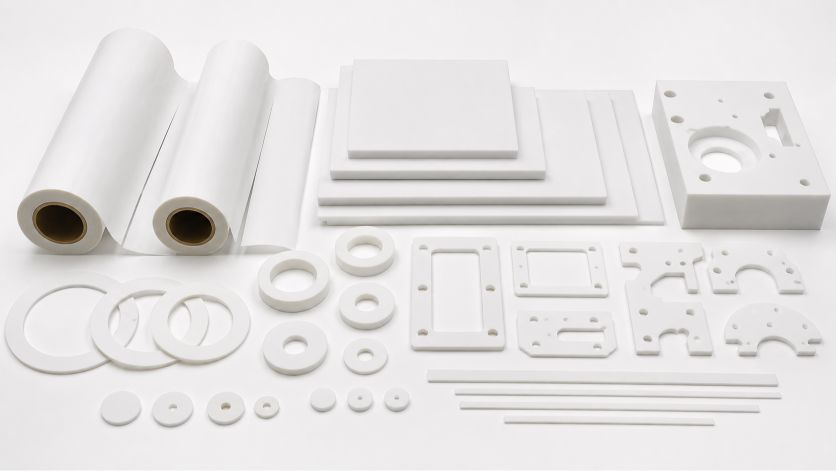
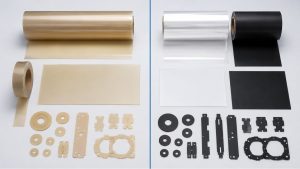
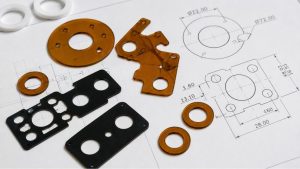
PTFE can be converted into production-ready components by precision slitting, sheet cutting, die cutting, kiss cutting, laminating, adhesive coating, surface treatment, CNC cutting and machining.
Typical finished products include PTFE washers, insulation discs, sealing rings, adhesive-backed strips, chemical-resistant gaskets, low-friction wear pads and electrical insulation parts. For volume assembly, kiss-cut components supplied on a common liner can reduce handling time and improve consistency.
Need Help Selecting a PTFE Material?
Send us your temperature, chemical environment, dimensions, thickness, adhesive requirements and expected quantity. We can compare skived, molded, expanded and adhesive-backed PTFE for your application.
Information to Include in Your RFQ
- Application and PTFE type, if known
- Continuous and peak temperature
- Chemical exposure and pressure
- Required thickness and dimensions
- Roll, sheet or finished-part format
- Porosity, sealing or airflow requirements
- Adhesive, substrate and surface-treatment requirements
- Drawing, sample and tolerance
- Prototype and production quantities
- Required delivery date
- Inspection, traceability or certification requirements
If the material type is unknown, provide the operating conditions and allow the supplier to recommend a construction.
Frequently Asked Questions
Skived film is peeled from a sintered cylindrical billet and can be supplied in flexible continuous rolls. Molded PTFE is compressed and sintered in a mold and is generally supplied as thicker sheets, plates, blocks or machined components.
Some ePTFE structures resist liquid water while allowing air or vapor transmission. Performance depends on pore structure, thickness, pressure, treatment and product design, so the exact grade must be evaluated.
Yes. Surface-treated PTFE can be laminated with silicone, acrylic, rubber-based or specialized pressure-sensitive adhesives selected for the substrate and service environment.
Some constructions are designed for elevated temperatures, but the complete tape must be evaluated because the adhesive can have a lower operating limit than the PTFE backing.
Yes. PTFE film, adhesive-backed PTFE and certain sheets can be converted into washers, discs, frames, strips, gaskets and custom components.
Dense skived film is commonly selected for thin flexible insulation. Molded PTFE may be better for thicker structural insulation. Consider voltage, thickness, temperature and mechanical load.
Dense skived PTFE suits many flat gaskets and washers. Expanded PTFE may be selected when more compressibility and conformity are required.
Not always. Film usually means uncoated material. Tape commonly means a narrower roll and may include a pressure-sensitive adhesive. Confirm the full construction.
Conclusion
Skived PTFE provides flexible dense film for insulation, barriers and converted parts. Molded PTFE provides thicker stock for structural and machined components. Expanded PTFE offers controlled microporosity and compression for venting, filtration and sealing. Adhesive-backed PTFE simplifies installation and places a low-friction or non-stick surface directly on another component.
The right choice depends on thickness, porosity, surface condition, adhesive chemistry, chemical exposure, pressure and final format—not temperature alone. Testing samples under actual operating conditions remains the most reliable confirmation.
Tell Us Your PTFE Application Requirements
Share your application, dimensions and operating conditions. Our team can recommend a suitable PTFE material and custom converting solution.