

Solar photovoltaic systems are expected to generate electricity reliably for decades while operating outdoors under sunlight, heat, moisture, electrical stress and changing weather conditions.
Achieving this level of reliability requires more than efficient solar cells and durable glass. Electrical and thermal insulation materials are also essential throughout the photovoltaic system—from solar modules and junction boxes to inverters, energy storage equipment and power-conversion electronics.
The correct insulation material helps prevent electrical leakage, protect sensitive components, maintain dimensional stability and reduce the risk of premature system failure.
This guide introduces seven important insulation materials used in the solar PV industry and explains how engineers and procurement teams can select the right film, pad, sheet or custom die-cut component.
Why Insulation Is Important in Solar PV Systems
A photovoltaic installation contains several areas where electrical conductors, heat-generating components and outdoor environmental conditions interact.
Insulation materials may be required to provide:
- Electrical isolation
- Dielectric protection
- Resistance to ultraviolet radiation
- Thermal stability
- Flame-retardant performance
- Moisture and weather resistance
- Chemical resistance
- Dimensional stability
- Component separation
- Vibration and impact protection
Poor insulation selection can contribute to electrical leakage, delamination, corrosion, short circuits, insulation breakdown or unstable inverter performance.
The challenge is that no single material can provide every required property. Solar module manufacturers and power electronics engineers normally use several materials in different parts of the system.
Where Insulation Materials Are Used
Insulation products can be found throughout a photovoltaic energy system.
Solar PV Modules
Inside or around a solar module, insulation films and laminated structures may support:
- Electrical isolation
- Component separation
- Backsheet or laminated protective structures
- Junction box mounting
- Busbar and ribbon protection
- Module edge insulation
- Outdoor weather protection
A film used within a solar backsheet structure must be evaluated as part of the complete multilayer construction. A general-purpose insulation film should not automatically be described as a complete solar backsheet.
Junction Boxes and Connectors
Junction boxes contain conductive components that require electrical isolation, thermal stability and resistance to outdoor conditions.
Custom insulation films, pads, gaskets and sealing components can help protect:
- Terminals
- Diodes
- Cable connections
- Internal circuit components
- Housing interfaces
PV Inverters
PV inverters convert direct current from solar modules into alternating current. Their power semiconductors, transformers, capacitors and control electronics can generate significant heat.
High-performance insulation materials are used around:
- IGBT and SiC power modules
- Busbars
- Heat sinks
- Transformers
- Inductors
- Printed circuit boards
- DC-link components
- Housing and mounting structures
Energy Storage and Power Conversion Systems
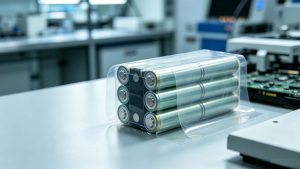
Solar installations are increasingly combined with battery energy storage systems and power conversion systems.
These systems may require electrical insulation, thermal interface pads, flame barriers, cushioning materials and custom die-cut components.
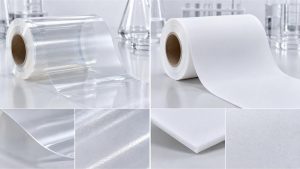
1. UV-Resistant PEN Insulation Film
PEN, or polyethylene naphthalate, is a high-performance polyester film offering better thermal and dimensional stability than standard PET.
UV-resistant PEN insulation film is particularly suitable for solar and outdoor electrical applications because it can combine electrical insulation with weather resistance and low thermal shrinkage.
Key Properties of PEN Film
Depending on the grade, PEN insulation film can provide:
- UV resistance
- Outdoor weatherability
- High dielectric strength
- Low thermal shrinkage
- Dimensional stability
- Good mechanical strength
- Chemical resistance
- Resistance to moisture
- Smooth processing performance
Available thicknesses may include approximately 25–125 μm, with custom thicknesses and roll dimensions available according to manufacturing requirements.
Certain solar-oriented PEN film grades may be designed for temperatures up to approximately 180°C. Actual continuous-use temperature depends on the material grade, load, exposure time and complete component structure.
Solar PV Applications
UV-resistant PEN film may be used in:
- Solar PV module laminated structures
- Insulation layers in backsheet constructions
- Junction boxes
- PV inverters
- Outdoor electrical components
- Power conversion systems
- Battery energy storage systems
- High-voltage insulation parts
PEN film should be evaluated according to the complete solar module or electrical component design. Its suitability for a backsheet construction depends on lamination compatibility, adhesion, moisture barrier requirements and long-term aging performance.
2. PET Electrical Insulation Film
PET is one of the most widely used electrical insulation films because it provides a practical balance of cost, dielectric strength, mechanical properties and converting performance.
Relevant PET products may include:
- Flame-retardant PET insulation film
- Clear electrical isolation film
- Black matte insulation film
- High-temperature masking film
- Lamination release film
- Adhesive-backed PET components
Advantages of PET Film
PET can provide:
- Good electrical insulation
- Dimensional stability
- Mechanical strength
- Smooth surface quality
- Good die-cutting performance
- Availability in multiple thicknesses
- Cost-effective processing
Flame-retardant grades may be selected for components requiring improved resistance to ignition. The complete component must still be evaluated according to the applicable safety requirements.
Solar PV Applications
PET film may be used for:
- Internal inverter insulation
- Busbar isolation
- Transformer insulation
- Junction box components
- Electronic component separation
- Protective film
- Release layers during manufacturing
PET has a lower high-temperature capability than materials such as PI or PPS. Engineers should confirm the continuous operating temperature, thermal cycling conditions and proximity to heat-generating components.
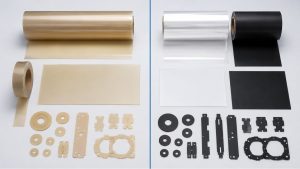
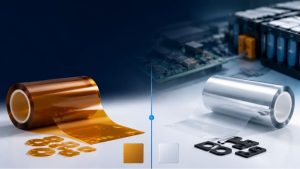
3. Polyimide Film for High-Temperature Insulation
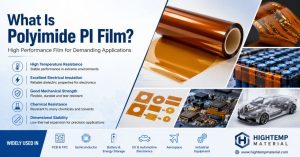
Polyimide, or PI film, is known for high dielectric strength, thermal stability, mechanical strength and flexibility at low thickness.
PI is commonly available as an amber film, although black matte, anti-static and laminated forms are also available.
Relevant PI products include:
- Plain PI base film
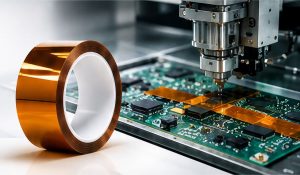
- High-temperature PI tape
- Anti-static ESD PI film
- Black matte PI film
- FEP laminated PI film
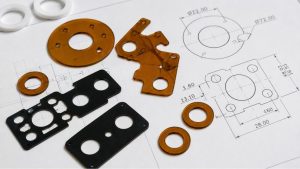
- Custom die-cut PI insulation pads
Why PI Is Used in PV Electronics
PI film can remain strong and dimensionally stable under demanding thermal and electrical conditions. This makes it suitable for compact areas inside PV inverters and other power electronics.
Typical applications include:
- IGBT and SiC module insulation
- Busbar protection
- Transformer and coil insulation
- PCB masking
- Electronic component isolation
- Custom die-cut terminal barriers
- High-temperature adhesive tape
PI can also be precision die cut into thin components with holes, slots and complex profiles.
Although PI provides excellent thermal performance, long-term outdoor UV exposure should be evaluated carefully. PI is normally more suitable for protected internal electrical components than directly exposed outdoor module surfaces unless a specifically qualified construction is used.
4. PPS Film for PV Inverters
PPS, or polyphenylene sulfide, is a high-performance polymer with good thermal stability, chemical resistance, flame resistance and dimensional control.
PPS insulation film is suitable for power electronics where components may face elevated temperatures, voltage stress and long operating cycles.
Advantages of PPS Film
PPS can provide:
- High-temperature resistance
- Good electrical insulation
- Chemical stability
- Low moisture absorption
- Flame-retardant performance
- Dimensional stability
- Mechanical rigidity
PV and Power Electronics Applications
PPS film may be used for:
- PV inverter insulation
- IGBT and SiC module components
- Power conversion systems
- Transformers
- Inductors
- High-voltage isolation
- Energy storage converters
- Charging equipment
PPS can be considered when standard PET does not provide sufficient thermal or chemical performance, but the application does not require the flexibility or extreme thin-film capabilities of PI.
5. PTFE and FEP Fluoropolymer Films
PTFE and FEP are fluoropolymers known for chemical resistance, electrical insulation, low friction and low moisture absorption.
PTFE Materials
PTFE products may include:
- Skived PTFE film
- PTFE adhesive tape
- Fiberglass-reinforced PTFE cloth
- Custom PTFE washers and gaskets
- ePTFE breathable film
PTFE can be useful in chemically demanding environments, sealing interfaces and applications requiring a low-friction or non-stick surface.
FEP Film
FEP film combines fluoropolymer chemical resistance and electrical insulation with transparency and heat sealability.
Potential applications include:
- Electrical isolation layers
- Release applications
- Protective film
- Cable and connector insulation
- FEP laminated PI structures
- Manufacturing process protection
PTFE and FEP have low surface energy, so bonding and lamination require suitable surface treatment or adhesive technology.
Solar PV Applications
Fluoropolymer materials may be used in:
- Outdoor electrical insulation
- Weather-resistant components
- Cable and connector systems
- Junction box seals
- Release surfaces during lamination
- Chemically resistant inverter parts
- Custom washers and gaskets
The exact fluoropolymer grade should be selected according to temperature, UV exposure, adhesive compatibility and mechanical requirements.
6. Silicone Insulation and Thermal Materials
Silicone rubber, silicone foam and thermally conductive silicone materials provide flexibility, sealing, cushioning and thermal management.
Relevant products include:
- Solid silicone rubber sheets
- Closed-cell silicone foam pads
- Thermally conductive silicone sheets
- Silicone-coated fiberglass cloth
- Custom die-cut silicone gaskets
Silicone Functions in PV Systems
Silicone materials can help provide:
- Electrical insulation
- Gap filling
- Vibration absorption
- Moisture sealing
- Dust protection
- Pressure distribution
- Heat transfer
- Resistance to weathering and ozone
Typical Applications
Silicone components may be used in:
- PV inverters
- Junction boxes
- Energy storage equipment
- Electronic enclosures
- Power modules
- Heat sink interfaces
- Cable entry points
- Outdoor sealing systems
Thermally conductive silicone pads help transfer heat from power components to heat sinks or metal housings. Closed-cell silicone foam is used primarily for sealing, cushioning and tolerance compensation.
These two materials perform different functions. A thermally conductive pad is designed to transfer heat, while a thermal insulation pad is designed to reduce heat transfer.
7. Mica, Aerogel and Fiberglass Materials
PV inverters, battery storage systems and electrical enclosures may require additional thermal or fire protection.
Mica Sheets
Mica provides electrical insulation, high-temperature resistance and flame protection.
Custom mica components may be used as:
- Electrical barriers
- Terminal insulation
- Busbar insulation
- Power module barriers
- Fire-resistant internal panels
- Custom die-cut gaskets
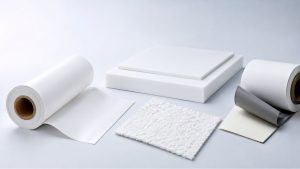
Aerogel Insulation Pads
Aerogel composites offer very low thermal conductivity at relatively low thickness.
They may be used in:
- Battery energy storage systems
- Thermal barriers
- Power equipment protection
- Compact high-temperature insulation
- Separation between heat-sensitive components
Fiberglass Materials
Fiberglass products may include:
- Silicone-coated fiberglass cloth
- High-silica fiberglass cloth
- Fiberglass insulation components
- PTFE-coated fiberglass cloth
These materials can provide combinations of reinforcement, heat resistance, flame protection and electrical insulation.
In standard solar modules, these high-temperature barrier materials may not be required. They are more relevant to inverters, energy storage systems, electrical cabinets and manufacturing equipment.
Comparison of Solar PV Insulation Materials
| Material | Main Advantages | Typical PV Applications |
|---|---|---|
| UV-resistant PEN | UV resistance, low shrinkage and dimensional stability | PV module structures, junction boxes and outdoor insulation |
| PET | Cost-effective electrical insulation and easy converting | Inverters, busbars, junction boxes and protective components |
| PI | High-temperature dielectric performance at low thickness | Power modules, transformers, PCBs and precision insulation |
| PPS | Thermal stability, flame resistance and chemical resistance | PV inverters and power conversion systems |
| PTFE | Chemical resistance, low friction and low moisture absorption | Seals, washers, release surfaces and harsh environments |
| FEP | Electrical insulation, transparency and heat sealability | Laminated structures, release films and protective layers |
| Silicone | Sealing, cushioning and thermal management | Junction boxes, enclosures, heat sinks and power modules |
| Mica | Electrical insulation and fire resistance | Inverter barriers and high-voltage components |
| Aerogel | Very low thermal conductivity | Energy storage and thermal barrier applications |
| Fiberglass | Heat resistance and reinforcement | Inverters, cabinets and production equipment |
This table presents general characteristics. Actual performance depends on grade, thickness, construction and operating environment.
Key Performance Requirements
Electrical Insulation
Solar PV systems operate at significant DC voltages. Insulation films must maintain sufficient dielectric strength throughout the intended operating life.
Important electrical properties include:
- Dielectric strength
- Volume resistivity
- Surface resistivity
- Dielectric constant
- Dissipation factor
- Comparative tracking performance where applicable
UV and Weather Resistance
Outdoor components may be exposed to sunlight, rain, humidity, wind, dust and temperature changes.
Materials used in exposed locations should be evaluated for:
- UV aging
- Thermal cycling
- Humidity resistance
- Hydrolysis resistance
- Outdoor weathering
- Dimensional stability
Thermal Stability
Solar modules and inverter components can reach elevated temperatures during operation.
Engineers should review:
- Continuous operating temperature
- Short-term peak temperature
- Thermal shrinkage
- Coefficient of thermal expansion
- Thermal cycling behavior
- Heat-aging performance
Flame-Retardant Performance
Flame-retardant insulation materials may be required in junction boxes, inverters, battery systems and other electrical equipment.
The material’s flammability classification should be reviewed together with thickness, installation method and the applicable component-level requirements.
Mechanical Strength
Insulation films may be exposed to tension, vibration, assembly pressure or repeated thermal expansion.
Important properties include:
- Tensile strength
- Elongation
- Tear resistance
- Puncture resistance
- Dimensional stability
- Compression performance
How to Select the Right Solar PV Insulation Material
1. Identify the Installation Location
Determine whether the component will be located:
- Inside a solar module
- Inside a junction box
- Inside an inverter
- Around a transformer
- Near a power semiconductor
- Inside an outdoor enclosure
- Inside a battery energy storage system
The exposure conditions can differ significantly between these locations.
2. Define the Primary Function
Confirm whether the material must provide:
- Electrical insulation
- Thermal transfer
- Thermal isolation
- UV protection
- Moisture sealing
- Flame protection
- Chemical resistance
- Mechanical cushioning
- Release performance
3. Confirm Temperature and Voltage
Provide the continuous temperature, maximum short-term temperature, operating voltage and required dielectric performance.
4. Review Outdoor Exposure
For outdoor applications, evaluate UV exposure, humidity, temperature cycling and expected service life.
A general-purpose electrical film should not be assumed to provide long-term outdoor durability without suitable qualification.
5. Check Lamination and Adhesion
For multilayer module structures, review:
- Adhesive compatibility
- Surface treatment
- Lamination temperature
- Peel strength
- Thermal shrinkage
- Moisture resistance
- Long-term aging performance
6. Determine the Finished Component Shape
Solar insulation materials can be supplied as rolls, sheets, strips, gaskets or precision die-cut parts.
A custom drawing should include:
- Dimensions
- Thickness
- Hole positions
- Tolerance
- Adhesive requirements
- Release liner
- Surface treatment
- Expected quantity
Precision Converting for Solar PV Components
Many insulation materials must be converted into application-specific parts before assembly.
Available processes may include:
- Precision die cutting
- CNC cutting
- Slitting and rewinding
- Sheet cutting
- Kiss cutting
- Adhesive lamination
- Multi-layer lamination
- Hole and slot cutting
- Protective liner application
- Prototype sampling
Custom converting can improve installation accuracy, reduce manual cutting and support consistent production quality.
Before mass production, samples should be tested under actual electrical, thermal, environmental and mechanical conditions.
Frequently Asked Questions
What insulation materials are commonly used in solar PV systems?
Common materials include PEN, PET, PI, PPS, PTFE, FEP, silicone, mica and fiberglass-based materials. The correct choice depends on the component and operating environment.
Which film is suitable for outdoor solar applications?
UV-resistant PEN film can be suitable for outdoor electrical insulation and certain PV module laminated structures. Its performance must be evaluated within the complete component or module design.
Can PEN film be used as a solar backsheet?
PEN film may be used as one layer within a solar backsheet or laminated protective structure. It should not automatically be considered a complete backsheet because moisture barrier, adhesion and multilayer performance must also be evaluated.
Which material is suitable for PV inverter insulation?
PI, PPS, PET, PEN, silicone and mica are commonly considered for inverter components. Material selection depends on voltage, temperature, thickness, flame resistance and component location.
What is the best material for high-temperature electrical insulation?
PI, PPS, PTFE and mica provide strong high-temperature insulation performance. No single material is best for every application.
How are power semiconductor modules thermally managed?
Thermally conductive silicone pads can transfer heat from power modules to cooling plates or heat sinks while also providing electrical isolation.
Can solar insulation materials be custom die cut?
Yes. PEN, PET, PI, PPS, PTFE, silicone, mica and other materials can be converted into custom shapes according to drawings or samples.
What information is required for material selection?
Provide the application, operating voltage, temperature, UV exposure, thickness, dimensions, dielectric requirements, flame-retardant requirements and expected order quantity.
Conclusion
Insulation materials are critical to the safety, reliability and long-term performance of solar PV systems.
UV-resistant PEN supports outdoor and photovoltaic insulation applications. PET provides cost-effective electrical isolation. PI and PPS protect high-temperature power electronics. PTFE and FEP offer chemical resistance and low moisture absorption. Silicone provides sealing and thermal management, while mica, aerogel and fiberglass materials strengthen thermal and fire protection where required.
The best insulation solution depends on the component location, voltage, temperature, outdoor exposure and required service life.
We supply high-performance insulation films, thermal materials, sealing components and precision die-cut parts for solar modules, junction boxes, PV inverters, energy storage systems and power electronics.
Contact us with your drawing, thickness, operating temperature, voltage and outdoor performance requirements. Our team can help recommend suitable materials and prepare samples for testing.