
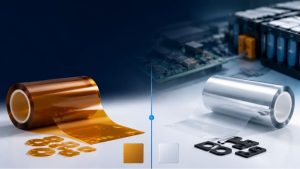

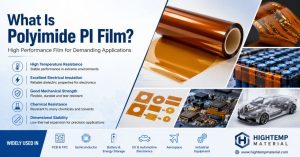
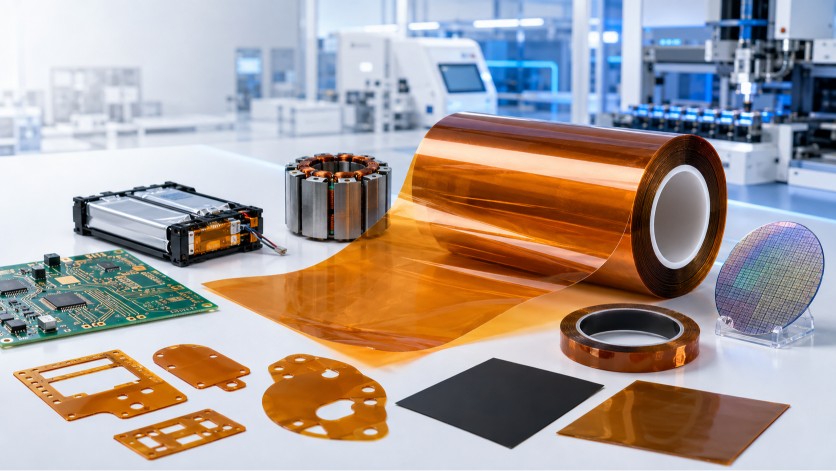
Polyimide (PI) film, commonly known by the trade name Kapton® film, is one of the most widely used high-performance insulation materials in the electronics industry. Thanks to its exceptional thermal stability, electrical insulation, mechanical strength, and chemical resistance, PI film has become the preferred material for applications operating under extreme temperatures and demanding environments.
From flexible printed circuits (FPC) and semiconductor manufacturing to electric vehicles (EVs) and aerospace electronics, PI film plays a critical role in ensuring reliability and long service life.
This guide explains the key properties, applications, advantages, and selection tips for PI Kapton® film.
What is PI Kapton® Film?
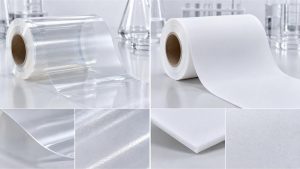
Polyimide (PI) film is a high-performance polymer film engineered to maintain excellent physical and electrical properties across a wide temperature range.
Kapton® is a registered trademark of DuPont™ for its polyimide film products. Today, many manufacturers produce equivalent polyimide films with similar performance characteristics for industrial applications.
Unlike conventional polyester films, PI film maintains its strength and flexibility under continuous high-temperature exposure, making it ideal for advanced electronic manufacturing.
Key Properties of PI Film
1. Excellent High Temperature Resistance
One of the most significant advantages of PI film is its outstanding thermal stability.
Typical performance includes:
| Property | Typical Value |
|---|---|
| Continuous Operating Temperature | -269°C to +260°C |
| Short-Term Temperature Resistance | Up to 400°C |
| Melting Point | No true melting point |
| Flame Rating | UL94 V-0 |
Unlike PET film, PI film does not soften or melt under normal electronics manufacturing temperatures.
2. Outstanding Electrical Insulation
PI film offers excellent dielectric performance, making it suitable for electrical insulation in demanding environments.
Benefits include:
- High dielectric strength
- Low dielectric loss
- Stable electrical properties
- Excellent insulation reliability
- High volume resistivity
These characteristics make PI film widely used in motors, transformers, flexible circuits, and battery insulation.
3. Excellent Mechanical Strength
Despite being lightweight, PI film provides remarkable mechanical durability.
Advantages include:
- High tensile strength
- Excellent tear resistance
- Superior dimensional stability
- Good flexibility
- Long fatigue life
Even after repeated bending, PI film maintains excellent mechanical performance.
4. Chemical Resistance
PI film performs well in many industrial environments.
It resists:
- Oils
- Fuels
- Most solvents
- Lubricants
- Industrial chemicals
Although PTFE offers broader chemical resistance, PI film provides an excellent balance of thermal, electrical, and mechanical performance.
5. Excellent Dimensional Stability
During high-temperature processing, maintaining dimensional accuracy is essential.
PI film exhibits:
- Low thermal expansion
- Excellent flatness
- Minimal shrinkage
- Stable thickness
These characteristics are particularly important in precision electronics manufacturing.
Common Types of PI Film
Different applications require different PI film constructions.
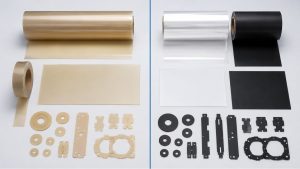
Standard PI Film
Suitable for:
- Electrical insulation
- Flexible circuits
- Semiconductor applications
Adhesive PI Tape
Used for:
- SMT masking
- Wave soldering
- PCB protection
Black PI Film
Ideal for:
- Optical modules
- Semiconductor packaging
- Light-blocking applications
Double-Sided PI Film
Suitable for:
- Composite laminates
- Thermal insulation assemblies
- Special industrial applications
Typical Applications of PI Film
Flexible Printed Circuits (FPC)
PI film is the standard substrate for flexible circuits because it combines flexibility with excellent heat resistance.
Applications include:
- Smartphones
- Wearable electronics
- Medical devices
- Automotive electronics
PCB Manufacturing
In PCB production, PI film is used for:
- High-temperature insulation
- Coverlay films
- Process protection
- Special masking applications
Its dimensional stability helps maintain circuit accuracy during manufacturing.
SMT Assembly
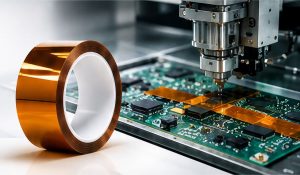
During surface mount technology (SMT), PI tape protects sensitive components from high soldering temperatures.
Typical uses include:
- Wave solder masking
- Reflow solder protection
- Connector protection
- Gold finger masking
Semiconductor Manufacturing
PI film is widely used in semiconductor production because of its clean processing characteristics and thermal stability.
Applications include:
- Wafer processing
- Chip packaging
- Temporary protection
- High-temperature insulation
Electric Vehicles (EV)
Electric vehicles require insulation materials capable of operating under high voltage and elevated temperatures.
PI film is commonly used for:
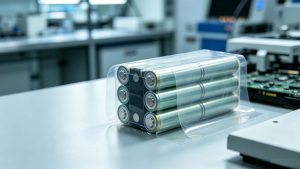
- Battery insulation
- Busbar insulation
- Motor winding insulation
- Power electronics
- High-voltage connectors
Aerospace
PI film performs reliably under extreme environmental conditions.
Typical aerospace applications include:
- Satellite insulation
- Aircraft wiring
- Space electronics
- Thermal shielding
Advantages of PI Film
Compared with conventional engineering films, PI offers several significant advantages:
- Excellent heat resistance
- Superior electrical insulation
- High mechanical strength
- Outstanding flexibility
- Good chemical resistance
- Excellent dimensional stability
- Long service life
- Flame retardancy
These properties make PI film one of the most versatile materials for advanced electronics.
PI Film vs PET Film
| Property | PI Film | PET Film |
|---|---|---|
| Continuous Temperature | Up to 260°C | Around 150°C |
| Electrical Insulation | Excellent | Very Good |
| Mechanical Strength | Excellent | Good |
| Flexibility | Excellent | Good |
| Chemical Resistance | Excellent | Good |
| Cost | Higher | Lower |
| Typical Applications | Electronics, Semiconductor, EV | General Insulation, Packaging |
For applications involving high temperatures or demanding reliability, PI film is generally the preferred choice.
How to Choose the Right PI Film
Before selecting PI film, consider the following factors:
Operating Temperature
Determine both continuous and peak temperatures.
Thickness
Common thicknesses include:
- 12.5 μm
- 25 μm
- 50 μm
- 75 μm
- 125 μm
Choose the thickness based on insulation requirements and mechanical strength.
Adhesive Requirements
Consider whether your application requires:
- Adhesive-free PI film
- Single-sided adhesive
- Double-sided adhesive
Electrical Requirements
Evaluate:
- Dielectric strength
- Breakdown voltage
- Insulation resistance
Processing Method
Consider whether the material will undergo:
- Die cutting
- Slitting
- Laminating
- CNC cutting
- Precision converting
Selecting a supplier capable of providing both raw materials and custom converting services can simplify production and improve efficiency.
HighTemp Material PI Film Solutions
At HighTemp Material Co., Ltd., we supply high-quality polyimide films for demanding industrial applications.
Our capabilities include:
- Standard PI Film
- High Temperature PI Film
- Black PI Film
- Adhesive PI Film
- Precision Die Cutting
- Slitting
- Laminating
- OEM Converting Services
We support customers in industries including:
- PCB Manufacturing
- SMT Assembly
- Semiconductor
- Solar PV
- Battery Pack
- Energy Storage
- Electric Vehicles
- Industrial Electronics
Conclusion
PI Kapton® film has become one of the most important insulation materials in modern electronics. Its exceptional thermal stability, electrical insulation, mechanical strength, and dimensional stability make it ideal for demanding applications ranging from flexible circuits to electric vehicles and semiconductor manufacturing.
Selecting the right PI film depends on temperature, electrical performance, mechanical requirements, and processing methods. Working with an experienced supplier ensures the material is optimized for your specific application and manufacturing process.
If you’re looking for reliable high-performance PI film or custom converting solutions, HighTemp Material Co., Ltd. is ready to support your project with quality materials and engineering expertise.
Frequently Asked Questions (FAQ)
Is Kapton® the same as PI film?
Kapton® is a registered trademark of DuPont™ for polyimide film. “PI film” is the generic material name, and many manufacturers produce equivalent high-performance polyimide films.
What temperature can PI film withstand?
Most industrial PI films operate continuously up to 260°C and can tolerate short-term exposure to temperatures approaching 400°C, depending on the specific grade.
Can PI film be die cut?
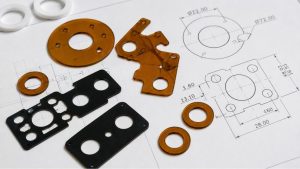
Yes. PI film is suitable for precision die cutting, slitting, laminating, adhesive coating, and other custom converting processes.
What industries commonly use PI film?
PI film is widely used in PCB manufacturing, flexible printed circuits (FPC), SMT assembly, semiconductor processing, electric vehicles, battery systems, aerospace, and industrial electronics.