




Table of Contents
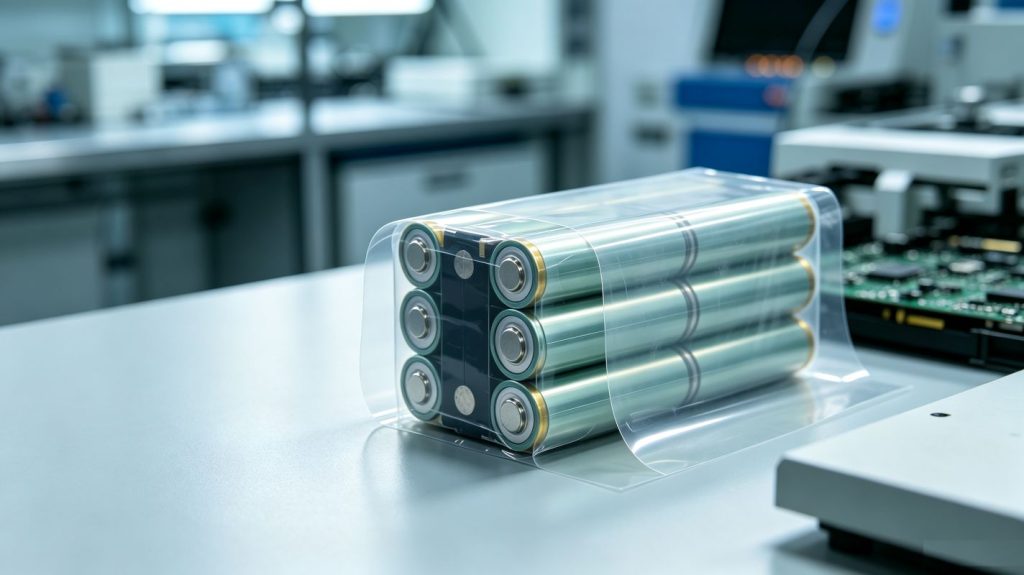
Recently, a U.S. customer approached us while developing a new product containing a battery. Their laboratory required a flame-retardant PET insulation film with UL94 VTM-0 classification for use around the battery.
The customer did not simply ask for a PET film with a “flame-retardant” specification. Before placing an order, their laboratory required verification of the material’s UL certification and UL Yellow Card information.
After we provided the relevant certification documentation and the laboratory completed its verification, the material was confirmed to meet the required standard. The customer then proceeded with the purchase.
This case demonstrates an important principle in high-performance material sourcing:
For safety-critical applications, material certification can be just as important as the material itself.
2. Why 1. Customer Application: Battery-Containing Product
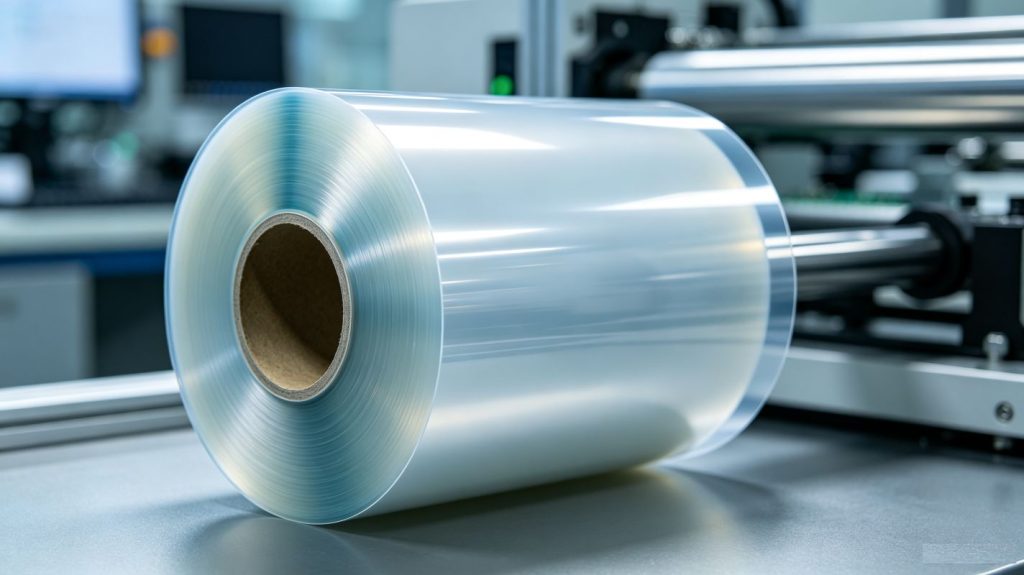
The customer was developing a new product containing an internal battery.
Because the battery was installed inside the product, the surrounding insulation material needed to provide more than basic electrical separation. The customer also needed a material with appropriate flame-retardant characteristics for laboratory evaluation.
The initial material requirement included:
- Material: PET film
- Application: Battery insulation / protection
- Flame classification: UL94 VTM-0
- Application environment: Internal battery-containing product
- Market: United States
- Verification: UL certification documentation required
- Project stage: New product development and laboratory evaluation
The required PET film needed to be thin, flexible, electrically insulating, and suitable for wrapping or insulating the battery area.
However, the most important requirement was not simply “flame-retardant PET.”
The customer needed a material that could be verified against recognized UL documentation.
2. Why UL94 VTM-0 Was Important
For thin and flexible plastic films, UL94 includes specific classifications for thin materials, including VTM-0, VTM-1, and VTM-2.
VTM-0 represents a higher level of flame performance within the VTM classification system.
It is important to distinguish VTM-0 from V-0.
Although both are UL94 flammability classifications, they are used for different types of plastic specimens and should not be treated as interchangeable requirements.
For thin flexible PET films, the VTM classification can therefore be particularly relevant when the end product specification or laboratory evaluation specifically calls for UL94 VTM-0.
For this project, the customer’s laboratory specifically requested VTM-0 rather than simply asking for a general flame-retardant grade.
3. Why the UL Yellow Card Verification Mattered

One of the most important parts of this project was the laboratory’s request to verify the UL Yellow Card before approving the material.
A supplier stating:
“This PET film is VTM-0.”
is not necessarily sufficient for a compliance-driven application.
The laboratory needs to determine whether the specific material designation, thickness, construction, and applicable UL recognition information correspond to the customer’s requirements.
Depending on the UL-recognized material, important information may include:
- Material manufacturer
- Material designation or grade
- Polymer type
- Color
- Minimum and maximum recognized thickness
- Flammability classification
- Electrical properties
- Thermal properties
- Other applicable limitations
Therefore, simply having a document with the words “UL94 VTM-0” is not enough.
The actual material supplied must correspond to the relevant recognized material information.
4. Our Approach to the Material Verification
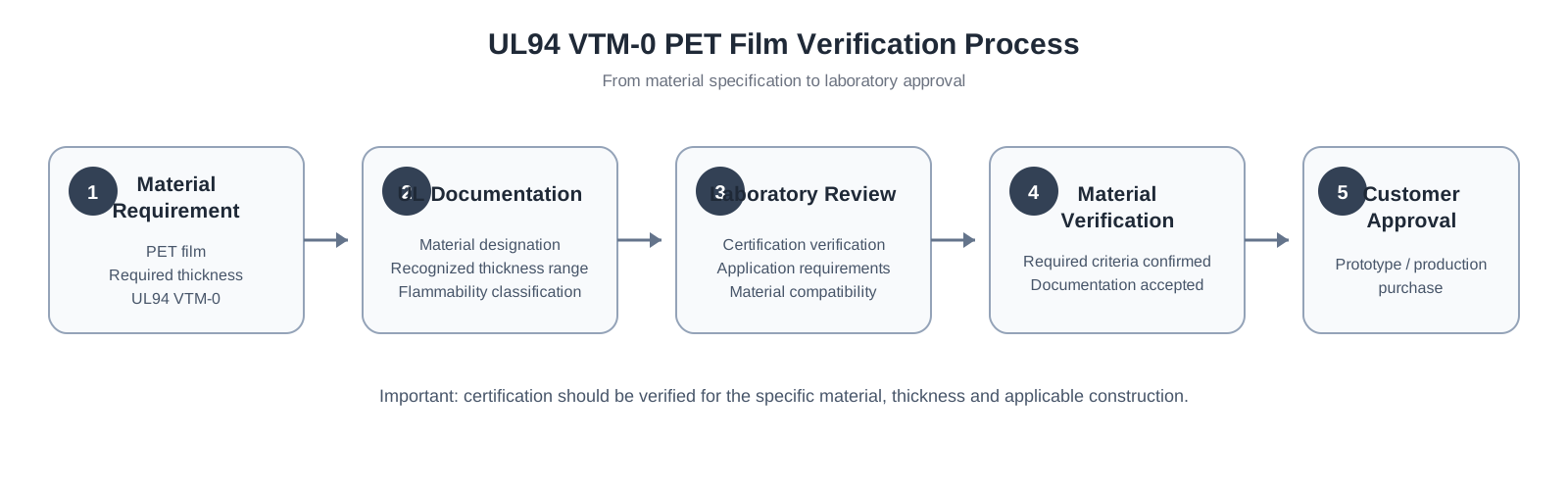
For this project, we first focused on the customer’s most important requirement:
Could the proposed PET film be verified against the required UL94 VTM-0 documentation?
Instead of immediately discussing price, we first reviewed the available certification information for the proposed material.
The verification process included:
5. Why Certification Should Be Checked Before Mass Production
For standard PET applications, buyers may focus primarily on:
- Price
- Thickness
- Width
- Roll length
- Appearance
- Tensile strength
However, the situation is different for products undergoing safety or regulatory evaluation.
Imagine that a customer purchases a large quantity of PET film and then sends the final product to a laboratory.
If the laboratory rejects the material because the certification does not match the required specification, the customer may have to:
- Find another material;
- Repeat material verification;
- Modify the product;
- Repeat laboratory testing;
- Delay product development;
- Potentially scrap previously purchased material.
For this reason, pre-verification of certification documentation can significantly reduce project risk.
6. What About PET Film With Adhesive Backing?
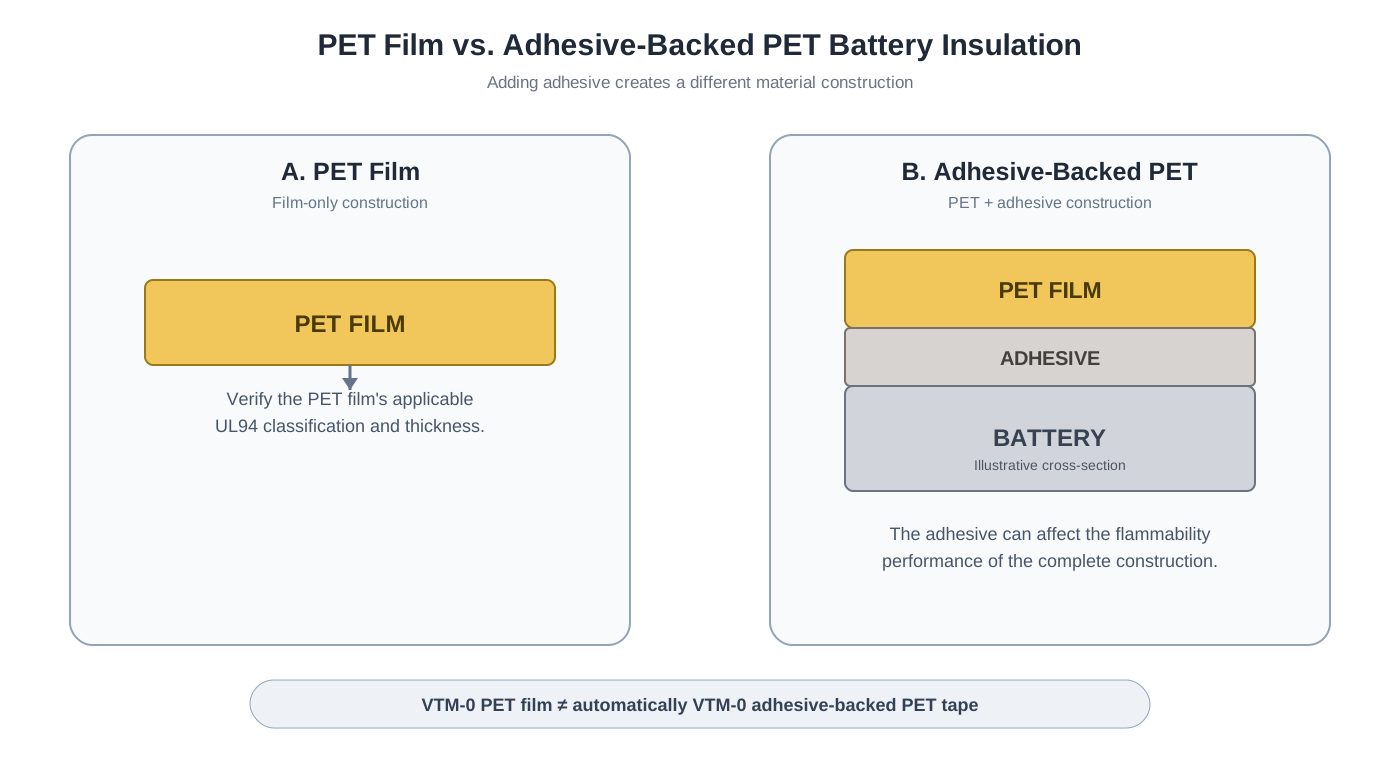
During battery insulation projects, customers may also ask whether the PET film can be supplied with adhesive backing.
In many applications, adhesive-backed PET can be used to wrap, secure, or insulate battery components.
A typical construction could be:
Battery → Adhesive → Flame-Retardant PET Film
or:
Battery → PET Film → Adhesive Layer
However, there is an important technical point:
UL94 VTM-0 for the PET film does not automatically mean that the complete PET + adhesive tape construction is also VTM-0.
Once adhesive is added, the final construction contains another combustible material.
The adhesive type and adhesive thickness can affect the flammability performance of the complete construction.
Therefore, if the laboratory requires the complete adhesive-backed PET tape to meet VTM-0, the PET film certification alone may not be sufficient.
The complete construction should be evaluated based on the applicable UL recognition or testing requirements.
7. PET Film vs. Adhesive-Backed PET Tape
This distinction is particularly important when selecting a material for battery insulation.
| Product | Construction | Key Consideration |
|---|---|---|
| Flame-retardant PET film | PET | Verify PET's UL94 classification |
| Adhesive-backed PET | PET + adhesive | Verify whether the complete construction meets the required classification |
| Die-cut PET insulation | PET or PET + adhesive | Verify material certification and converting requirements |
| Custom battery insulation tape | PET + adhesive | Confirm flame rating, adhesive compatibility and dimensions |
For customers requiring adhesive backing, we recommend confirming the following before quotation:
- PET thickness
- Adhesive type
- Adhesive thickness
- Total thickness
- Required flame classification
- Required UL recognition
- Operating temperature
- Dielectric requirements
- Width
- Roll length
- Battery shape and application method
This information allows the material supplier and laboratory requirements to be matched more accurately.
8. Potential Benefits of Flame-Retardant PET for Battery Insulation
Depending on the specific grade and application, flame-retardant PET film can offer several useful characteristics for battery-related insulation applications.
Thin and flexible
PET film can provide electrical insulation without adding significant bulk to a compact battery assembly.
Electrical insulation
PET is widely used as an electrical insulation material in various electronic and electrical applications.
Flame-retardant grades available
Specially formulated PET films can be supplied with enhanced flame-retardant performance and, for certain grades, recognized UL94 classifications.
Good dimensional stability
PET film generally provides good dimensional stability compared with many other flexible polymer films.
Easy converting
Depending on the grade, PET film can be:
- Slit
- Laminated
- Adhesive coated
- Die-cut
- Kiss-cut
- Custom converted
This makes it suitable for both roll-stock and customized insulation components.
9. From PET Film to Custom Battery Insulation Components
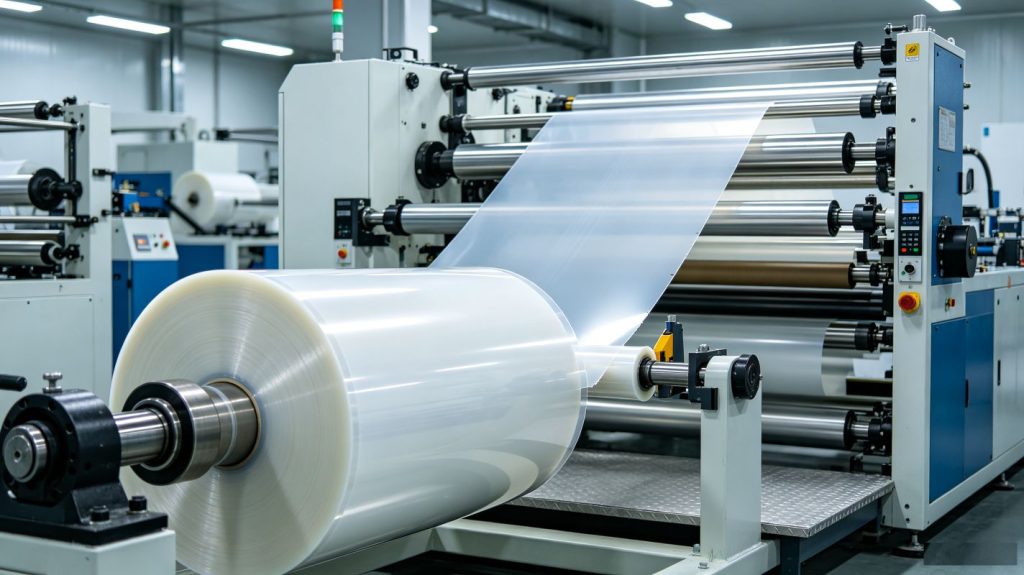
For customers developing battery-powered products, the requirement may eventually move beyond raw film.
Instead of purchasing standard PET rolls, they may require a customized insulation component.
For example:
PET film → adhesive coating → slitting → die cutting → finished battery insulation part
A supplier capable of both material sourcing and converting can potentially provide a more complete solution.
Possible customized products include:
- Battery wrapping film
- Battery insulation sheets
- Adhesive-backed PET insulation
- Die-cut PET insulation
- Custom PET tabs
- Electrical insulation liners
- Protective battery film
- Custom roll-to-roll PET components
This can be particularly useful during product development because the customer can work with one supplier for both material selection and converting.
10. Key Questions to Ask Before Supplying VTM-0 PET
When receiving an inquiry for flame-retardant PET film, we recommend confirming the following information.
Material requirements
- What PET thickness is required?
- What width and roll length are required?
- Is transparent, natural, black, or another color required?
- Is the material used as film or tape?
Flame-retardant requirements
- Is UL94 VTM-0 specifically required?
- Is the requirement for the PET film itself?
- Or does the requirement apply to the complete PET + adhesive construction?
Certification requirements
- Does the laboratory require a UL Yellow Card?
- Does the UL-recognized material designation need to match the supplied grade?
- Is there a minimum thickness requirement?
- Are there specific RTI or electrical requirements?
Adhesive requirements
If adhesive backing is required:
- Acrylic or silicone adhesive?
- Adhesive thickness?
- Permanent or removable?
- Required operating temperature?
- Required adhesion level?
- Does the final adhesive-backed construction require UL recognition?
11. Project Result
For this project, the key challenge was not simply finding a PET film.
The real challenge was finding a PET insulation material whose certification could be verified and accepted by the customer’s laboratory.
After the UL documentation was provided and reviewed by the laboratory, the proposed PET film was confirmed to satisfy the customer’s material requirement.
The customer then proceeded with the purchase.
The project demonstrated the importance of connecting three elements:
Material Selection + Certification Verification + End-Application Requirements
rather than treating them as separate steps.
12. What We Learned From This Battery Insulation Project
This project reinforced several important principles for high-performance material sourcing.
1. Certification should be verified early
If a project requires UL recognition, the certification should be reviewed before mass production whenever possible.
2. VTM-0 should not be treated as a generic marketing term
The applicable material, thickness, construction, and recognition information should be checked carefully.
3. Adding adhesive changes the material construction
A VTM-0 PET film should not automatically be described as a VTM-0 adhesive tape.
4. The final application matters
The correct material depends on the customer’s actual product structure, laboratory requirements, thickness, temperature, electrical and mechanical requirements.
5. Material suppliers can add value through technical matching
For new product development, customers often need more than a quotation. They need help identifying a material that can move successfully from prototype → laboratory evaluation → production.
Conclusion
For battery-powered products, choosing an insulation film is not simply a matter of finding the lowest-cost PET material.
When a laboratory requires UL94 VTM-0, the material’s certification and recognized construction need to be carefully verified against the actual application.
In this case, the customer required a flame-retardant PET film for battery insulation and asked for UL documentation before purchasing. By providing the relevant certification information for laboratory verification, the material was successfully approved and the customer proceeded with the order.
For applications requiring adhesive-backed PET, additional verification is necessary because PET film and adhesive-backed PET tape are different constructions. If VTM-0 is required for the complete tape construction, the adhesive system and its thickness must also be considered.
For battery insulation, electrical insulation, electronics, energy storage, and other safety-sensitive applications, we can help customers evaluate flame-retardant PET film, adhesive-backed PET, and customized PET insulation components according to their required specifications and certification needs.
Looking for UL94 VTM-0 PET film for a battery insulation application? Contact us with your required thickness, width, adhesive requirements, and certification specification.
13.Frequently Asked Questions
What is UL94 VTM-0 PET film?
UL94 VTM-0 PET film is a thin, flexible polyethylene terephthalate film that has been classified VTM-0 under the applicable UL94 flammability testing requirements.
Can PET film with UL94 VTM-0 be used for battery insulation?
Yes, UL94 VTM-0 PET film can be considered for battery insulation and other electrical insulation applications when its thickness, electrical properties, temperature requirements, and certification are suitable for the end product.
Is VTM-0 the same as V-0?
No. UL94 VTM-0 and V-0 are different classifications intended for different types of plastic materials and test specimens. VTM classifications are specifically associated with thin flexible materials.
Can UL94 VTM-0 PET film be made with adhesive backing?
Yes, PET film can be supplied with adhesive backing. However, VTM-0 certification for the PET film does not automatically mean that the complete PET and adhesive construction is VTM-0. The adhesive type and thickness may need to be evaluated separately.
Does adhesive affect the flame rating of PET tape?
Yes. When adhesive is added to PET film, the resulting construction contains an additional material that can affect its flammability performance. For applications requiring VTM-0, the complete adhesive-backed construction should be verified against the applicable certification or testing requirements.
What information is needed to quote VTM-0 PET film?
Important information includes PET thickness, width, roll length, color, required UL94 classification, application temperature, adhesive requirements, and whether UL certification is required for the film itself or the complete adhesive-backed construction.
Need UL94 VTM-0 PET Film for Your Battery Application?
Our engineers will help you select the right tape for your application.Tell us your PET thickness, width, adhesive requirements, and required UL classification. We can help you evaluate the appropriate PET insulation material and certification documentation for your application.Tell us your PET thickness, width, adhesive requirements, and required UL classification. We can help you evaluate the appropriate PET insulation material and certification documentation for your application.
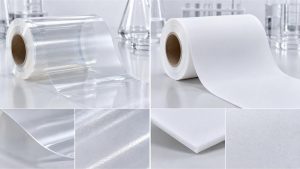
FEP vs PTFE Film: Key Differences in Processing and Performance
FEP and PTFE films belong to the fluoropolymer family and share valuable characteristics such as chemical resistance, electrical insulation, low surface energy and good performance in demanding environments. However, they are not interchangeable. Their different molecular structures lead to major differences in melt processing, transparency, heat sealing, temperature capability, stiffness and fabrication.
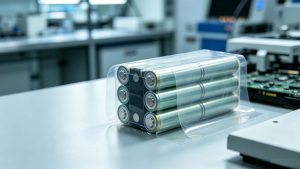
Case Study: UL94 VTM-0 PET Film for Battery Insulation Applications
How a flame-retardant PET insulation film helped a U.S. customer meet laboratory material requirements for a battery-powered product
When developing a new battery-powered product for the U.S. market, material selection is not only about thickness, flexibility, or cost. For products containing batteries, flammability, electrical insulation, and regulatory compliance can become critical factors during laboratory evaluation.
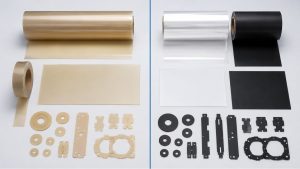
PPS vs PET Film: Which Electrical Insulation Film Should You Choose?
PPS film is generally selected for demanding environments involving higher temperatures, thermal aging, chemicals, humidity, or flame-performance requirements. PET film offers dependable electrical insulation, broad availability, convenient processing, and lower material cost for applications operating within its qualified limits.
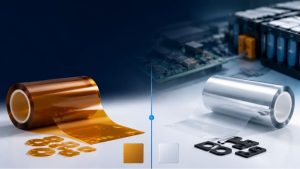
PI vs PET Film: Temperature Resistance, Insulation and Cost Comparison
PI film is generally selected when an application requires greater thermal stability or resistance to demanding processing conditions. PET film is often preferred when reliable electrical insulation, dimensional stability, and lower material cost are the main priorities.