










Quick Answer
Evaluate a high-temperature material supplier across twelve areas: material specialization, technical data, batch consistency, traceability, test methods, certifications, custom converting, samples, change control, capacity, complaint handling and commercial risk. Do not approve a supplier based only on price, one sample or an ISO certificate.
Why Supplier Selection Matters
High-temperature materials often protect electrical insulation, fire safety, sealing performance and production reliability. Inconsistent thickness, uncontrolled adhesive changes, incomplete test data or poor traceability can cause lamination defects, dielectric breakdown, dimensional shrinkage, adhesive residue, downtime and expensive rework.
The right supplier combines proven materials, controlled manufacturing, clear documentation, responsive engineering support and dependable delivery.
12 Questions Buyers Should Ask
Use the following questions during supplier screening, technical review, factory audits and sample qualification. Require evidence for important claims instead of relying only on sales statements.
1. Which Materials Do You Specialize In?
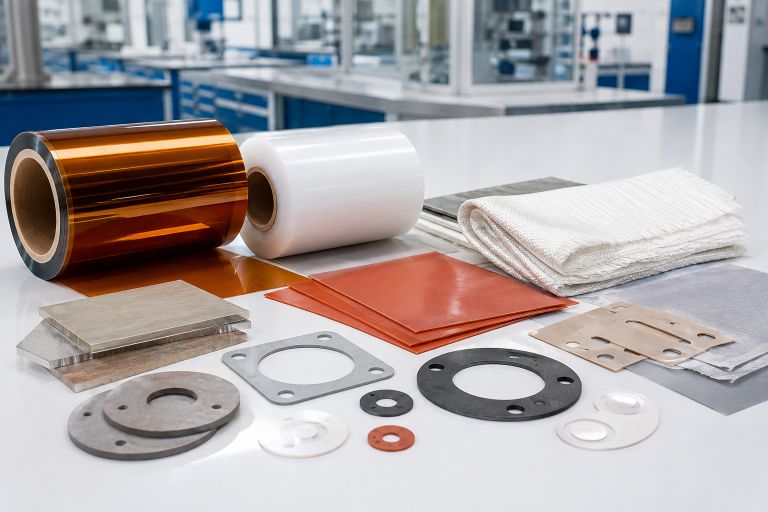
Ask which materials represent the supplier’s core experience: PTFE, polyimide, PET, PPS, PEN, silicone, mica, aerogel, fiberglass or gasket materials. A capable supplier should explain available grades, temperature limits, thickness ranges, processing limitations and suitable applications.
- Core material families and grades
- Typical applications and limits
- Standard formats and customization

2. Can You Provide Complete Technical Data?
Request a technical data sheet for the exact grade being quoted. Separate typical values from guaranteed limits and confirm the test method, units, thickness and test conditions.
- Thickness and tolerance
- Thermal, mechanical and electrical data
- Test methods and conditions

3. How Do You Control Batch Consistency?
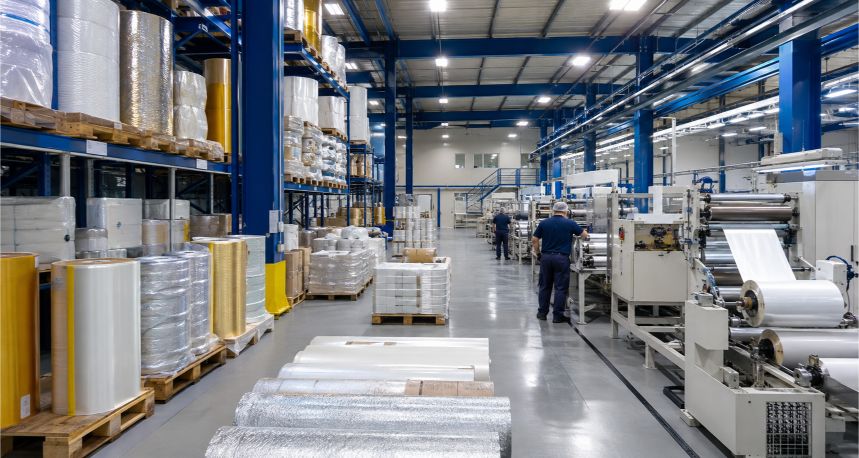
An approved sample does not guarantee future batches. Review controls for raw materials, thickness, coating weight, adhesive, density, curing, roll tension, slitting and final inspection.
- Incoming material inspection
- In-process and final controls
- Batch reports and retained samples

4. Is Material Traceability Available?
The supplier should be able to trace finished rolls or parts back to production lots, raw-material batches and inspection records. For controlled applications, request a Certificate of Conformance with each shipment.
- Lot, batch and roll numbers
- Production and inspection records
- Certificate of Conformance
5. Which Test Methods Do You Use?
Performance data has limited value without a test method. Confirm whether testing follows ASTM, ISO, IEC, UL, IPC or a customer-specific procedure and whether it is performed internally or by a qualified third party.
- Recognized test methods
- Calibrated equipment
- Raw data and third-party reports

6. Which Certifications Can Be Verified?
Distinguish between management-system certificates, facility certificates and approvals for the exact material grade. Verify certificate scope, number, issuing organization, site address and validity.
- ISO and industry systems
- UL or product-specific approvals
- RoHS, REACH and declarations
7. Can You Support Custom Converting?
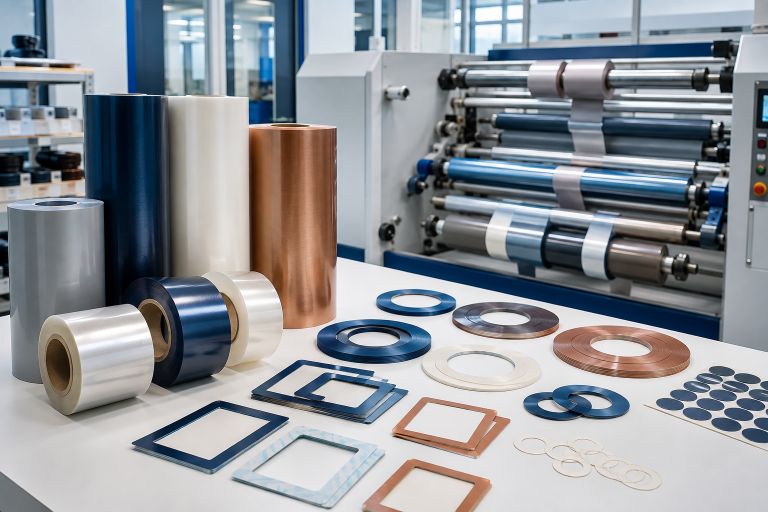
Ask about slitting, sheet cutting, die cutting, kiss cutting, laminating, adhesive coating, CNC processing and custom packaging. Tolerances must be evaluated against the specific material, thickness and part geometry.
- Equipment and feasible tolerances
- Edge quality and cleanliness
- Rolls, sheets or finished parts
8. How Do You Handle Samples and Prototypes?
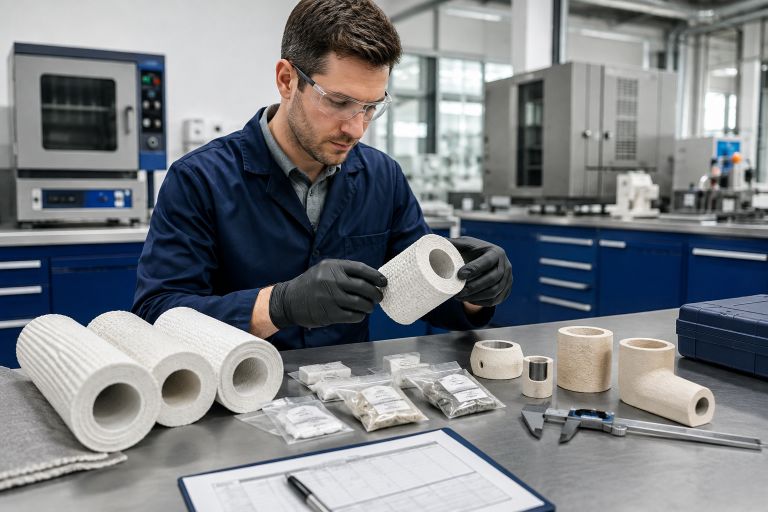
Confirm sample availability, prototype quantity, tooling, lead time, lot identification and inspection reports. Whenever possible, samples should represent the proposed production grade and manufacturing process.
- Representative production material
- Prototype and pilot-order support
- Testing recommendations

9. How Are Material Changes Controlled?
Ask for advance notification before changes to raw-material sources, resin grades, adhesive formulations, release liners, manufacturing sites, equipment, test methods or subcontractors.
- Documented change procedure
- Customer notification period
- Requalification and approval rules
10. What Are Your Capacity and Lead Times?
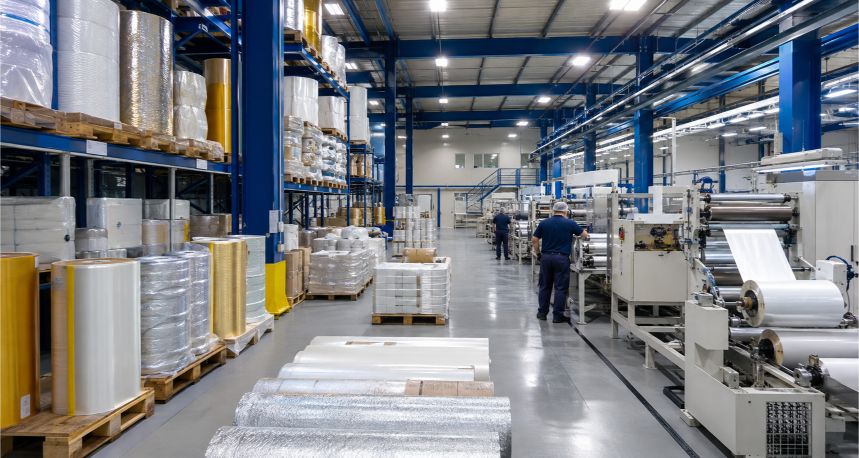
Review normal and peak capacity, production lead time, raw-material availability, safety stock, subcontracted processes, equipment redundancy and emergency-order capability.
- Realistic production lead time
- Capacity and scalability
- Inventory and continuity planning

11. How Do You Handle Quality Complaints?
A strong supplier should provide containment, root-cause investigation, corrective action and effectiveness verification—not only product replacement.
- Initial response and containment
- 8D or CAPA investigation
- Corrective-action verification

12. What Commercial Risks Should Buyers Review?
Confirm the supplier’s business role, manufacturing location, payment terms, tooling ownership, confidentiality, warranty, logistics capability, alternative material sources and business-continuity plan.
- Transparent company and factory identity
- Contract and liability terms
- Supply-chain continuity
Supplier Evaluation Scorecard
| Evaluation Criterion | Weight | Rating 1–5 | Notes |
|---|---|---|---|
| Material expertise | 15% | ||
| Technical data quality | 10% | ||
| Quality and process control | 15% | ||
| Traceability and documentation | 10% | ||
| Testing capability | 10% | ||
| Certifications and compliance | 10% | ||
| Custom converting capability | 10% | ||
| Samples and prototype support | 5% | ||
| Capacity and delivery reliability | 5% | ||
| Complaint handling | 5% | ||
| Commercial terms and risk | 5% | ||
| Total | 100% |
Rating guide: 1 = unacceptable or no evidence; 2 = major gaps; 3 = meets minimum requirements; 4 = strong capability; 5 = excellent and supported by evidence. A high total score should not override failure of a critical safety, traceability or compliance requirement.
Supplier Red Flags to Watch For
- Incomplete technical data or unidentified material grade
- Test values without methods, units or conditions
- No lot number or raw-material traceability
- Expired, unverifiable or unrelated certificates
- Promises every tolerance without reviewing the drawing
- No documented material-change procedure
- Unrealistic lead-time promises
- No root-cause or corrective-action process
- Inconsistent company, factory or banking information
Documents to Request Before Approval
- Technical Data Sheet and Safety Data Sheet
- Certificate of Conformance example
- Third-party test reports
- ISO and product-specific certificates
- RoHS, REACH and composition declarations
- Process flowchart and control plan
- Inspection report format
- Material traceability procedure
- Change-control procedure
- Packaging specification
- Company registration and NDA
Documents should match the supplier name, manufacturing site, product grade and quoted material whenever applicable.
Sample-to-Production Qualification Process
Need a High-Temperature Material Solution?
Share your operating temperature, application, required properties, dimensions, tolerance and expected quantity. Our team can help review PTFE, polyimide, PET, PPS, PEN, silicone, mica, aerogel and fiberglass solutions.
Frequently Asked Questions
/www/wwwroot/www.hightempmaterial.com/wp-content/plugins/elementor/includes/widgets/accordion.php on line 615
">
What is the most important factor when selecting a high-temperature material supplier?
/www/wwwroot/www.hightempmaterial.com/wp-content/plugins/elementor/includes/widgets/accordion.php on line 615
">
Is ISO 9001 enough to approve a supplier?
/www/wwwroot/www.hightempmaterial.com/wp-content/plugins/elementor/includes/widgets/accordion.php on line 615
">
How can buyers verify material performance claims?
/www/wwwroot/www.hightempmaterial.com/wp-content/plugins/elementor/includes/widgets/accordion.php on line 615
">
What certifications should a supplier have?
/www/wwwroot/www.hightempmaterial.com/wp-content/plugins/elementor/includes/widgets/accordion.php on line 615
">
Should buyers always choose the original manufacturer?
/www/wwwroot/www.hightempmaterial.com/wp-content/plugins/elementor/includes/widgets/accordion.php on line 615
">
How should a new supplier be qualified?
Ready to Evaluate Your Next Supplier?
Send us your application conditions, drawings and required material properties. We can recommend a suitable material and custom converting solution.